Extracorporeal Shockwave Therapy (ESWT) in Singapore: How It Works, Who It's For & What to Expect
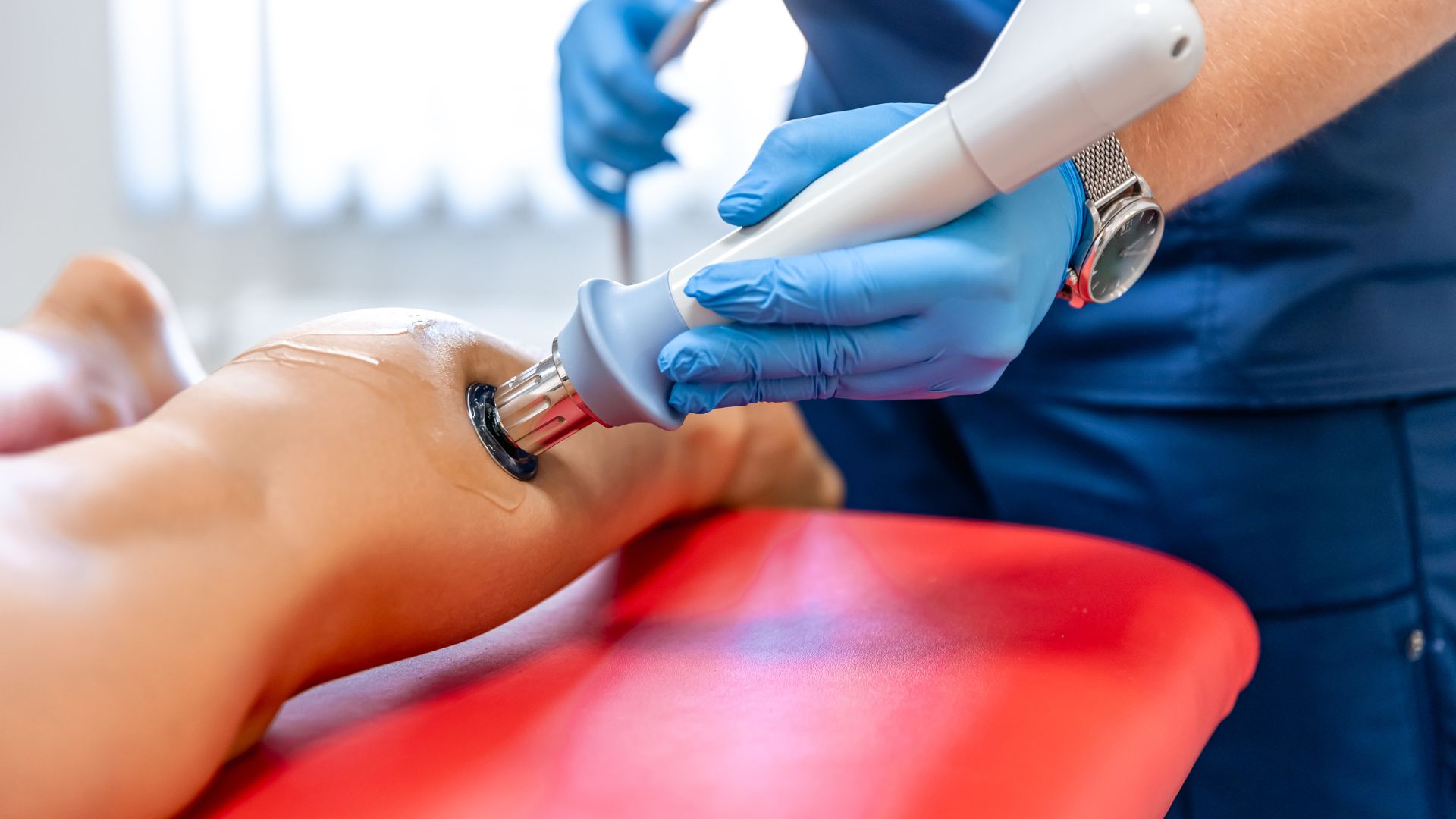
Extracorporeal Shockwave Therapy (ESWT) — often just called shockwave treatment — is a non-invasive treatment that uses high-energy acoustic waves to stimulate the body's natural healing process, improve blood circulation, and relieve chronic or stubborn pain. It's a viable option for musculoskeletal conditions that haven't fully responded to rest, medication, or conservative physiotherapy alone.
At Physio & Sole Clinic, shockwave therapy is delivered as part of a personalised rehabilitation plan, with podiatrists and physiotherapists working together so treatment addresses the underlying cause, not just the pain.
Conditions Treated with Shockwave Therapy

At Physio & Sole Clinic, we use Radial Shockwave Therapy (RSWT) to treat a wide range of musculoskeletal conditions, including:
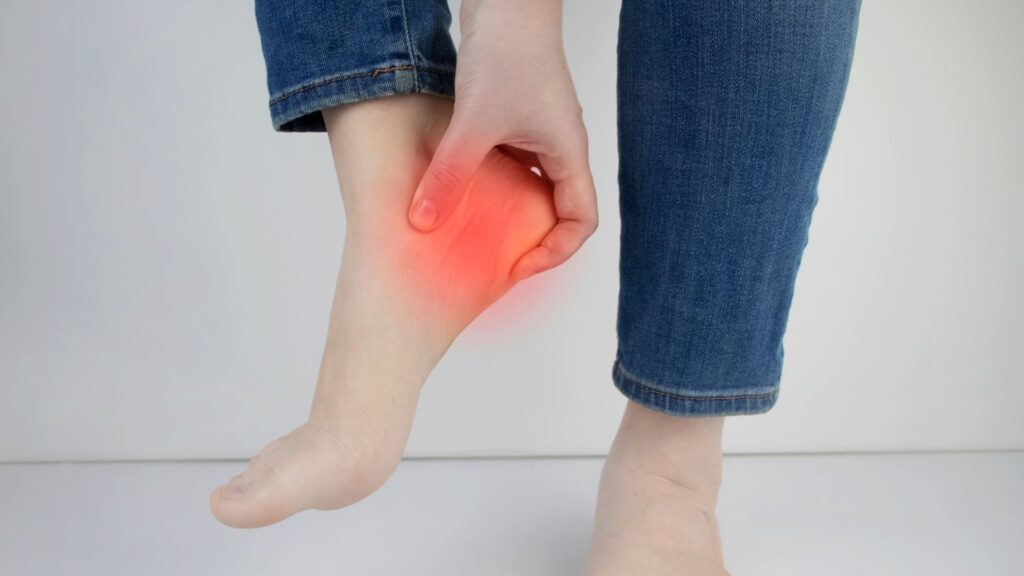
- Plantar fasciitis & heel pain
- Tennis elbow and golfer's elbow
- Achilles tendinopathy
- Patellar tendinopathy (jumper's knee)
- Calcific shoulder tendinopathy
- Frozen shoulder
- Heel spurs & Morton's neuroma
- Chronic tendonitis & trigger points
Whether you're an office worker, an athlete, or simply dealing with nagging pain that won't settle, shockwave therapy may help.
Signs You Might Benefit from Shockwave Therapy
- Chronic pain that won't go away — persistent pain for months or years that hasn't responded to conventional treatment.
- A condition that keeps coming back — recurring flare-ups often mean the underlying cause hasn't been fully addressed; shockwave targets that root cause rather than just the symptom.
- An injury that's taking too long to heal — shockwave can enhance blood circulation and speed up healing in stubborn tendon, ligament, and muscle injuries.
How Does Shockwave Therapy Work?
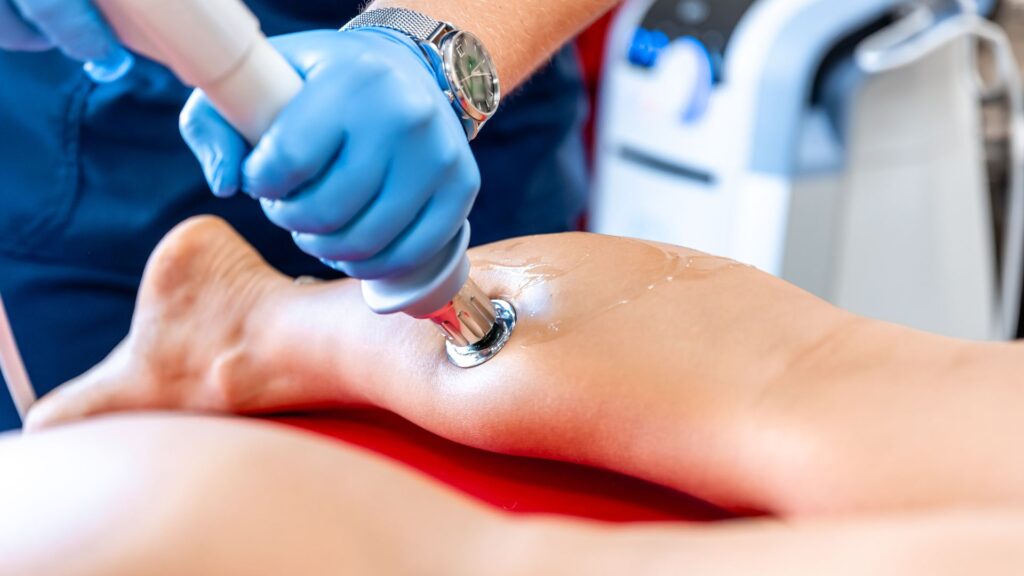
Shockwaves are mechanical acoustic pulses, delivered through the skin to the injured area using a handheld device. They work in three ways:
- Stimulate healing — increase blood flow and metabolism in the damaged tissue, delivering more oxygen and nutrients for repair.
- Reduce pain — desensitise nerve endings and lower pain-sensitising chemicals in the body, often giving almost-immediate relief.
- Break down scar tissue — the increase in circulation helps break down fibrous scar tissue and calcific deposits that build up in chronic conditions, one of the key reasons shockwave is effective where other treatments have plateaued.
What is Radial Shockwave Therapy (RSWT)?
Radial shockwave is the most commonly used form of shockwave therapy in physiotherapy clinics, and the only type performed at Physio & Sole Clinic. A small projectile inside the handheld device creates shockwaves that spread outwards in a "radial" pattern — best suited to surface-level or broader treatment areas such as plantar fasciitis, tennis elbow, or general tendon pain, with minimal discomfort and no downtime.
What to Expect During a Shockwave Therapy Session
Before Your Session
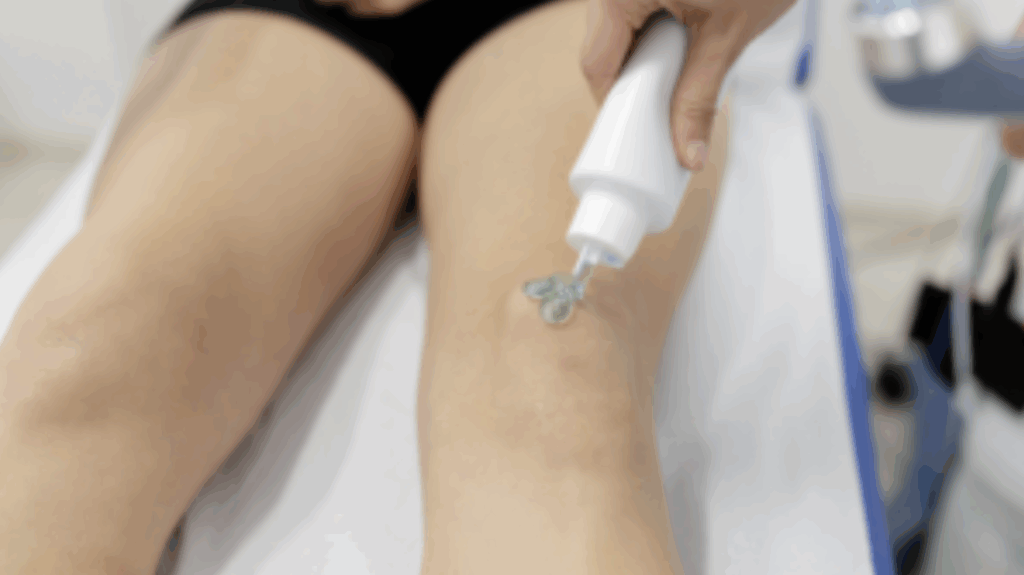
Your physiotherapist or podiatrist first conducts a detailed assessment to confirm shockwave is the right treatment for your condition, then identifies and marks the affected area. A conductive gel is applied to the skin to help transmit the shockwaves effectively into the tissues. No anaesthesia or special preparation is needed, so you can walk in and out the same day.
During the Session
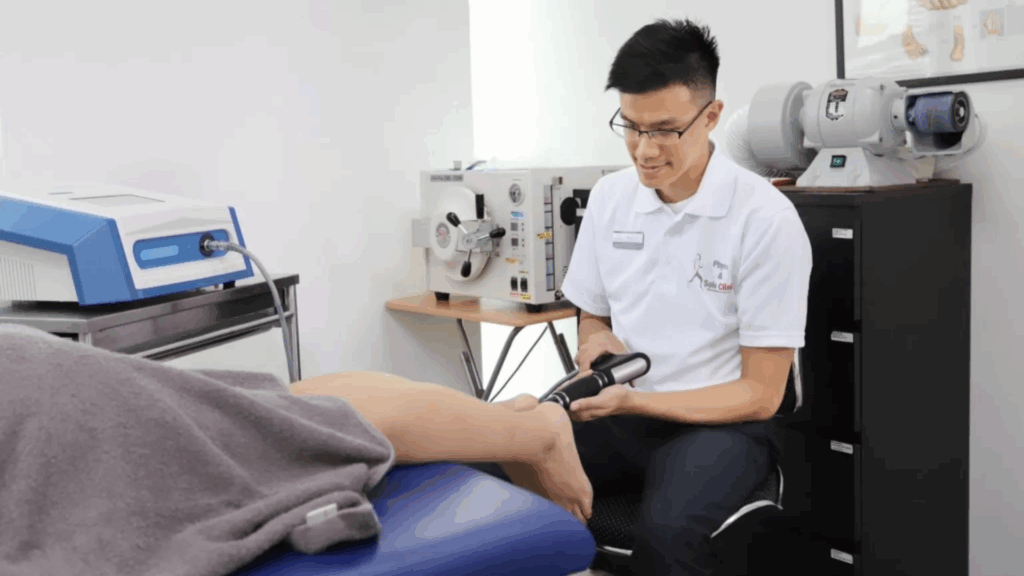
- Using a handheld applicator, your therapist delivers a series of short, high-energy shockwave pulses directly to the affected area.
- Most patients describe the sensation as a tapping or vibrating feeling. Some mild discomfort may occur, especially over sensitive spots, but the intensity is always adjusted to your tolerance level.
- Each session typically lasts 10–20 minutes, depending on the condition and treatment area.
- Most patients require 3–6 sessions for optimal results, scheduled about once a week.
Immediately After
It's normal to experience mild soreness, warmth, or redness in the treated area. This is part of the body's healing response and usually subsides within a few hours. Unlike surgery or injections, there's no downtime, and you can return to your day right away.
Recovery Guidelines
- Avoid strenuous activity for at least 48 hours after each session.
- Hold off on high-impact exercise (e.g., running, jumping) until two weeks after completing your full course of shockwave therapy.
- Your therapist may recommend complementary treatments such as stretching, strengthening exercises, or orthotics to support long-term recovery.
Common Myths About Shockwave Therapy
"Shockwave therapy is painful." Despite the name, it isn't electric shocks — "shockwave" refers to the acoustic pulse itself, not an electrical current. The tapping sensation described above is as intense as it gets for most patients.
"It's only for athletes." Shockwave is widely used for sports injuries, but it's just as effective for everyday chronic pain, tendon issues, and slow-healing injuries in people who aren't athletes at all.
"One session fixes everything." Some people notice improvement after one session, but lasting recovery typically takes a course of 3–6 sessions — each one builds on the last, gradually breaking down scar tissue and restoring function, similar to physiotherapy or strength training.
Shockwave Therapy vs. Other Treatments
| Treatment | Best For | Pros | Cons |
|---|---|---|---|
| Shockwave Therapy | Chronic pain, tendon injuries | Non-invasive, drug-free, stimulates healing | May need multiple sessions, mild discomfort |
| Medication | Temporary pain relief | Fast-acting, easy to access | Only masks symptoms, potential side effects |
| Steroid Injections | Severe inflammation | Quick relief | Short-term, weakens tendons with repeated use |
| Surgery | Last resort for severe cases | Can be a permanent fix | Invasive, long recovery, real risks |
Shockwave therapy tends to be worth considering if you have chronic pain that hasn't improved with other treatment, want a non-invasive and drug-free option, and would rather avoid surgery or repeated steroid injections.
Why Choose Physio & Sole Clinic for Shockwave Therapy?
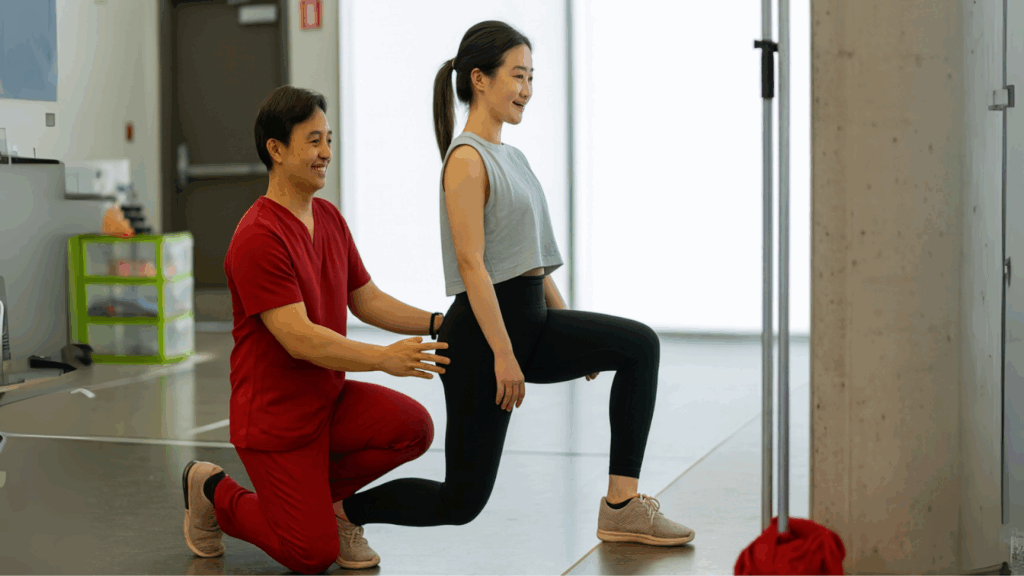
- Evidence-based, non-surgical treatment delivered by experienced podiatrists and physiotherapists
- A multidisciplinary approach — podiatry and physiotherapy teams work together on one rehabilitation plan, rather than treating shockwave in isolation
- Tailored programmes combining ESWT with physiotherapy, exercise, or orthotics for lasting recovery, not just symptom relief
- Multiple clinic locations across Singapore
FAQs About Shockwave Therapy
Is shockwave therapy painful? Some patients feel mild discomfort during treatment, often described as a tapping sensation. It's typically well tolerated and temporary.
What should I do if I'm in pain after treatment? Mild soreness is normal and usually fades within a few days. Apply ice, avoid strenuous activity for 48 hours, and let your therapist know if pain persists or worsens.
How long do the results last? Most patients experience relief lasting months to years, especially when shockwave is combined with physiotherapy and lifestyle changes. Some may need occasional follow-up sessions if symptoms return.
Is Shockwave Treatment Right for You?
If you've tried rest, ice, medication, or physiotherapy and your pain keeps coming back, shockwave therapy is worth discussing with your podiatrist or physiotherapist — it's safe, backed by clinical research, and comes with minimal downtime.
Book an appointment at one of our clinics islandwide, or send your questions to our team via WhatsApp.
Ready to feel better?
Book a consultation with our podiatry team to get an assessment tailored to you.