Quick Summary
Quick Summary
The best orthopaedic shoes are the ones that match your foot type, your walking pattern and your daily activities. They should not be the softest, priciest or most popular pair. A supportive shoe fits well, holds the heel, does not fold or twist too easily, has cushioning that is not overly soft, and gives your toes room. They can help with everyday foot strain, but they are not a guaranteed fix for all foot ailments. If the pain keeps coming back after you change shoes, a podiatry assessment looks at your foot, your walking, and your footwear together, so you stop buying shoes by trial and error.
What Are Orthopaedic Shoes?
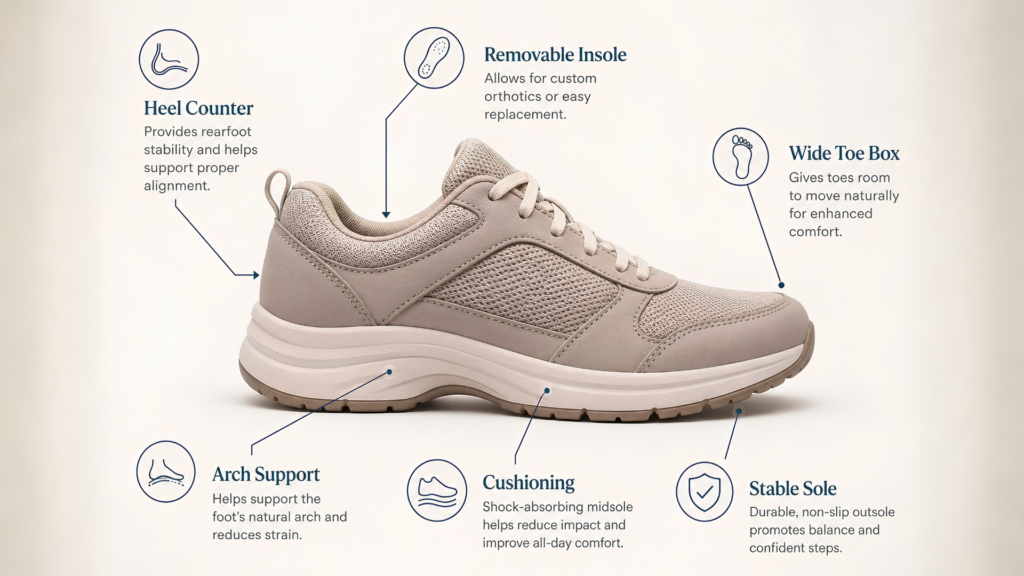
Orthopaedic shoes are supportive footwear designed to improve comfort, reduce excessive pressure and help your foot work well when you walk or stand. They are built with more attention to support, stability and fit than most fashion shoes. A supportive pair may have:
Arch support
A firm heel counter, which is the back of the shoe that cups your heel
A stable sole
Adequate cushioning
A wide toe box
A removable insole
They are not only for seniors, and they no longer all look medical. Many look like regular walking shoes, work shoes or casual shoes. The difference is how they support the foot, not how they look.
Are Orthopaedic Shoes Good for Foot Pain?
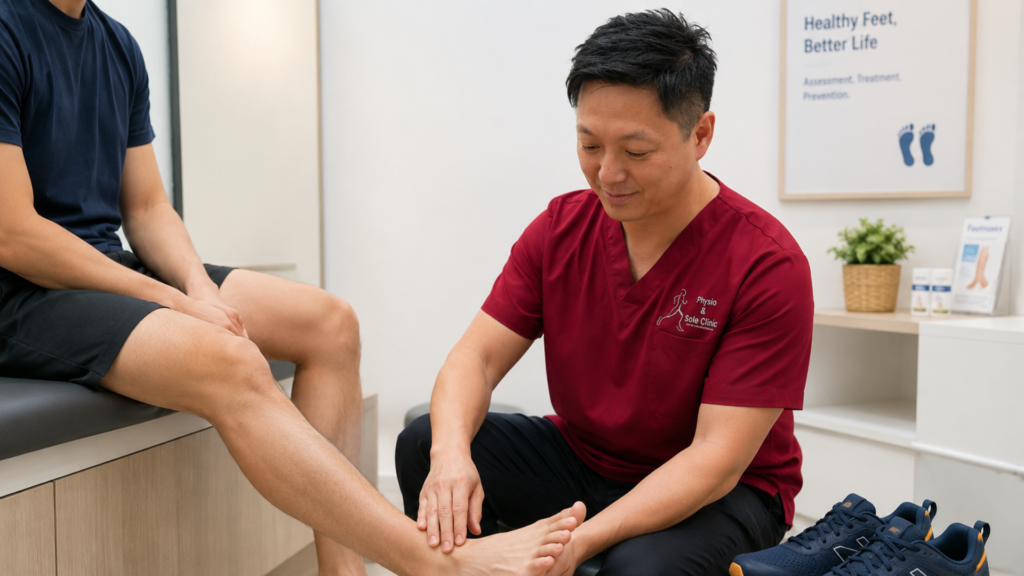
They can help when the strain comes from poor support, pressure, or long hours on your feet, but they are not a guaranteed solution. HealthHub lists wearing footwear inappropriate for your foot type among the common causes of plantar fasciitis, and advises well-fitted footwear for exercise, work and daily activities.
They may not be enough if:
The shoe does not match your foot type, or it is unstable
The pain comes from an injury or inflammation that has not been assessed
The pain has become persistent, or you may need customised orthotics
For bunions, shoes are worth getting right, but they are not a cure. Our bunion page notes that changing your shoes could potentially help prevent the further development of a bunion, but once a bunion has started developing, it is likely to worsen over time even with changes in footwear.
If you have recurring foot pain, it is worth seeing a podiatrist before buying shoes.
What Makes a Shoe Truly Supportive?
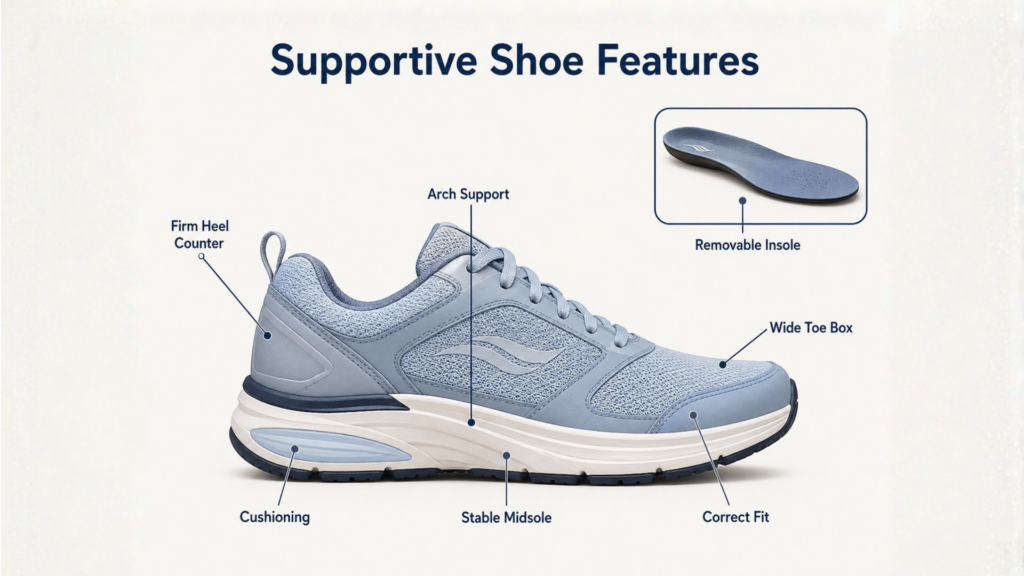
A supportive shoe fits well, holds your heel, keeps its shape under load, and gives your toes room. These are the features we look at, based on what we see in the clinic rather than a published standard:
| Feature | What to look for |
|---|---|
| Heel counter | Firm, not flimsy, so the heel is held steady |
| Midsole and sole | Gives structure and does not twist or fold in the middle; bends where your toes bend |
| Cushioning | Absorbs impact without being so soft that the foot sinks in |
| Toe box | Room for your toes to spread without pressure |
| Fit | Secure without squeezing, no heel slipping, no pressure points |
| Insole | Removable if you use insoles or may need them later |
Fit matters most. HealthHub notes that blisters can form when the skin is rubbed by ill-fitting shoes, and advises well-fitted footwear with padded socks that absorb moisture well.
Why Are Comfortable Shoes Not Always Good for Your Feet?
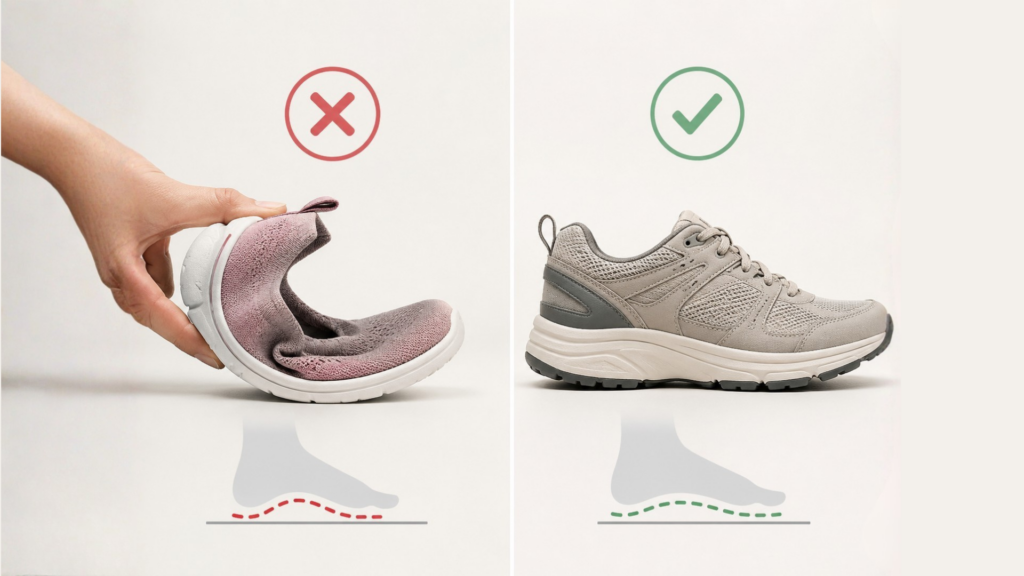
Softness and support are not the same thing. A very soft shoe can feel good at first but may let the foot sink in, feel unstable, and leave you tired after a full day. If you keep buying comfortable shoes and the pain returns, the shoe may be missing structure rather than cushioning. Comfort matters, but it should come with stability.
Who May Want Orthopaedic Shoes in Singapore?
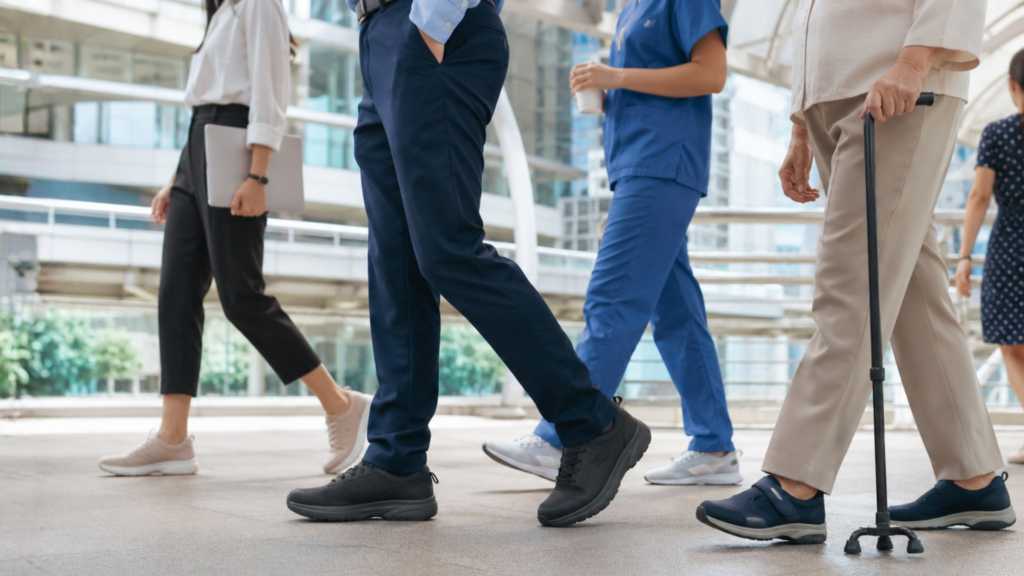
Anyone whose feet hurt or tire from daily walking and standing may find supportive shoes worth considering, whatever their age. In Singapore, a normal day can mean the MRT commute, stairs, hard indoor floors and standing in a lift lobby. In clinic, we most often hear from:
Office workers with long commutes, and people who stand all day, such as retail and service staff, teachers and healthcare workers
People with flat feet, heel pain or recurring arch pain
People whose shoes wear out unevenly, or who still hurt in comfortable shoes
Older adults who need steady footing
For older adults, the Health Promotion Board suggests choosing footwear with secure footing, with non-slip soles that are essential for a good grip, and shoes that are comfortable and well fitted. If you have diabetes, MOH advises well-fitted, covered shoes with socks, and warns that improper or inadequate footwear increases the risk of calluses and ulcers. In that case, consult your doctor or podiatrist before choosing shoes.
What Shoes Do Podiatrists Recommend?
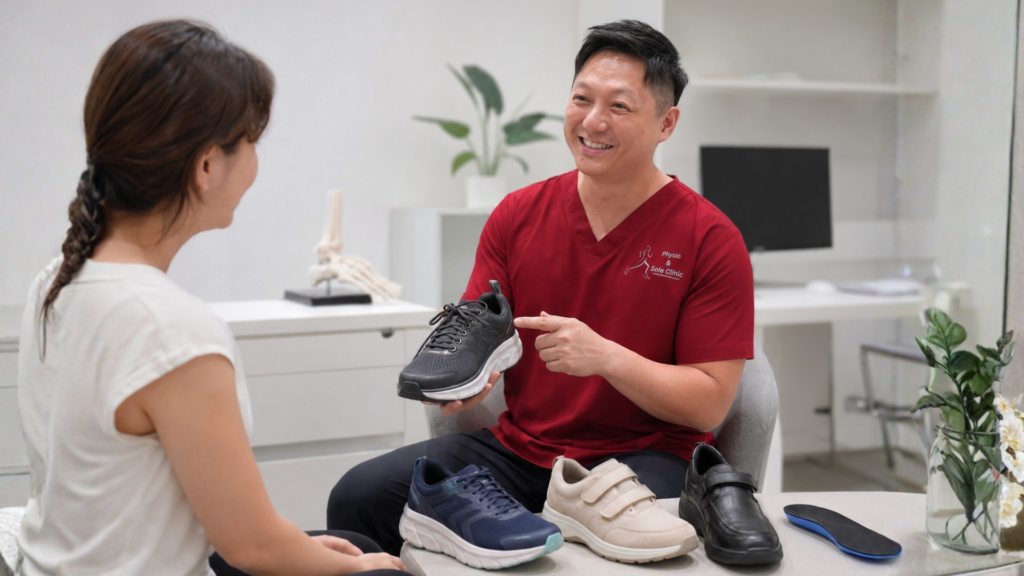
There is no single best shoe for everyone, because the right one depends on your foot, your pain and your activities. HealthHub's podiatry page says podiatrists advise footwear after considering a person's foot type, activity level, occupation and presenting foot problem. In practice, the priorities are:
Flat feet: heel stability and a firmer midsole. See our flat feet page.
Heel pain: cushioning and a stable midsole. See our heel pain page, which lists ill-fitting or worn-out footwear as one possible cause.
Wide feet or toe pressure: a wider toe box and less pressure over the forefoot.
Older adults: grip, stability, and ease of wear.
These are general guidelines from our clinic experience, not rules. Two people with the same heel pain may need different things depending on the posture of their feet, which is why the same shoes do not suit everyone.
How Do You Know If You Need More Supportive Shoes?
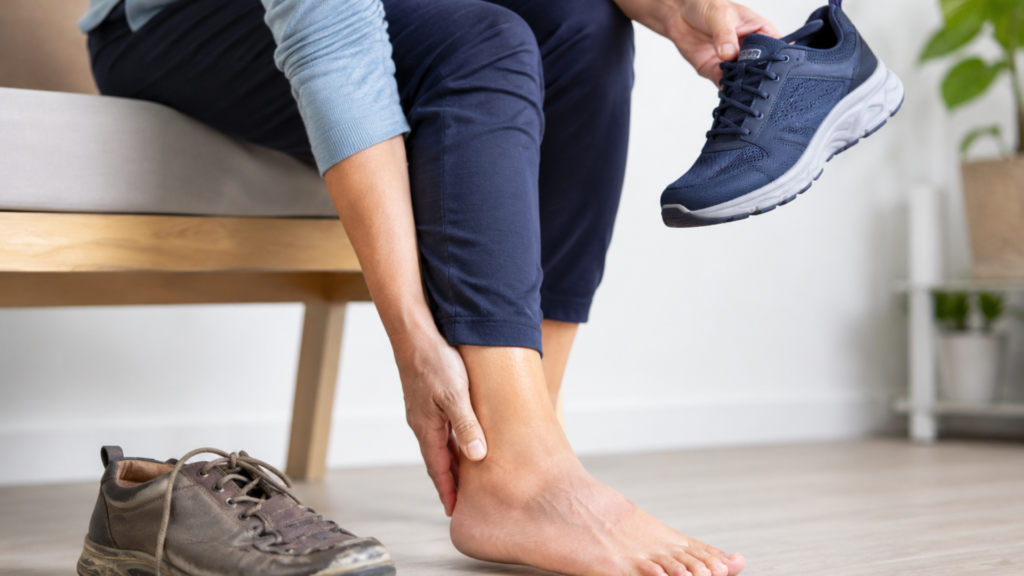
Recurring discomfort in daily activities is the main sign. Common signs include:
Your feet hurt after walking or standing, or your arches feel tired
You have morning heel pain
Your shoes wear out unevenly
You have flat feet, or your ankles roll in
You feel better in supportive shoes than barefoot or in slippers
You keep changing shoes but the pain returns
Changing shoes may help, but if the pain keeps coming back, the cause may be more than footwear. Our guides to slippers for flat feet and Crocs cover two everyday shoes people ask us about.
What Should You Check Before Buying Orthopaedic Shoes?
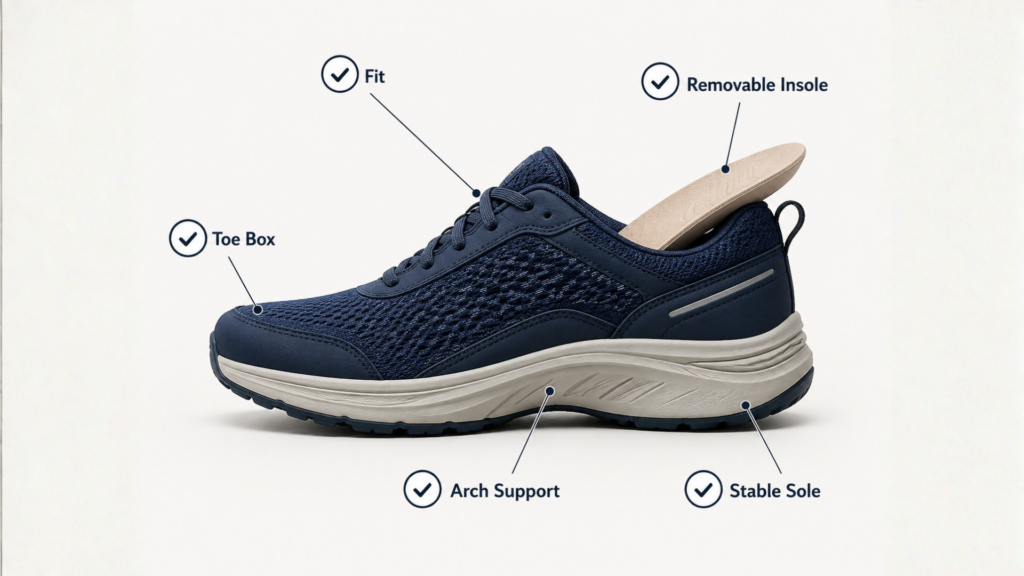
Check fit, heel, sole, cushioning, toe room, insole, and how you will use them, rather than choosing based on brand, price or reviews. Eight quick checks:
Fit. Room for your toes, secure at the midfoot and heel, no squeezing and no sliding.
Arch support. It should suit your foot type. Higher arches may need more cushioning and shock absorption; flatter feet may need more structure.
Heel counter. Press the back of the shoe. It should feel firm.
Sole stability. Gently twist the shoe. It should bend where your toes bend, not fold in the middle.
Cushioning. Enough to absorb impact, not so soft that it feels unstable.
Toe box. Toes should not feel cramped.
Insole. Removable, if you use or may need insoles. HealthHub notes insoles can be used to reduce pressure points if needed.
Daily use. A shoe for the office may differ from one for long walks, retail shifts or exercise.
These tests are practical checks from our clinic, not a published standard. Try shoes on in the afternoon with the socks you will wear, and wear new shoes for short periods at first until they feel comfortable, as HealthHub advises. After you have bought a pair, our guide to what to do in the first few weeks covers breaking them in and the warning signs to watch for.
Orthopaedic Shoes, Arch Support Shoes and Custom Orthotics: What Is the Difference?
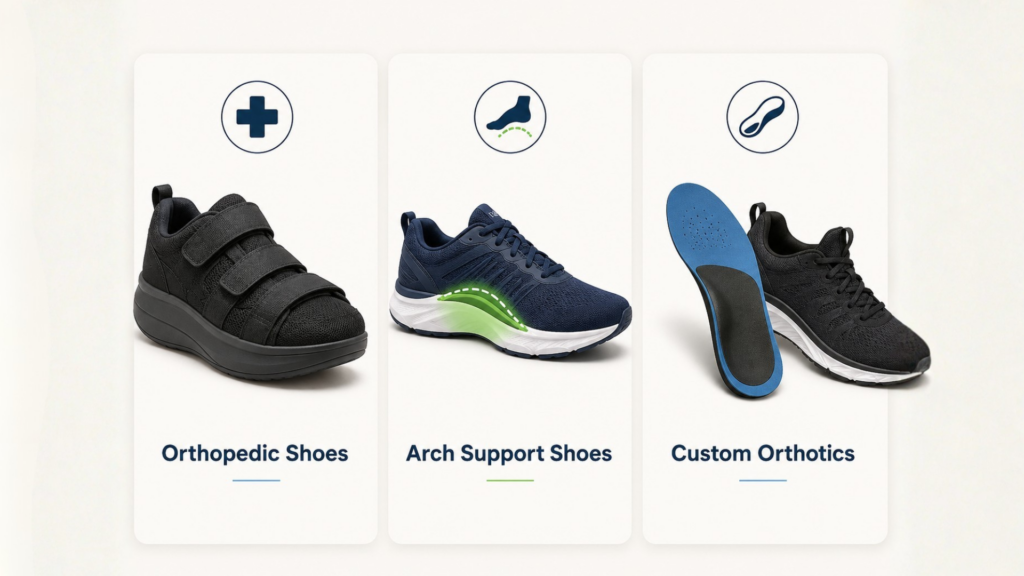
Orthopaedic and arch support shoes are supportive footwear. Custom orthotics are insoles made for your foot and transferable between shoes.
| Option | Function | Worth knowing |
|---|---|---|
| Soft everyday shoes | Provides comfort briefly | May lack structure or stability |
| Orthopaedic shoes | Supportive footwear with stability and pressure relief | Must match your foot posture and your daily needs |
| Arch support shoes | Support built in under the arch | Useful for tired or rolling-in feet |
| Custom orthotics | Insoles designed to support, align, prevent or correct deformities and improve foot function | Prescribed after a thorough assessment and 3D foot scans, and transferable between different footwear |
Some people only need better shoes. Others do better with insoles inside the right shoes. Our customised insoles page says custom insoles can be made to fit sports shoes, casual shoes, work shoes and even formal shoes, and our guide to custom compared with store-bought insoles goes into the differences. If you are keen on insoles, choose shoes with a removable insole and enough depth.
Where Can You Get Orthopaedic Shoes in Singapore?
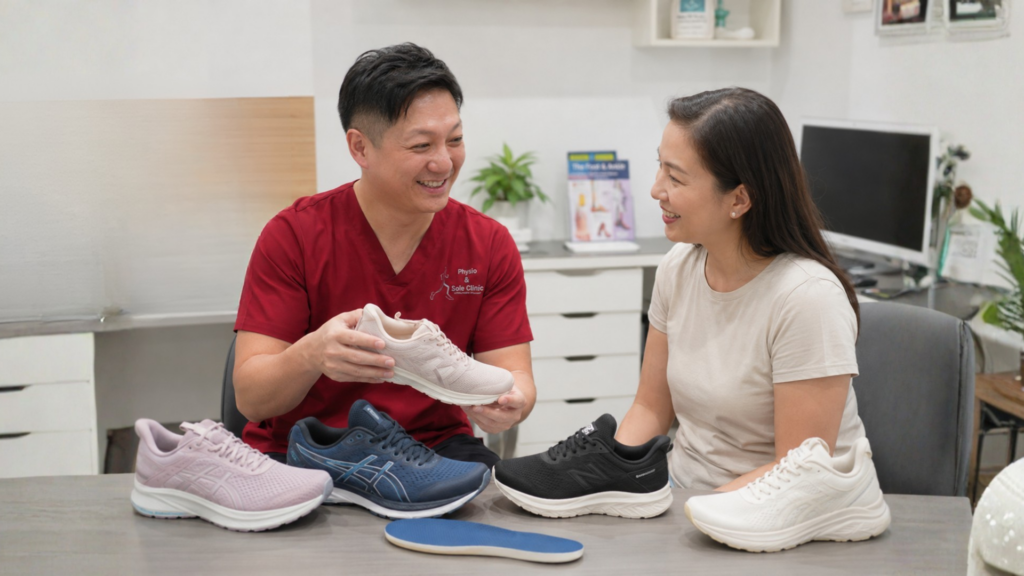
You can find supportive footwear at footwear retailers, specialty shoe stores and through recommendations from podiatry clinics. If you are buying shoes because of foot pain, avoid relying only on online reviews or brand lists: a shoe that works for someone else may not suit your foot type, pain or walking style. Note where your pain is, how long it has been there, whether your current shoes wear unevenly, and whether you need support, cushioning, width or stability.
When Should You See a Podiatrist?
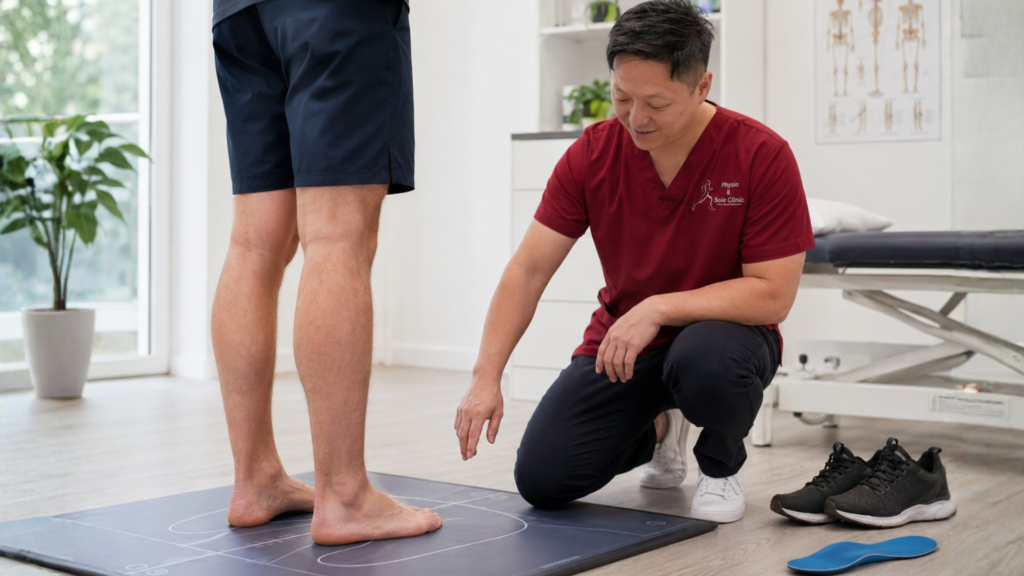
See a podiatrist if your foot pain keeps coming back, if changing shoes has not helped, or if the pain affects walking, work or exercise. Other reasons to be assessed include morning heel pain, flat feet with pain or fatigue, bunions, corns or calluses, and shoes that keep wearing unevenly.
A podiatry assessment looks at how your feet and legs work together, and includes gait analysis, footwear analysis and advice. It helps show whether your pain is mainly due to footwear, to how your foot moves, or to something else. A podiatry session lasts 30 to 45 minutes, and the podiatry assessment is $225 before GST; see our pricing page.
Frequently Asked Questions
What are orthopaedic shoes?
Supportive shoes designed to improve comfort, stability and pressure distribution while you walk or stand. They may have arch support, a firm heel counter, a stable sole and a wider toe box.
Are orthopaedic shoes good for foot pain?
They can help when the pain is linked to poor support, pressure or long hours of standing, but they are not a guaranteed fix, and persistent pain should be assessed.
What shoes do podiatrists recommend?
It depends on your foot type, activity level, occupation and the problem you have. There is no single best shoe for everyone.
Are orthopaedic shoes only for the elderly?
No. Office workers, people who stand all day, and people with flat feet or heel pain can all find supportive shoes useful.
Can orthopaedic shoes fix a bunion?
Shoes can help avoid making a bunion worse, but once one has started developing, it is more likely to worsen over time, even with changes in footwear.
Where can I get orthopaedic shoes in Singapore?
At footwear retailers, specialty shoe stores and through recommendations from podiatry clinics. If you have recurring pain, have your feet assessed first.
Choose the Support Your Feet Need
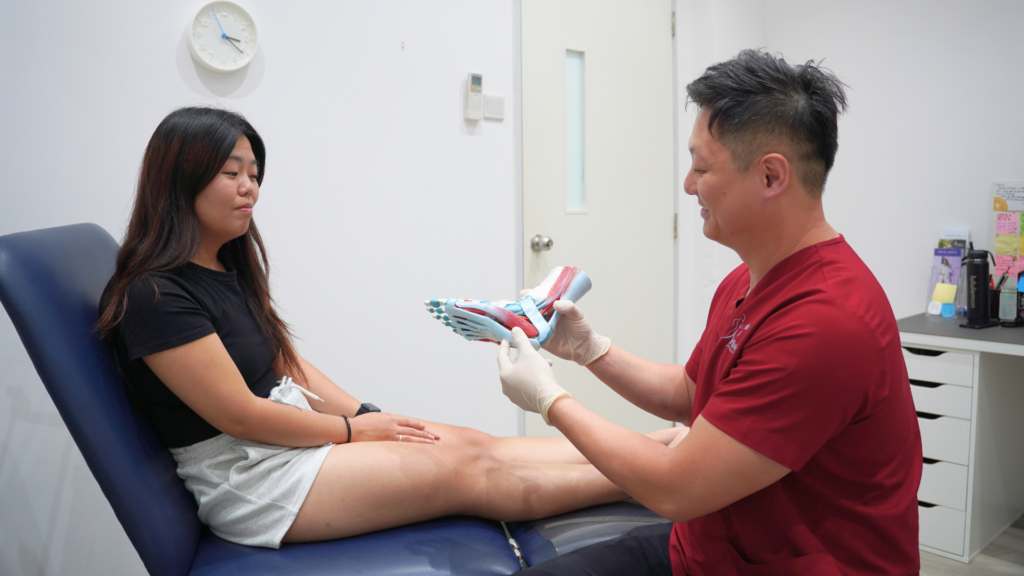
The best shoe is the one that suits your foot, your pain and your daily needs. If changing shoes has not stopped the pain, find out why before buying the next one.
Our podiatrists can look at your feet, your walking and your footwear together. Book an appointment at one of our 11 clinics across Singapore, or send us a question on Ask Emma on Telegram.
References
HealthHub. Plantar Fasciitis: Pain In The Heel Of Your Foot. Khoo Teck Puat Hospital, last reviewed 30 June 2021.
HealthHub. Blister. Pharmaceutical Society of Singapore, last reviewed 8 January 2026.
HealthHub. 7 Fall Prevention Tips for Seniors and Caregivers. Health Promotion Board, last reviewed 31 March 2023.
HealthHub. Foot care, Diabetes Hub. Ministry of Health.
HealthHub. Podiatry. Alexandra Hospital, last reviewed 30 January 2019.
Ready to feel better?
Book a consultation with our podiatry team to get an assessment tailored to you.