

Quick Summary
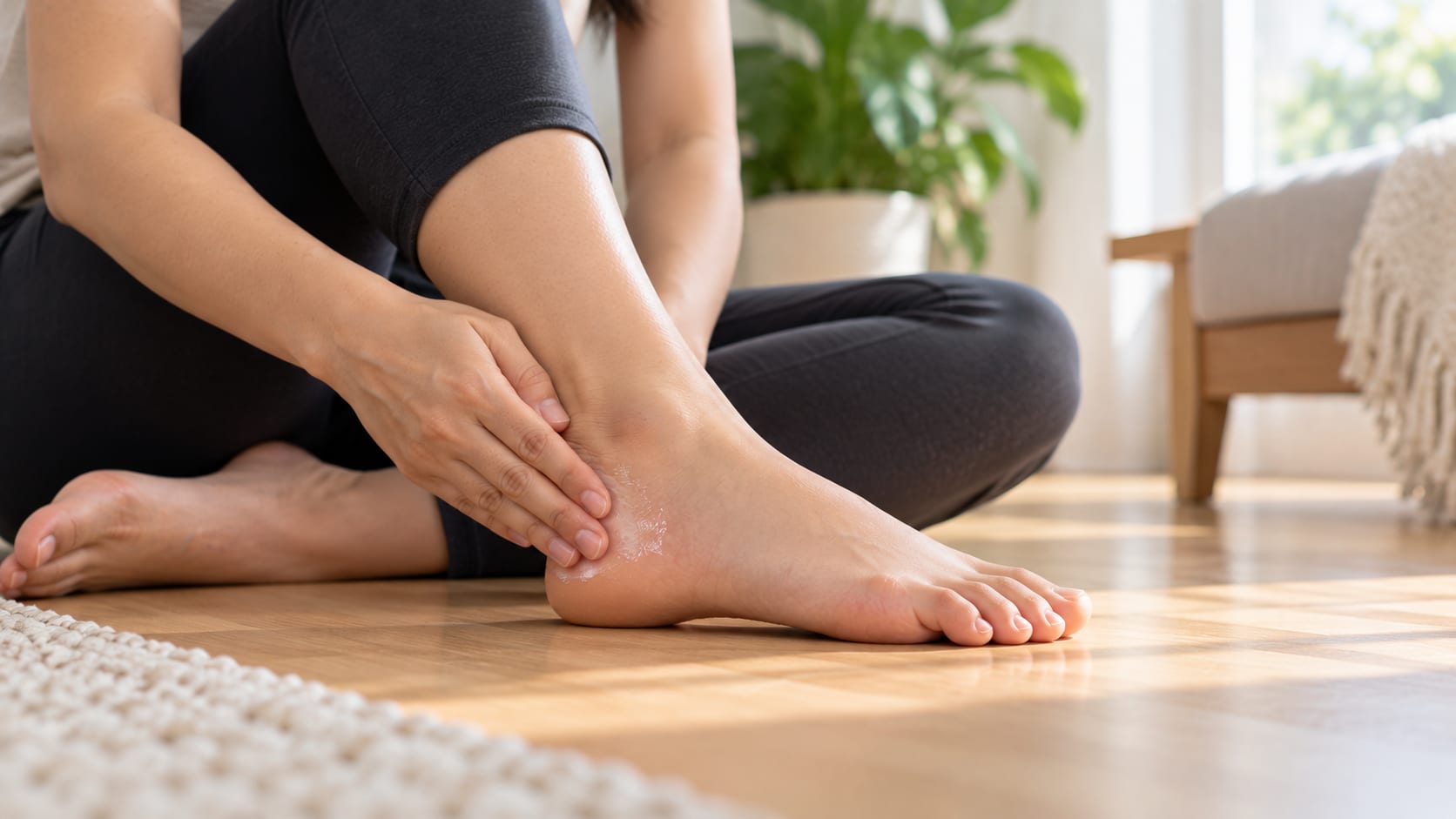
Voltaren gel can ease plantar fasciitis pain for a while, but it does not treat the cause. It contains diclofenac, an anti-inflammatory medicine you rub onto the skin, and Voltaren gels are sold in Singapore without a prescription.
If you use it, apply it for short-term relief alongside the things that actually help: taking load off the heel, stretching the calf, and supporting the foot. The label sets a clear limit. If the pain has not improved within 7 days, or if it is getting worse, it is time to seek professional help.
Kelvin graduated with First Class Honours from the University of Southampton in 2010 on a Ministry of Health scholarship, and spent six years as a podiatrist at Singapore General Hospital and Changi General Hospital. A former competitive runner, he works closely with physiotherapists and sports trainers to get patients back on their feet.
Is Voltaren Good for Plantar Fasciitis?
For short-term pain relief, it can help, but it is not a treatment for plantar fasciitis itself.
Voltaren gel is licensed to relieve pain and swelling in joints and muscles, and its label names "injuries involving the tendons, ligaments, muscles and joints" (NDF: Voltaren 12 Hours Emulgel 2%). Plantar fasciitis is not named on the label. HealthHub describes the plantar fascia as "a tough ligament" connecting the heel bone to the toes (HealthHub: Plantar Fasciitis).
So a gel can reasonably take the edge off a sore heel. What it cannot do is treat a condition that, in HealthHub's words, "usually takes months" to recover from. That depends on what you do with your feet, not what you put on them.
What Is Actually in Voltaren Gel?
Voltaren gel contains diclofenac, a non-steroidal anti-inflammatory drug (NSAID) made for rubbing into the skin.
Singapore's National Drug Formulary lists two Voltaren gels. Both are on the General Sale List, which means you can buy them without a prescription (NDF: Voltaren Emulgel 1%).
Diclofenac is not unique to Voltaren. HealthHub lists "Diclofenac, Flurbiprofen, Ketoprofen and Piroxicam" as topical NSAIDs available without a prescription (HealthHub: Topical NSAIDs). If you are standing in a pharmacy comparing "plantar fasciitis creams", most anti-inflammatory ones will contain one of these four.
Heel balms and moisturisers are a different product altogether. They soften dry or cracked skin, and do nothing for pain coming from the fascia underneath.
What Does the Voltaren Label Say It Is For?
The label lists pain and swelling in joints and muscles, including sprains, strains, bruises, backache, tendonitis and mild arthritis.
Both gels carry the same list of uses and the same limits. They are for adults and adolescents over 12, and the label is specific about how long to use them without advice: no more than "2 weeks for muscle and joint injuries (e.g. sprains, strains, bruises) or tendonitis" without consulting a doctor or pharmacist.
That two-week line matters for plantar fasciitis. Heel pain that needs daily gel for weeks without improvement requires a proper assessment.
Should You Choose the 1% or the 2% Gel?
The main practical difference is how often you apply it: the 2% gel twice a day, the 1% gel three to four times a day.
| Voltaren Emulgel 1% | Voltaren 12 Hours Emulgel 2% | |
|---|---|---|
| Active ingredient | Diclofenac | Diclofenac |
| How often | 3 to 4 times a day | 2 times a day (morning and evening) |
| Prescription needed? | No (General Sale List) | No (General Sale List) |
| Age | Adults and over-12s | Adults and over-12s |
| Limit without advice | 2 weeks for tendonitis-type pain | 2 weeks for tendonitis-type pain |
The 2% label says it "provides lasting pain relief up to 12 hours", which suits people who would rather not reapply at work. A pharmacist can help you decide which suits you, especially if you take other medicines.
How Do You Use Voltaren Gel Safely?
Follow the label, keep to a small amount, and stop if nothing has changed in 7 days.
- Use a small amount. The label suggests "an amount ranging in size from a cherry to a walnut", rubbed slowly into the painful area.
- Wash your hands afterwards, and let the gel dry before you shower.
- Only on intact skin. HealthHub advises against applying topical NSAIDs on "irritated or broken skin". Cracked heels count.
- Do not cover it. HealthHub says not to use "any airtight bandage or dressing over the area of application".
- One product at a time. Do not use a gel and a medicated plaster on the same area of skin.
- Mind the sun. HealthHub advises avoiding excessive sunlight on the treated area.
Check with a pharmacist or doctor first if:
- you are allergic to diclofenac or other NSAIDs such as ibuprofen or aspirin (the label says not to use it)
- you are in the last three months of pregnancy (the label says not to use it)
- you are pregnant, planning a pregnancy or breastfeeding, or have had skin reactions to sunlight (HealthHub advises consulting your healthcare professional)
The common side effect, per HealthHub, is "mild redness and irritation at the area on which the medication is applied".
Why Doesn't Voltaren Fix Plantar Fasciitis?
Because plantar fasciitis is often a load problem, and a gel changes how the heel feels, not how much load it takes.
HealthHub notes plantar fasciitis "usually develops from long hours of standing or walking, or in the case of active persons, from long-distance running". Its risk factors include flat or high-arched feet, tight calf muscles and footwear that does not suit your foot type. None of those changes when the pain quietens.
That is why heel pain so often comes back when the tube runs out. The gel was masking a signal, while the cause kept going.
What Actually Helps Plantar Fasciitis Recover?
The things that reduce load on the fascia: supportive footwear, daily stretching, ice after activity, and, where needed, a proper assessment.
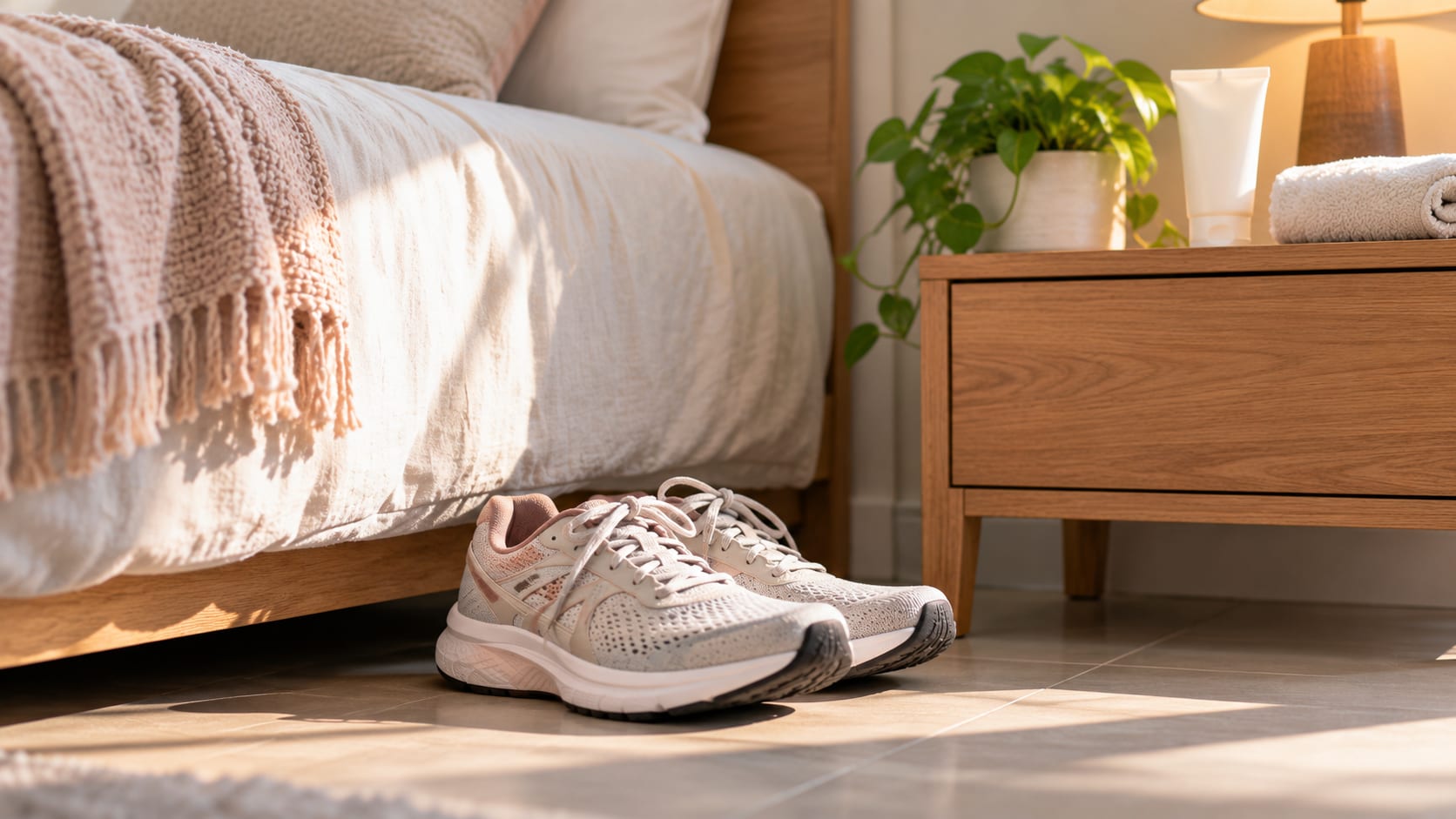
- Support your feet from the first step. Keep supportive footwear by the bed and wear it at home. Barefoot on tiles, or in flat slippers, keeps loading the sore spot.
- Stretch your calves every day, especially before getting out of bed.
- Ice after activity. HealthHub recommends "applying an ice pack over the heel, especially if heel pains worsen after running or prolonged walking."
- Swap to low impact activities for a while: swimming or cycling instead of running.
- Get the cause assessed if it keeps returning. A biomechanical gait analysis shows how your foot takes load, and customised insoles can spread pressure away from the heel.
Our guide to what one week of care can realistically do walks through the home routine day by day, and Managing Morning Stiffness explains why those first steps hurt most.
When Should You Stop and See a Podiatrist?
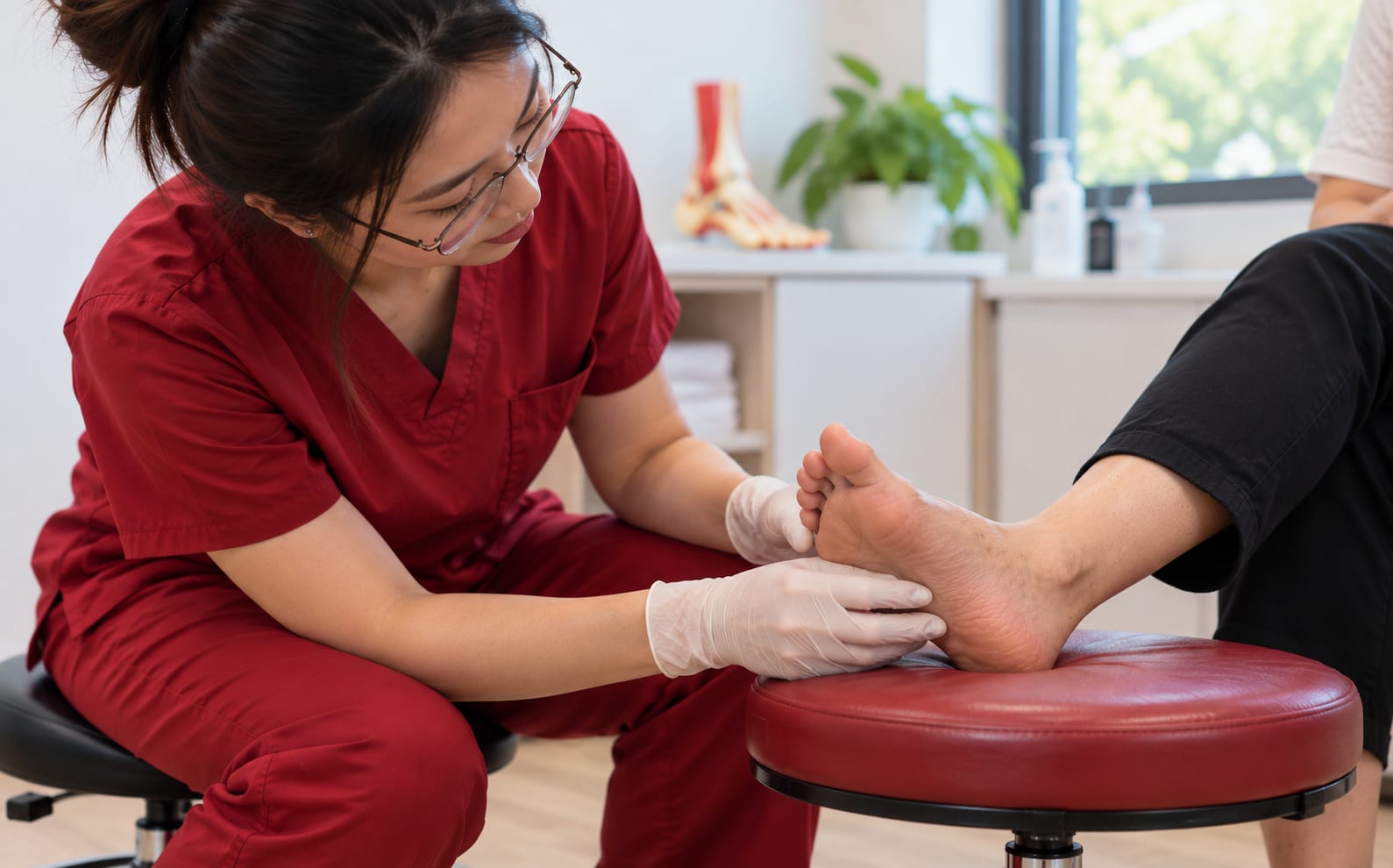
If the pain has not improved within 7 days of using the gel, or if it is getting worse, stop relying on topical gels and have your heel assessed.
That threshold is on the Voltaren label and in HealthHub's guidance for topical NSAIDs, which says the condition "may be too serious for self-treatment". Book sooner if:
- the pain is changing the way you walk
- it hurts even at rest, or wakes you at night
- you notice swelling, numbness or tingling in the foot
- the pain keeps coming back once you stop the gel
If your heel pain has already lasted months, our Chronic Plantar Fasciitis Recovery Roadmap covers what longer-term recovery involves. Our heel pain page explains how our podiatrists assess and treat it.
Relief Now, Recovery Later
- Voltaren can take the edge off. It is a diclofenac gel you can buy without a prescription.
- It is not the treatment. Plantar fasciitis recovers when the load on the heel comes down, and that usually takes months.
- Seven days is the check-in point. No improvement by then means an assessment, not another tube.
Booking Your Podiatry Assessment in Singapore?
Physio & Sole Clinic provides podiatry across 11 clinics in Singapore, with no GP referral needed.
Not sure whether a gel is enough for your heel pain? Message our team on Telegram and we will help you work out the next step.
Ready to feel better?
Book a consultation with our podiatry team to get an assessment tailored to you.
Frequently Asked Questions
It can ease the pain for a while, since it is an anti-inflammatory gel licensed for joint, muscle, tendon, and ligament pain. It does not treat the cause behind plantar fasciitis, so use it alongside footwear changes and stretching, not instead of them.
No. Both Voltaren Emulgel 1% and Voltaren 12 Hours Emulgel 2% are on the General Sale List. Voltaren tablets are different: they are prescription-only medicines.
The label says not to use it for more than two weeks for tendonitis-type pain without consulting a doctor or pharmacist, and to see a doctor if the pain has not improved within 7 days.
There is no single best one. HealthHub lists diclofenac, flurbiprofen, ketoprofen and piroxicam as topical anti-inflammatories available without a prescription. A pharmacist can advise which cream or gel suits you.
No. The gel eases the sensation; footwear, stretching and, where needed, insoles address the load causing it. Relying on the gel alone leaves the cause untreated.