

Quick Summary
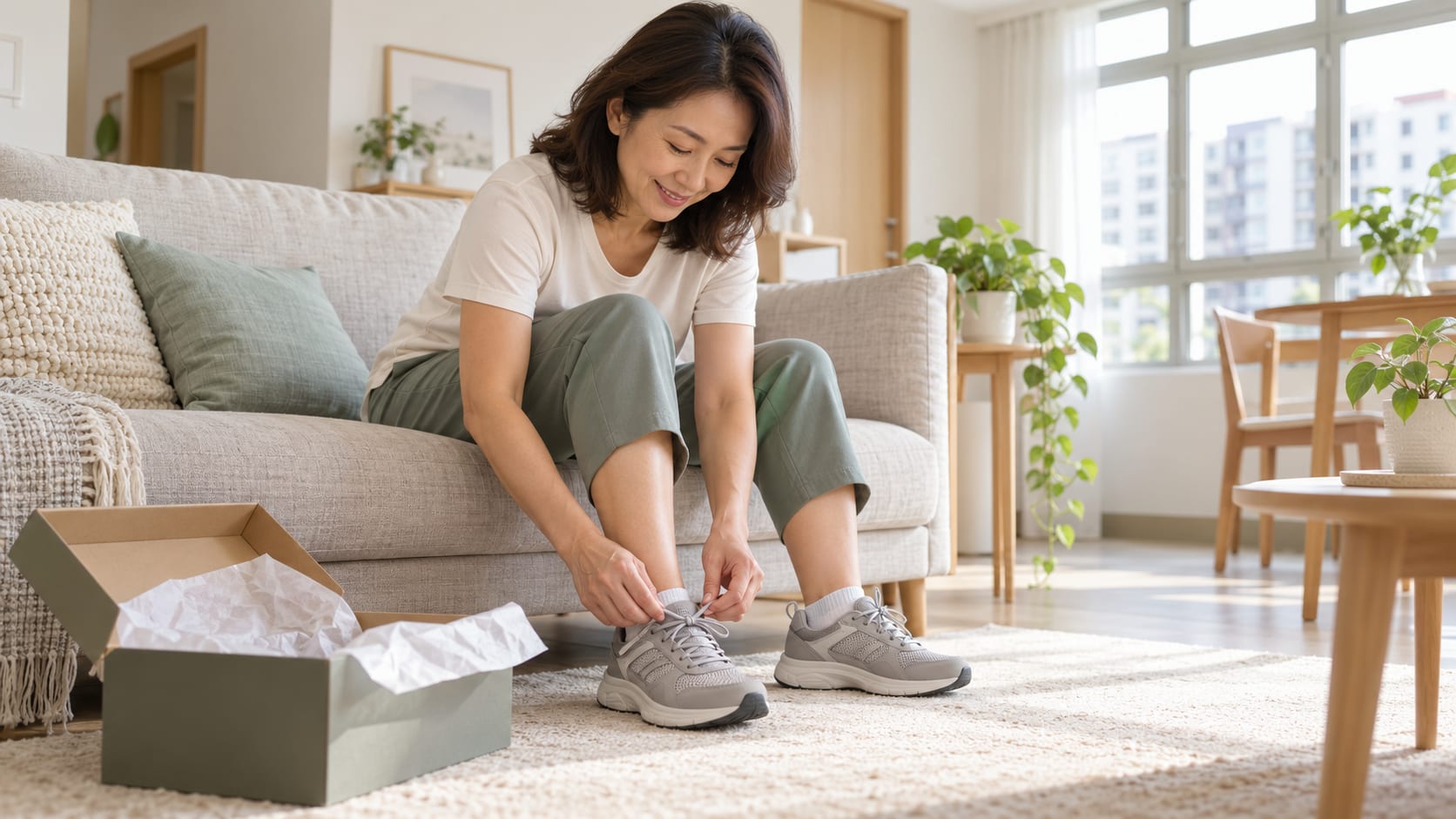
After buying orthopaedic shoes, wear them indoors first, build up the time gradually, and check your feet after each wear: they may feel firmer than you are used to, but they should not rub or hurt.
Starting at home means you can take them off the moment anything rubs, and checking your feet after each wear helps you spot blisters or red marks early. If the shoes keep rubbing, or the pain you bought them for has not eased after one to two weeks, the fit or the support is probably not right for your foot. It is worth having it checked rather than buying another pair.
Kelvin graduated with First Class Honours from the University of Southampton in 2010 on a Ministry of Health scholarship, and spent six years as a podiatrist at Singapore General Hospital and Changi General Hospital. A former competitive runner, he works closely with physiotherapists and sports trainers to get patients back on their feet.
Should New Orthopaedic Shoes Feel Different at First?
Yes, a little. A supportive shoe is built differently from a soft one, and your feet will notice.
As our guide to choosing orthopaedic shoes explains, a supportive shoe usually has a firm heel counter, a stable sole, and arch support. If you have been wearing soft, flexible shoes, or walking barefoot at home, that structure can feel unfamiliar for the first few wears: firmer under the arch, more control at the heel.
Feeling unfamiliar is not the same as hurting. A pair that fits well and suits your foot should feel supportive from the start, even if it is not yet as comfortable as your old shoes.
How Do You Break In New Orthopaedic Shoes?
Start indoors, wear them for short periods, and build up only when they feel comfortable.
A simple routine for the first few weeks:
- Wear them indoors first. At home, you can take them off the moment anything rubs.
- Keep the first wears short. Build up the time only once they feel comfortable.
- Check your feet after each wear. Look for redness, blisters, or broken skin, especially at the heel, the sides of the big and little toes, and the top of the foot.
- Check inside the shoe before you put it on. A small stone or a folded insole edge can rub quickly.
- Wear socks. They reduce friction. If you have sensitive skin, try seamless socks, or turn your socks inside out so the seams don't rub.
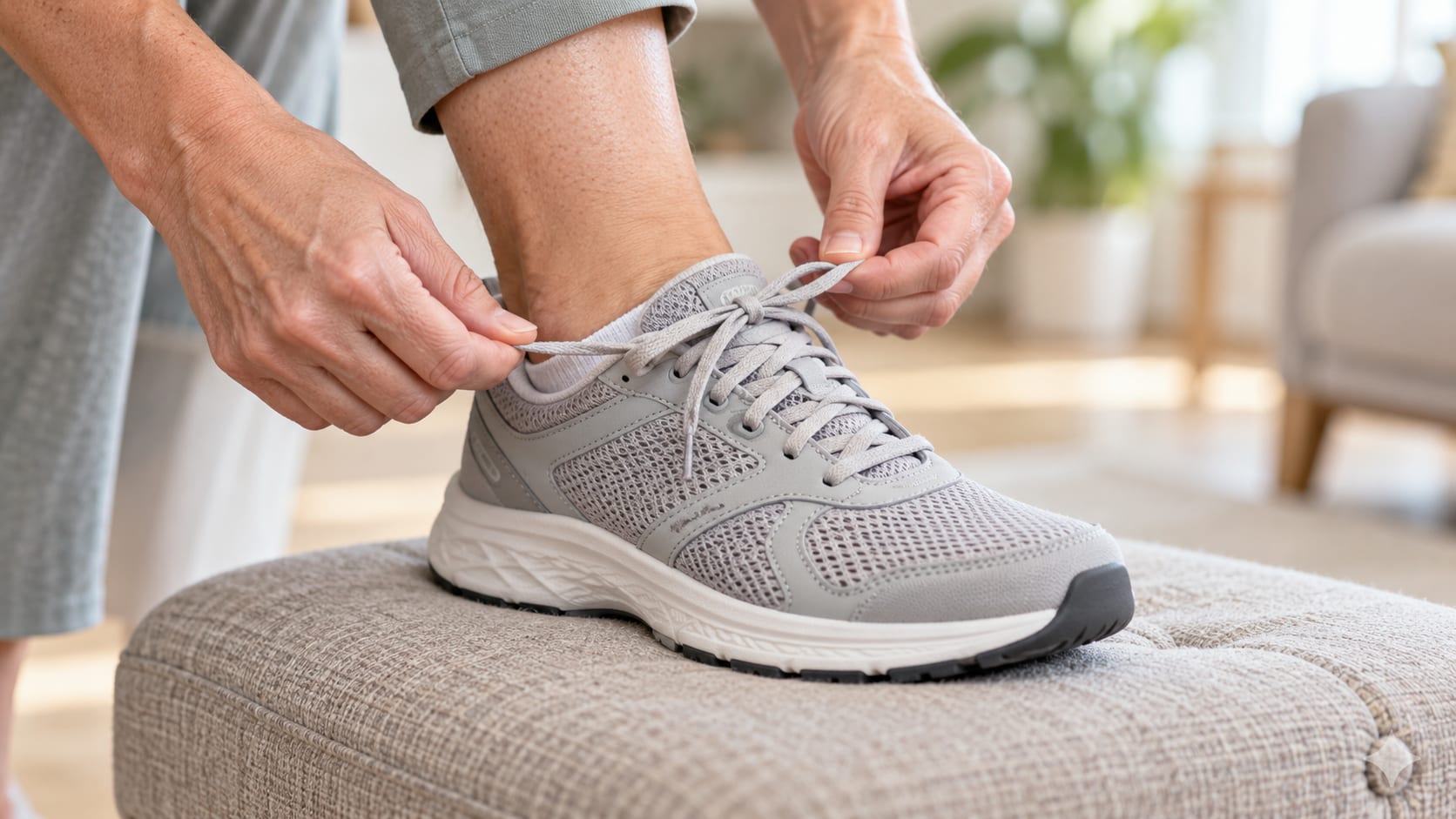
- Do up the laces or straps properly. A loose fastening lets the foot slide and rub, which is how calluses start, so don't slip the shoes on and off with the laces still tied.
Only take them on a long day once shorter wears feel comfortable. Don't make a full workday, a long walk, or a holiday their first proper outing.
What Is Normal, and What Is a Warning Sign?
Noticing the support is normal. Anything that marks, rubs, or hurts is not.
| Usually fine with breaking in | Stop wearing. Get it checked |
|---|---|
| The arch support feels noticeable | Blisters, raw patches, or broken skin |
| The heel feels more controlled than in your old shoes | Red pressure spots still there after the shoes come off |
| The shoe feels firmer underfoot | Toes feel squeezed, or the heel slips as you walk |
| Your feet feel tired after the first longer wear | Numbness, tingling, or burning |
| New pain somewhere that did not hurt before | |
| The pain you bought them for is getting worse |
Fit problems tend to show up early. Shoes that are too tight squeeze the toes together and cause friction, while shoes that are too loose let the foot slide and rub against the shoe. Repeated rubbing is how corns and calluses start, so it is not something to push through.
If a blister does form, our blisters page explains how to look after it. If it has not improved within five days, or is getting worse, have it checked by a doctor or podiatrist.
What If You Wear Custom Insoles?
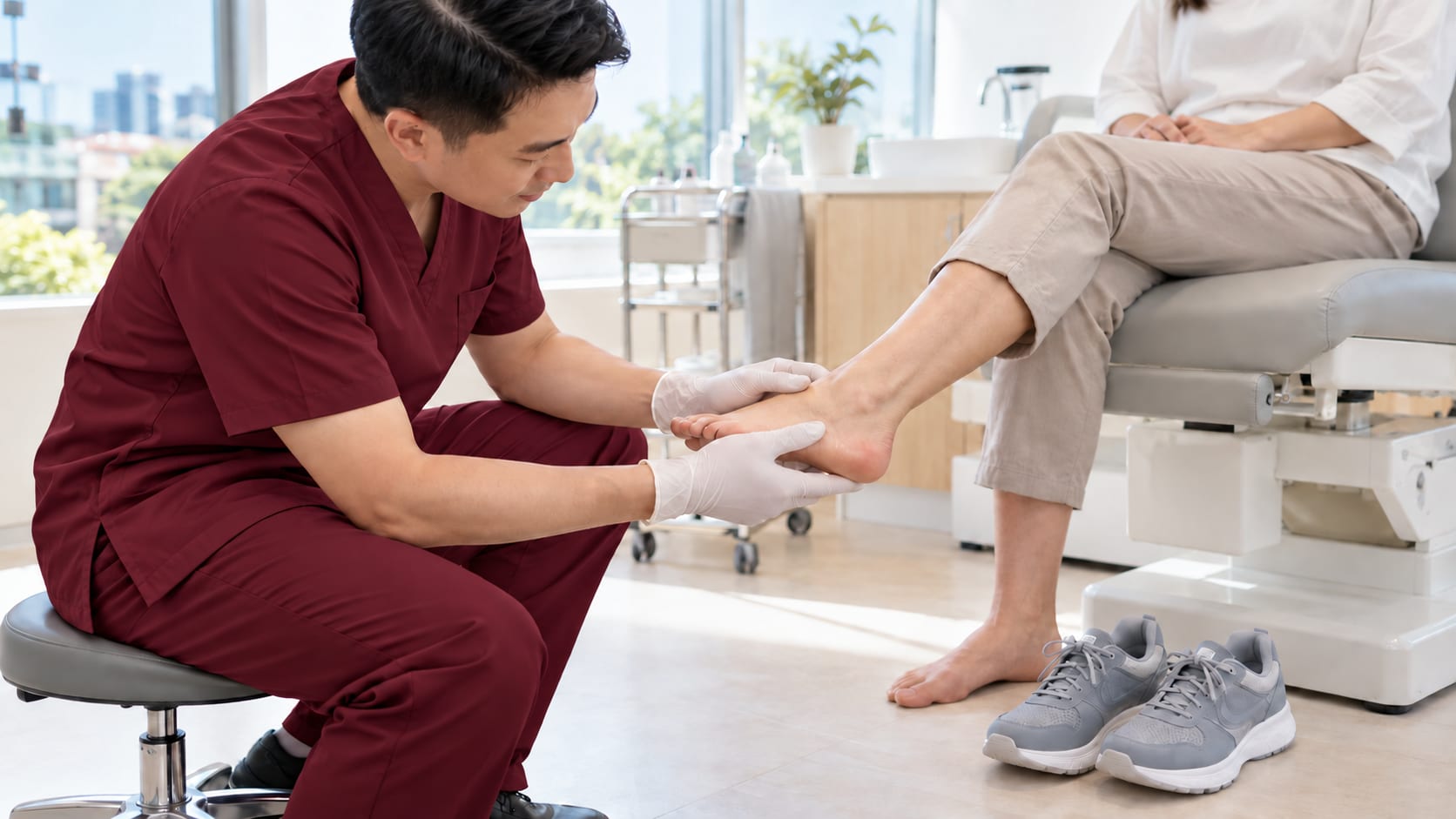
Try the new shoes with your insoles in, because a shoe that fits on its own can feel tight once an insole goes in.
Our orthopaedic shoes guide points out that "some shoes feel comfortable initially but do not have enough space to accommodate orthotics properly", which is why a removable insole matters. Custom insoles are designed to move between pairs. Our customised insoles page notes they are "transferable between different footwear".
When you first wear the new pair, check that:
- the insole lies flat, without curling at the edges or bunching at the toes
- your heel still sits down in the heel cup, rather than lifting out as you walk
- your toes are not pressed against the top or the front of the shoe
If the combination feels tight or the insole shifts around, bring both the shoes and the insoles to your podiatrist for an assessment.
What If Your Feet Still Hurt in the New Shoes?
Then the shoes are probably not the whole answer, and guessing with another pair rarely helps.
Our orthopaedic shoes guide is clear that "pain that lasts more than one to two weeks should not be ignored, especially if it affects your walking, work, or exercise." Good shoes can reduce strain, but they cannot tell you why your foot is being overloaded.
Common reasons new supportive shoes do not settle things:
- The shoe does not suit your foot type. Our guide explains that flat feet and high arches need different things from a shoe, so a pair that works for one may not work for the other.
- The problem needs more than footwear. Conditions such as heel pain often need exercises and load management as well.
- You need targeted support. Some people need custom insoles inside good shoes. As the guide puts it, "custom orthotics still need to be paired with suitable footwear."
This is what a biomechanical gait analysis is for. It looks at how your foot moves and takes load, and guides podiatrists in recommending suitable footwear, orthotics or exercises. Bring the new shoes and your old ones: our FAQs advise you to "bring your walking or exercise shoes to the appointment", and the wear on your old pair helps show how you walk.
Who Needs to Take More Care With New Shoes?
People with diabetes, and older adults who are unsteady on their feet, because a small problem can become a bigger one.
- If you have diabetes, check your feet and toes every day for cuts, sores, corns or blisters. Choose shoes that fit well and are comfortable, and always wear socks or stockings with them. A blister from new shoes can go unnoticed if your feet have less sensation, so check after every wear. Do not treat corns or calluses yourself; see a podiatrist or doctor instead. Our diabetes foot care page covers this in more detail.
- If you are older or unsteady, comfortable shoes alone won't prevent a fall, so choose well-fitting shoes with non-slip soles. Get used to new soles at home, on flat ground, before you take them on stairs, wet floors or busy MRT platforms.
How Do You Look After Them, and When Do You Replace Them?
Keep them clean and dry, check them every six months, and replace them once the support has worn out, even if they still look fine.
- Keep them dry. If a pair gets wet, switch to another pair and let the wet one dry out before you wear it again. This matters in rainy weather.
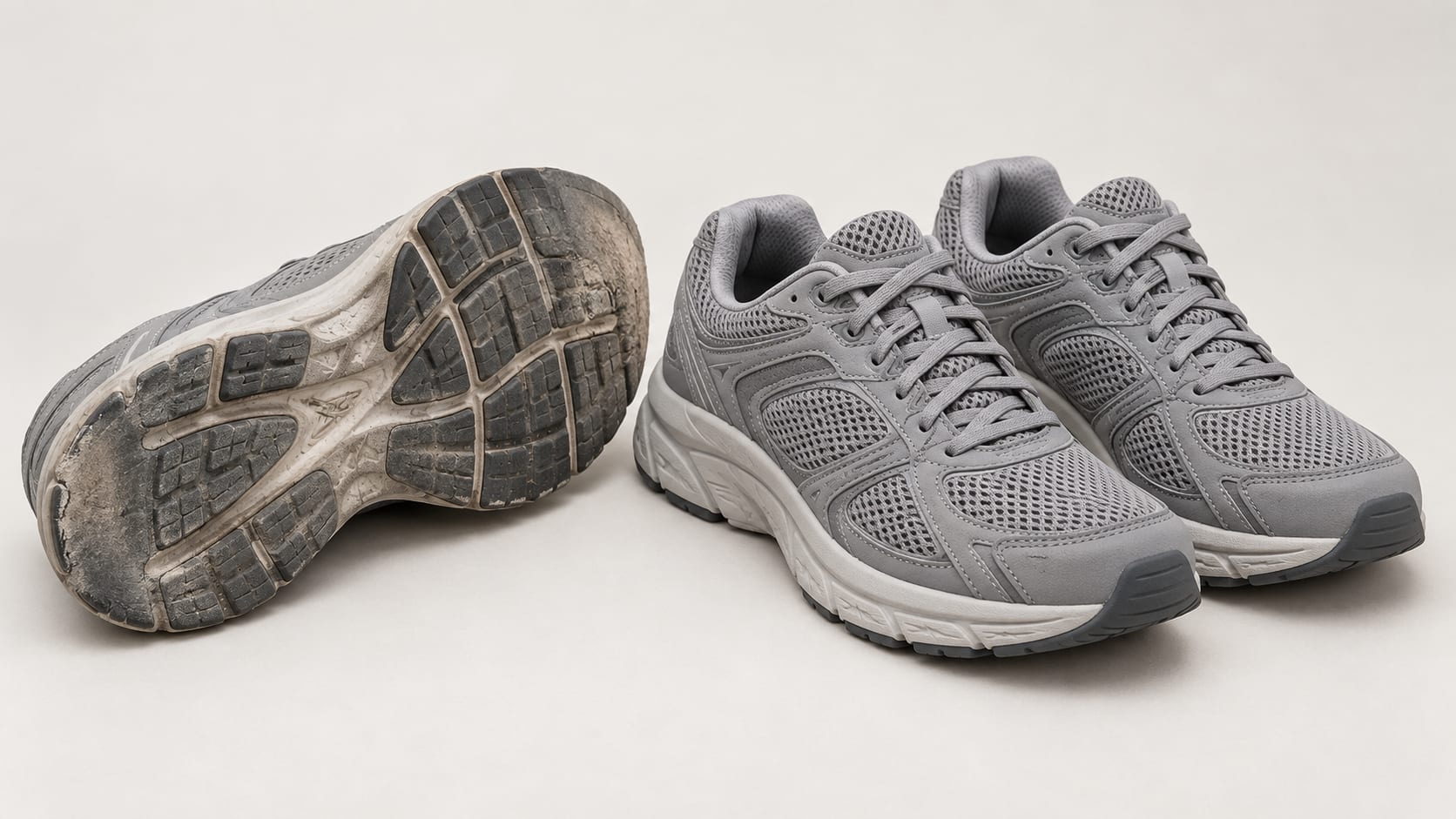
- Check them regularly. Look over the shoes you wear most every six months, and replace them when the soles are worn out, or they no longer give enough support or cushioning.
Signs it may be time: the sole has worn down unevenly, the heel counter has softened and no longer holds your heel, or the pain you bought them for is creeping back. When you replace them, break in the new pair the same way.
Supportive, Not Sore
- Indoors first, short wears, then build up. It is the simplest way to catch a problem before it becomes a blister.
- Different is fine; painful is not. Rubbing, pressure spots, and new pain are signs to stop, not to push through.
- Pain that lingers needs an answer, not another pair. An assessment shows what your foot actually needs.
Booking Your Podiatry Assessment in Singapore?
Physio & Sole Clinic provides podiatry at 11 clinics across Singapore, and a referral from a doctor is not always necessary.
New shoes still not feeling right? Message our team on Telegram, and we will help you work out the next step.
Ask Emma on Telegram · Biomechanical Gait Analysis · Find Your Nearest Clinic
Ready to feel better?
Book a consultation with our podiatry team to get an assessment tailored to you.
Frequently Asked Questions
There is no fixed number of days. Wear them indoors first, keep the early wears short, and build up once they feel comfortable. A well-fitted pair should feel supportive from the first wear, even if it feels unfamiliar.
Noticing the arch support, or a firmer feel underfoot, is normal. Blisters, pressure spots, numbness, or new pain are not, and usually mean the fit or the support is not right for your foot.
Usually, yes. Custom insoles are designed to move between shoes, and a removable insole in the new pair makes it easier. Try the shoes with the insoles in, and if the fit becomes tight or the insole shifts, have it checked.
If the pain lasts more than one to two weeks, have it assessed rather than buying another pair. A podiatrist can check whether you need different footwear, exercises or custom insoles.
Check the shoes you wear most every six months, and replace them when the soles are worn out or they no longer give enough support or cushioning.