
Quick Summary
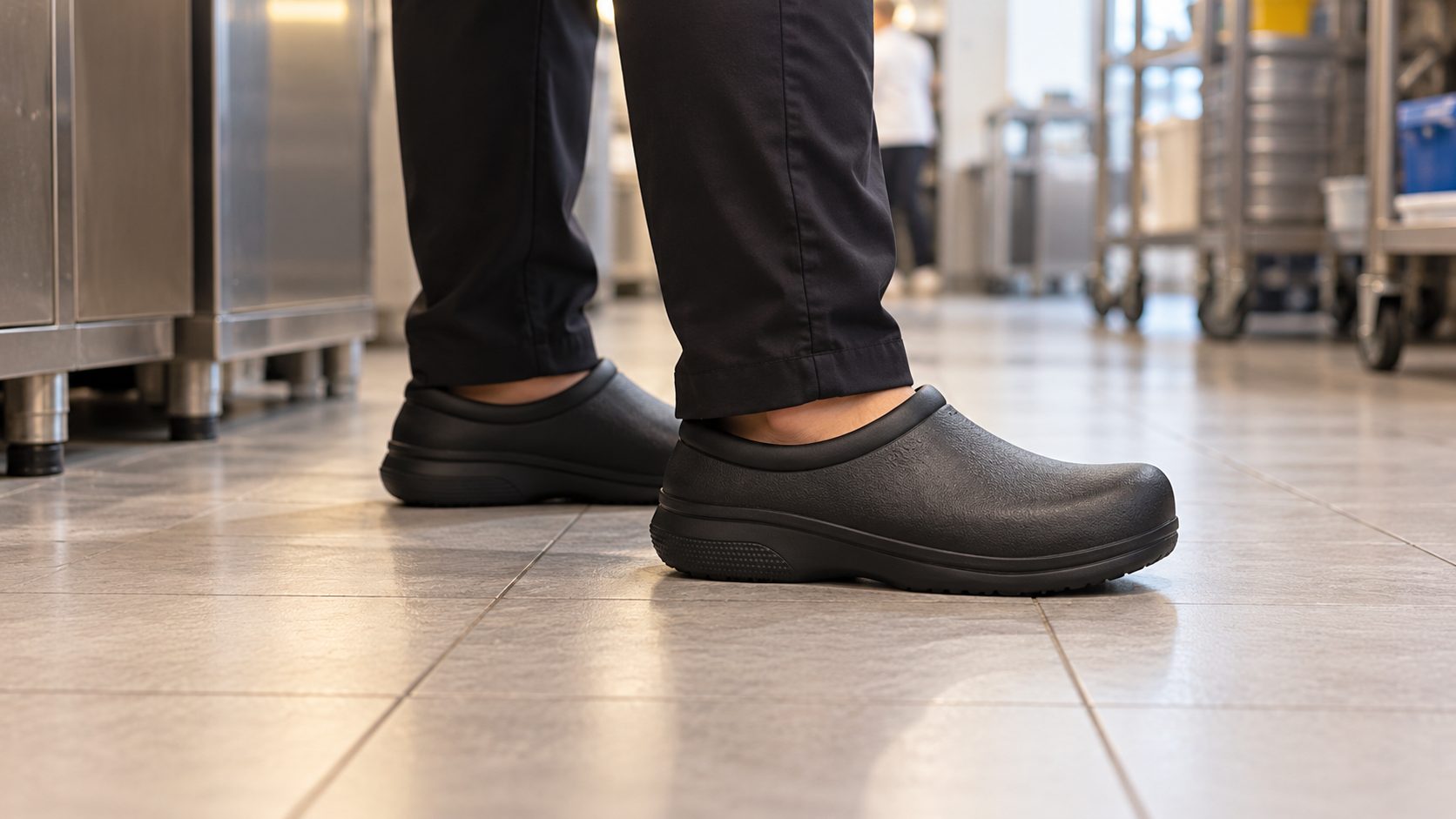
Whether Crocs work for you on shift depends less on the brand and more on three things: how securely the shoe holds your foot, how much support it gives, and whether it meets your workplace's footwear rules.
Standing for long periods can lead to feet swelling and tiring muscles, and Singapore's Workplace Safety and Health guidance on slips, trips and falls recommends covered shoes with proper soles. This post is a checklist for choosing a work shoe. For the wider question of whether Crocs suit your feet, read the podiatrist's guide to Crocs and foot health.
Kelvin graduated with First Class Honours from the University of Southampton in 2010 on a Ministry of Health scholarship, and spent six years as a podiatrist at Singapore General Hospital and Changi General Hospital. A former competitive runner, he works closely with physiotherapists and sports trainers to get patients back on their feet.
Are Crocs Okay to Wear for Work?
They can be, for some people and some jobs, but a shoe that feels comfortable for ten minutes is not the same as one that suits a full shift.
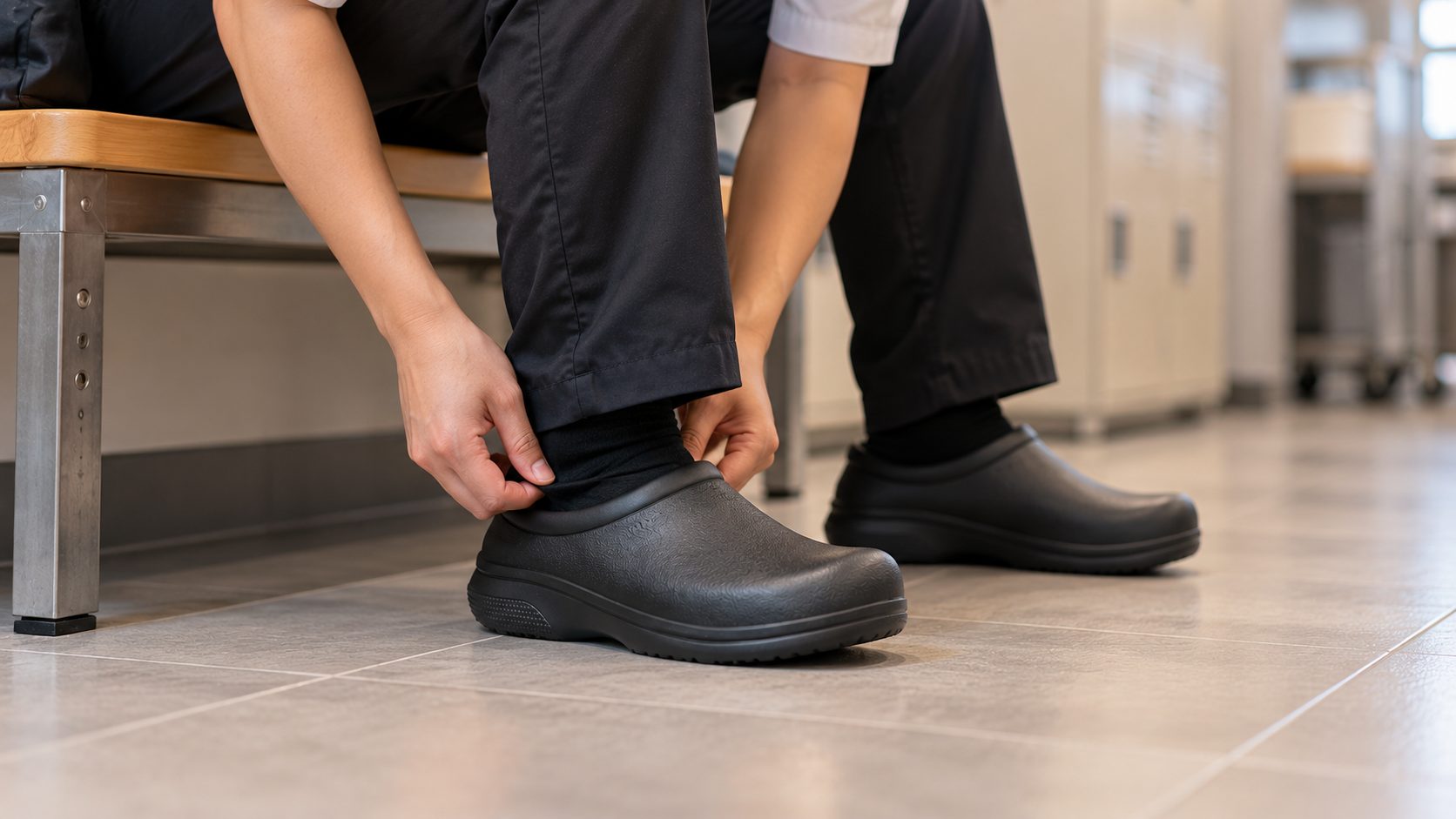
Comfort when you try a shoe on in a shop tells you about softness. It does not tell you how your feet will feel after six hours of standing and walking, or whether the shoe is allowed where you work.
So rather than ask "are Crocs good or bad", ask what your job asks of your feet, then check the shoe against that. The sections below show how.
What Happens to Your Feet Over a Long Shift?
Standing in one place for long stretches can cause swollen feet and tired muscles over time. Regular sitting breaks, anti-fatigue mats and sit-stand stools help, where an employer provides them.
Shoes are one part of the picture, not the whole of it. Breaks, floor surfaces, and how long you stay in one spot all play a role, so if you can change those, that will help too.
What Should a Work Shoe Have?
A work shoe should hold your foot securely, support your foot's posture, and have a sole suited to your floor. Use these questions on any shoe, Crocs included.
| Check | What to look for | Why it matters |
|---|---|---|
| Fit and hold | Your heel stays put when you walk, and your toes are not curling to keep the shoe on | Toes gripping the shoe means your foot muscles are working to hold it on, on top of the walking itself |
| Support | A sole that is not thin or flat, with some support | Thin soles and footwear that is not supportive enough are linked to plantar fasciitis |
| Sole and grip | A proper sole with grip suited to wet or oily floors | The WSH Council recommends covered shoes with proper soles, such as non-slip work shoes |
| Coverage | Covered shoes where your workplace requires them | Open, vented or backless styles may not meet your workplace safety rules or dress code |
| Condition | Soles that are not worn, uppers that are not stretched | Worn-out shoes are listed as a slip hazard |
Does Your Workplace Set Rules for Footwear?
Check with your employer before you choose, because some workplaces require covered, non-slip shoes and some require more.

The WSH Council's slips, trips and falls guidance lists inadequate footwear as a hazard. Kitchens, wet areas, wards and sites can each have their own requirements.
If you are not sure whether a particular shoe is allowed, ask your supervisor or safety officer.
A Quick Check Before Your Next Shift
Three simple checks will tell you more than the price tag.
- The heel test. Walk a few steps. Does your heel lift out of the shoe or slide?
- The toe test. Notice whether your toes curl or grip as you stand. If they do, the shoe may not be holding your foot securely.
- The end-of-shift test. Note where your feet ache, and when. Heel, arch or ball-of-foot pain at the end of a shift is worth writing down.
These are prompts to notice, not a diagnosis. The guide to orthopaedic shoes covers what to look for when you shop.
When Should You See a Podiatrist?
See a podiatrist if foot pain keeps coming back after your shifts, or does not improve after you change your shoes.

If pain has not cleared up after a week of wearing better footwear, see a doctor. Pain that is severe, follows an injury, or comes with swelling, redness or numbness should be looked at sooner.
A podiatrist can look at how your foot loads when you stand and walk, and at your footwear. Physio & Sole Clinic offers biomechanical gait analysis and custom insoles. Whether either is right for you is decided after a thorough assessment.
Choosing Shoes for Your Shift
- Fit beats brand. A shoe that holds your heel and lets your toes relax is doing the job, whatever the label says.
- Your floor decides the sole. Wet or oily floors need grip, and worn soles are a hazard in their own right.
- Your workplace has the final say. Covered and non-slip is the common requirement, so check before you buy.
- Listen to the end of the shift. If your feet tell you the same thing every day, that is worth acting on early.
Booking Your Podiatry Assessment in Singapore?
Physio & Sole Clinic provides podiatry at 11 clinics across Singapore, and a referral from a doctor is not always necessary.
Feet sore after every shift? Message our team on Telegram, and we will help you work out the next step.
Ask Emma on Telegram · Biomechanical Gait Analysis · Find Your Nearest Clinic
Ready to feel better?
Book a consultation with our podiatry team to get an assessment tailored to you.
Frequently Asked Questions
It depends on your job, your feet, and your workplace's rules. Check that the shoe holds your heel, gives enough support, and is allowed where you work, then see how your feet feel at the end of the shift.
That is up to each employer. WSH guidance recommends covered shoes with proper soles where slips are a risk, so ask your supervisor.
Try better-fitting, more supportive shoes and take regular breaks if you can. If the pain has not eased after a week, see a doctor or podiatrist.
Not everyone does. A podiatrist can assess whether insoles would suit your feet and your job.
MOM cites standing for more than four hours a day in a fixed location as a point where swollen feet or weakened muscles may develop. Individual tolerance varies.