

Quick Summary
No, you cannot cure plantar fasciitis in one week. Full recovery usually takes months. But one week of the right care can noticeably reduce your heel pain and stop it from turning into a long-term problem.
You should do these three things in the first week: take load off the heel, stretch the calf every day, and support your foot from your very first step in the morning. If the pain has not started easing after a week or two of doing this properly, it is time to have it assessed.
Can You Cure Plantar Fasciitis in One Week?
Not fully. HealthHub is direct about it: "Recovery from plantar fasciitis usually takes months" (HealthHub: Plantar Fasciitis).
What one week can realistically change is the pain. Irritated tissue settles when you stop overloading it, so a week of consistent care often takes the sharpest edge off, especially those painful first steps out of bed. That early relief matters, because the longer heel pain is left alone, the harder it is to treat. HealthHub's advice is to seek treatment early for the same reason.
So treat this week as the start of recovery, not the whole of it.
Why Does Plantar Fasciitis Happen?
The plantar fascia, a thick band of tissue running from your heel to your toes, becomes irritated when the load on it outpaces what it can handle.
HealthHub notes that it "usually develops from long hours of standing or walking, or in the case of active persons, from long-distance running." It also lists the risk factors, and most people will recognise at least one:
- Flat or high-arched feet
- Tight calf muscles
- Standing or walking for long hours at work
- A sudden increase in running mileage or intensity
- Footwear that does not suit your foot type
- Being overweight
Singapore adds its own pressure: hard floors at home and at work, long walks through MRT interchanges, and flat slippers worn almost everywhere.
The classic sign is sharp heel pain with your first steps in the morning, or after sitting for a while. If that sounds familiar, our guide to morning stiffness and first-step pain explains why it happens.

What Can You Safely Try at Home This Week?
Do these every day this week, not just on the days it hurts most.
- Stretch before your first step. Before getting out of bed, gently point and flex your feet, then stretch your calves. It warms up the fascia so that the first step is less of a shock.
- Support your feet from the moment you stand up. Keep supportive footwear by the bed and wear it at home too. Walking barefoot on tiled floors, or in flat slippers, keeps loading the painful spot. HealthHub lists changing your footwear as advised as part of recovery.
- Ice after activity. HealthHub recommends "applying an ice pack over the heel, especially if heel pains worsen after running or prolonged walking." Ten to fifteen minutes is enough; wrap the ice so it never sits directly on skin.
- Swap impact for low-impact. You do not need to stop moving. Trade running or jumping for swimming or cycling while the heel settles.
- Massage the plantar fascia gently. Rolling your arch over a ball or a chilled bottle can ease tension. Keep it comfortable, not painful.

What not to do: Do not push through sharp pain, do not go barefoot on hard floors, and do not rely on painkillers alone. Pain-relief gels can take the edge off for a while, but they do not fix the cause. Check with a pharmacist before starting one.
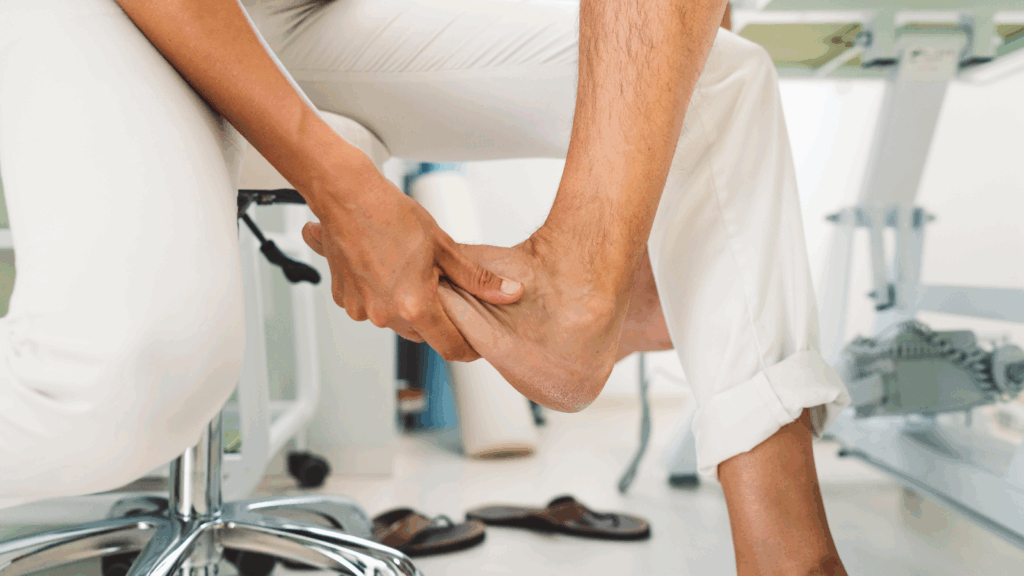
When Is It Time to See a Podiatrist?
If the pain has not started easing after one to two weeks of consistent home care, get it assessed rather than waiting it out.
Book sooner if:
- The pain is changing the way you walk
- It hurts even at rest, or wakes you at night
- You notice swelling, numbness or tingling in the foot
- The heel pain keeps coming back
The last three are not typical of plantar fasciitis and are worth having it checked properly. If your heel pain has already lasted three months or more, our chronic plantar fasciitis recovery roadmap covers what longer-term recovery involves.
What Does Treatment Look Like at Our Clinics?
Treatment starts by finding out why your plantar fascia is overloaded, then treats the pain and the cause together.
Depending on what the assessment finds, that can include:
- A biomechanical gait analysis to see how your foot moves and takes load
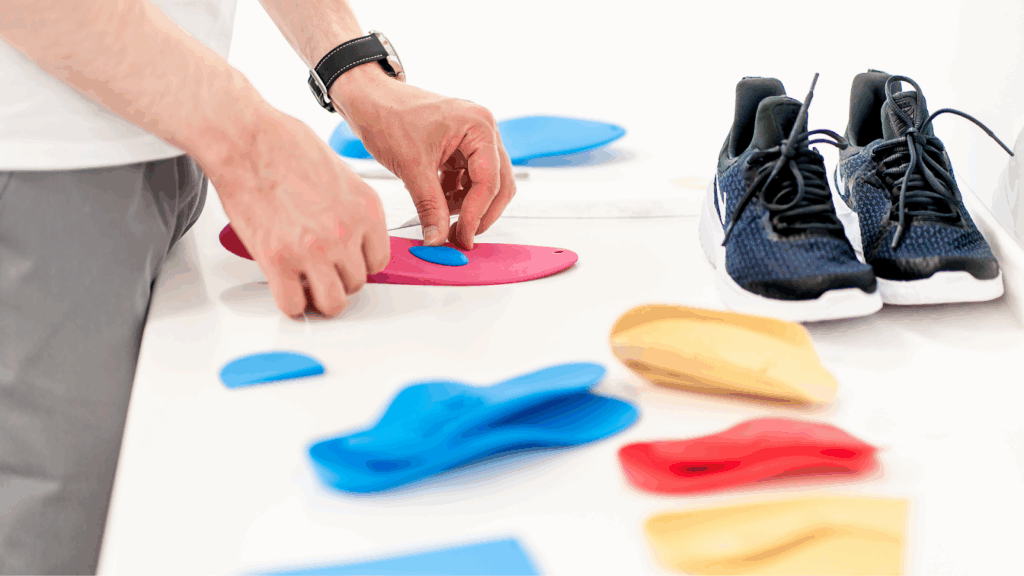
- Custom insoles to support the arch and spread pressure away from the heel
- Strapping or taping to offload the fascia in the short term
- Calf and foot strengthening exercises, so the tissue can cope with everyday load again
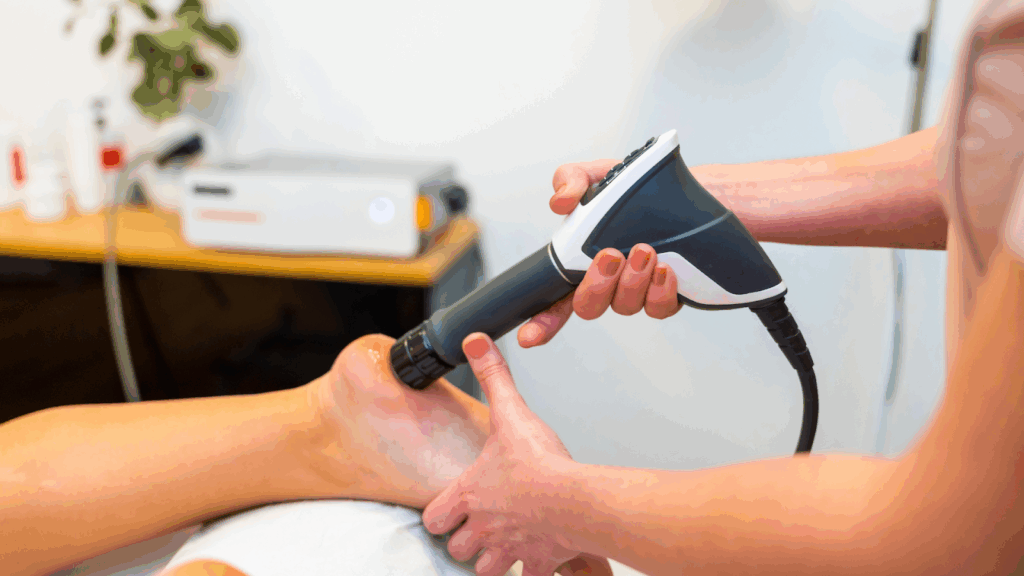
- Shockwave therapy for stubborn, longer-standing cases
HealthHub notes that physiotherapists may also "provide pain relief with procedures, such as heat, ultrasound or electrical stimulation." Our podiatrists and physiotherapists work together, so an assessment can cover both footwear and movement in one place. See our heel pain page for the full picture.
One Week Is a Start, Not a Finish
- One week will not cure it, but it can bring the pain down and set up a faster recovery.
- Load, stretch, support. Those three habits, done daily, do most of the work.
- No change after one to two weeks suggests having it assessed. The earlier the cause is found, the shorter the recovery tends to be.
Ask a Podiatrist About Your Heel Pain
Physio & Sole Clinic provides podiatry across our clinics in Singapore, with no doctor's referral needed for most services.
Not sure whether your heel pain is plantar fasciitis? Message our team directly on Telegram.
Ready to feel better?
Book a consultation with our podiatry team to get an assessment tailored to you.
Frequently Asked Questions
Not completely. HealthHub notes that recovery usually takes months. With consistent care, though, many people notice the pain easing within the first week or two.
Usually months rather than weeks. Starting the right care early, and keeping it up, tends to shorten that.
Not entirely. Switch to low-impact activity such as swimming or cycling, and ease back into running only once your heel settles.
On hard floors, yes. Barefoot walking and flat slippers keep loading the painful spot. Supportive footwear, even at home, helps the tissue settle.
Not for most services at a private clinic. Some insurers require a GP or specialist referral before approving a claim, so do check your policy.