Skip to content


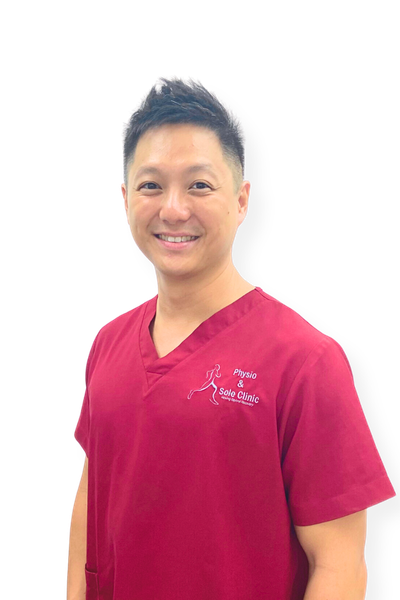
Written by
Kwok Siew Kong
Principal Podiatrist at Physio & Sole Clinic
An experienced podiatrist who spent eight years at Singapore General Hospital (SGH), where he was part of the MSK Specialist Team and worked closely with the Orthopaedics Department. SK has extensive experience managing musculoskeletal foot conditions, advanced wound care, and post-operative recovery, and is passionate about helping patients stay active and mobile through comprehensive foot and lower-limb care.
The best orthopaedic shoes in Singapore are not the same for everyone. A good pair should match your foot type, loading pattern, walking style, and daily activity levels.
Many people assume that the best orthopaedic shoes are the softest, most expensive, or most heavily cushioned pair. But comfort alone is not enough. Proper support, fit, stability, cushioning, and pressure distribution matter more than brand or costs.
Orthopaedic shoes are not only for seniors. They benefit people with foot pain, heel pain, flat feet, plantar fasciitis, bunions, or those who stand and walk for long hours daily.
As a podiatrist, I often see patients who have already bought several pairs of “comfortable shoes” but still experience foot pain. The issue is usually not just the shoe brand. It is whether the shoes provide the right support for their foot type, walking pattern, and daily activities.
In This Blog:
- What orthopaedic shoes actually are
- Who may benefit from orthopaedic shoes
- What features to look for before buying
- Why comfortable shoes may still cause foot pain
- When to see a podiatrist in Singapore
- How to choose shoes for foot pain, flat feet, or plantar fasciitis
What Are Orthopaedic Shoes?
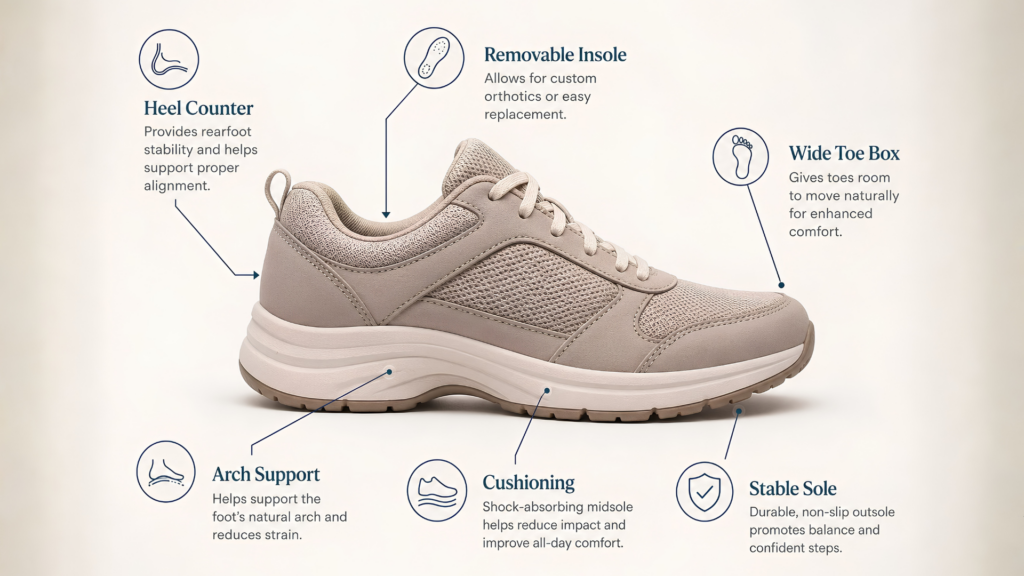
Orthopaedic shoes are footwear designed to support foot structure, improve comfort, reduce excessive pressure, and help with better alignment during walking or standing.
They are different from regular fashion shoes because they are usually built with more attention to support, stability, fit, and pressure relief.
A proper orthopaedic shoe may include:
- Arch support
- A firm heel counter
- A stable sole
- Adequate cushioning
- A wide toe box
- Removable insoles
- Better pressure distribution
However, orthopaedic shoes are not just “medical-looking shoes”. They are also not only for elderly people. Today, many supportive shoes look similar to regular walking shoes, work shoes, or casual shoes.
The key difference is not appearance. It is how well the shoe supports the foot during daily movement.
Are Orthopaedic Shoes Good for Foot Pain?
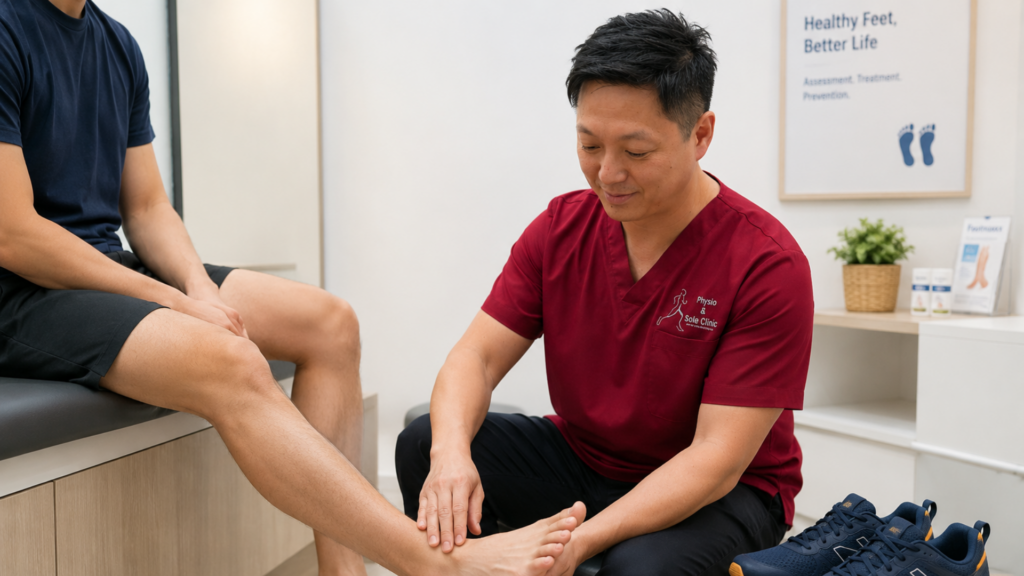
Orthopaedic shoes can help with foot pain when the pain is related to poor support, pressure overload, flat feet, plantar fasciitis, bunions, or long hours of standing.
For example, if your arch collapses excessively while walking, your foot may need more structure. If your heel pain is worse after standing for long periods, you may need better cushioning and load distribution. If your toes feel cramped, you may need a wider toe box rather than just a softer shoe.
That said, orthopaedic shoes are not a guaranteed solution for every type of foot pain.
They may not fully help if:
- The shoe does not match your foot type
- The pain is caused by an injury or inflammation
- The pain has become chronic
- You need customised orthotics
- The shoe feels comfortable but is unstable
- The underlying cause has not been assessed
Shoes can reduce stress on the foot, but they should not replace proper diagnosis when pain is persistent.
If you have recurring foot pain in Singapore, especially pain that affects walking, work, or exercise, it may be worth seeing a podiatrist before buying another pair of shoes.
What Makes a Shoe Truly Supportive?
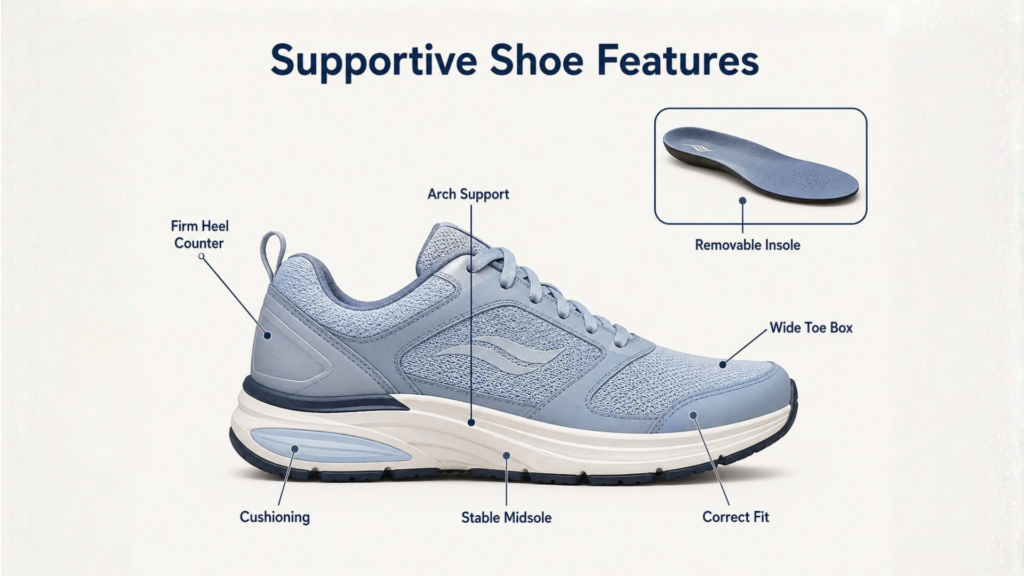
A supportive shoe is not just soft. It should help your foot manage load properly when you walk, stand, and move.
This is important because every step places pressure through your heel, arch, forefoot, and toes. If the shoe does not support your foot mechanics well, certain areas may become overloaded.
A truly supportive shoe should have several key features.
Firm Heel Counter
The heel counter is the back part of the shoe that cups your heel.
A firm heel counter helps control excessive heel movement and improves rearfoot stability. This is important for people whose feet roll in too much when they walk.
Stable Midsole
The midsole should provide structure, not collapse completely under your weight.
If a shoe twists too easily or folds in the middle, it may not provide enough stability for someone with foot pain, flat feet, or long standing demands.
Proper Cushioning
Cushioning helps absorb impact. This is useful for Singaporeans who walk on hard surfaces, commute daily, or stand for long periods at work.
However, more cushioning is not always better. If the shoe is too soft, the foot may sink in and become unstable.
Wide Toe Box
A wide toe box gives your toes enough space to spread naturally. This is especially important for people with bunions, wide feet, corns, calluses, or toe pressure.
Shoes that are too narrow may increase friction and pressure, even if they feel soft at first.
Correct Fit
A supportive shoe will not help much if the size or width is wrong.
Your shoes should not squeeze your toes, slip at the heel, or create pressure points. A good fit should feel secure but not tight.
Removable Insoles
Removable insoles are useful if you need custom orthotics or podiatrist-recommended insoles.
Some shoes feel comfortable initially but do not have enough space to accommodate orthotics properly.
Why Are Comfortable Shoes Not Always Good for Your Feet?
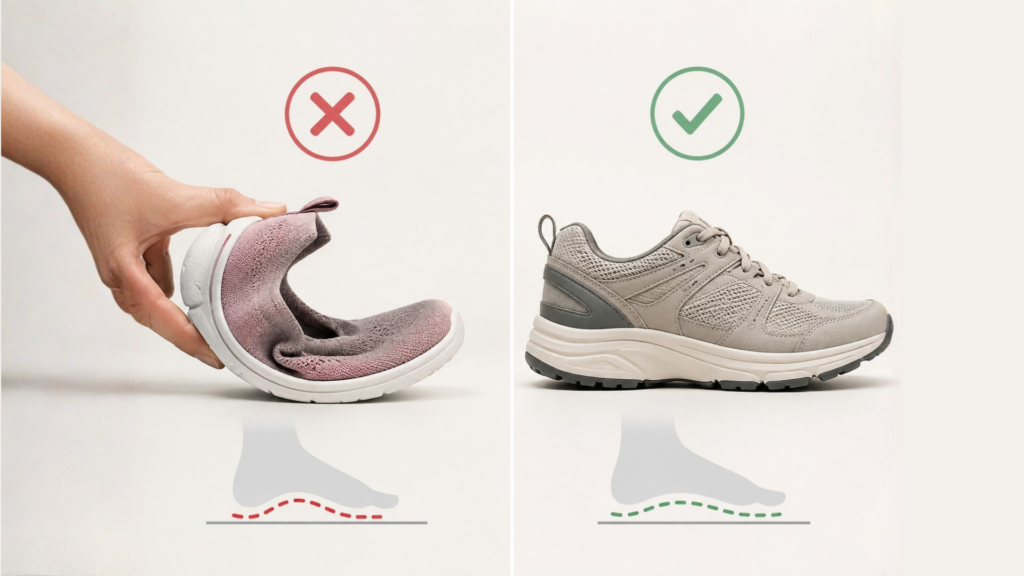
Many people in Singapore choose shoes based on softness, convenience, or style.
This is understandable. If your feet hurt, a soft shoe may feel like the obvious solution. But softness and support are not the same thing.
An overly soft shoe may feel comfortable at first, but it can sometimes:
- Allow the foot to sink in
- Increase instability
- Fail to support the arch
- Worsen fatigue after long walking
- Provide short-term comfort but poor long-term support
This is why some people buy “comfortable shoes” but still experience heel pain, arch pain, or tired feet after a full day.
Comfort matters, but it should be paired with structure and stability.
A good shoe should not only feel nice when you first put it on. It should also support your foot after hours of walking, standing, commuting, and daily movement.
Who Should Consider Orthopaedic Shoes in Singapore?

Not everyone needs orthopaedic shoes. But if you regularly experience foot pain or fatigue, supportive footwear may be worth considering.
Orthopaedic shoes may benefit:
- Office workers with long commutes
- Retail staff who stand all day
- Teachers who spend long hours on their feet
- Nurses and healthcare workers
- Service staff
- Seniors who need stable and comfortable footwear
- People with flat feet
- People with plantar fasciitis or heel pain
- People with bunions or wide feet
- People with recurring arch pain
- People whose shoes wear out unevenly
- People who feel pain despite wearing “comfortable” shoes
In Singapore, many people walk more than they realise. A typical day may include walking to the MRT, standing during the commute, moving between office buildings, climbing stairs, and walking on hard indoor flooring.
If your shoes do not support your feet well, these daily movements can gradually add up.
What Shoes Do Podiatrists Recommend?
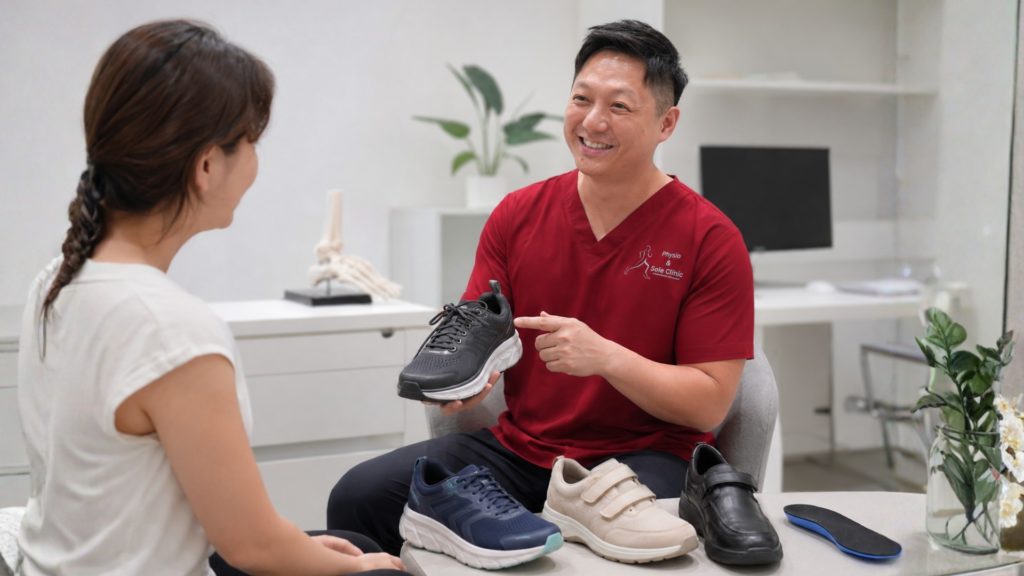
Podiatrists do not usually recommend one universal shoe for everyone.
There is no single “best orthopaedic shoe” that works for every foot type, every condition, and every lifestyle.
Instead, podiatrist-recommended shoes depend on:
- Foot type
- Arch height
- Walking pattern
- Pain location
- Work demands
- Activity level
- Shoe wear pattern
- Whether orthotics are needed
For someone with flat feet, the priority may be pressure distribution, heel stability, and a firmer midsole.
For someone with plantar fasciitis, the priority may be heel cushioning, stable midsole and reducing strain through the plantar fascia.
For someone with bunions, the priority may be a wider toe box and reduced pressure over the forefoot.
For seniors, the priority may be stability, grip, ease of wear, and reducing the risk of slips or trips.
This is why a shoe that works well for one person may not work for another person, even if both have foot pain.
The right shoe depends on your biomechanics, not just your shoe size.
How Do I Know If I Need Orthopaedic Shoes?
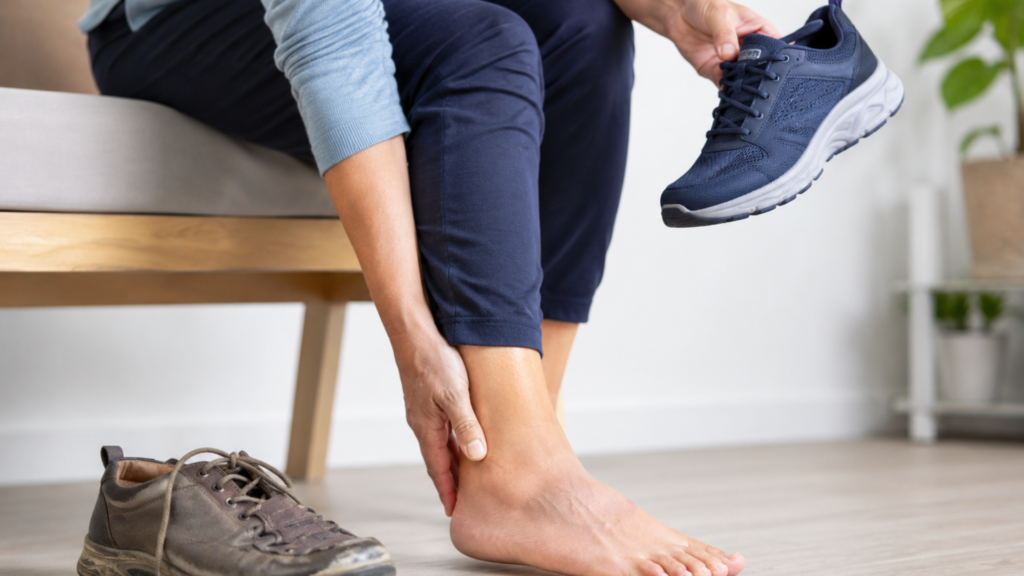
You may benefit from orthopaedic shoes or more supportive footwear if you notice recurring discomfort during daily activities.
Common signs include:
- Your feet hurt after walking or standing
- You experience morning heel pain
- Your arches feel tired or strained
- Your shoes wear out unevenly
- You have flat feet or overpronation
- You have bunions, corns, calluses, or pressure points
- You feel better in supportive shoes than barefoot or slippers
- You keep changing shoes but the pain returns
Pain that lasts more than one to two weeks should not be ignored, especially if it affects your walking, work, or exercise.
Foot pain is often your body’s way of telling you that something is being overloaded.
Changing shoes may help, but if the pain keeps coming back, the issue may be deeper than footwear alone.
What Should You Look For Before Buying Orthopaedic Shoes?
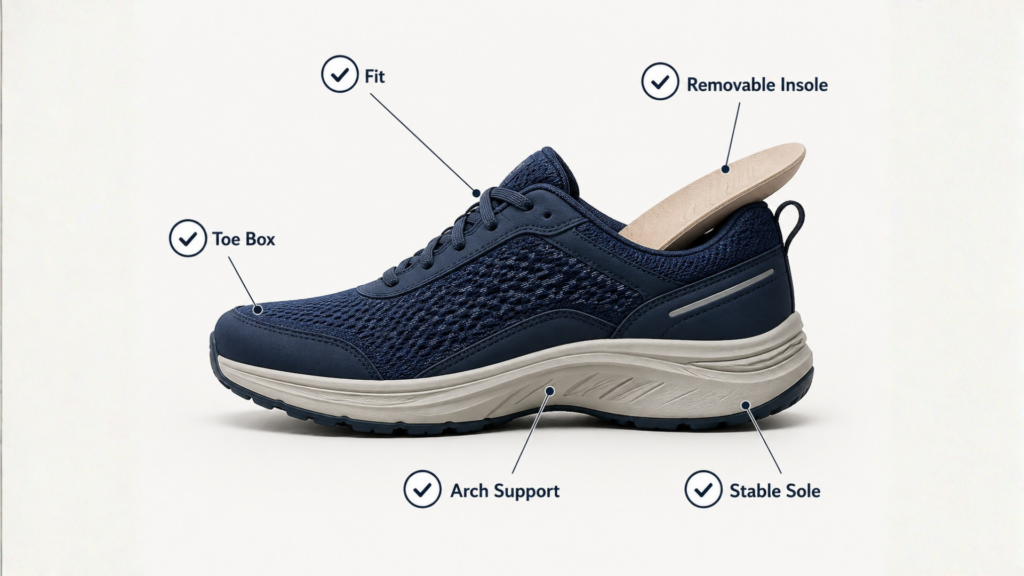
Before buying orthopedic shoes in Singapore, avoid choosing based only on brand, price, or online reviews.
Instead, check whether the shoe matches your foot shape, support needs, and daily lifestyle.
1. Check the Fit
Your toes should have enough space at the front of the shoe. The shoe should feel secure around the midfoot and heel without squeezing.
If your foot slides around inside the shoe, it may cause friction and instability. If the shoe is too tight, it may create pressure points.
2. Check the Arch Support
The arch support should match your foot type.
For flat feet, a shoe with better arch support may help reduce excessive strain. For high arches, cushioning and shock absorption may be more important.
3. Check the Heel Counter
Press the back of the shoe. It should feel firm, not flimsy.
A firm heel counter helps keep the heel more stable when walking.
4. Check the Sole Stability
Try twisting the shoe gently. If it twists too easily, it may not offer enough support.
The shoe should bend at the forefoot where your toes naturally bend, not collapse completely in the middle.
5. Check the Cushioning
Cushioning should reduce impact, but the shoe should not feel overly soft or unstable.
If you stand for long hours, you need both cushioning and support.
6. Check the Toe Box Width
Your toes should not feel cramped.
A wider toe box may be helpful if you have bunions, wide feet, corns, calluses, or toe discomfort.
7. Check If the Insole Is Removable
If you use custom orthotics or may need them later, removable insoles are useful.
This allows the shoe to accommodate additional support without making the fit too tight.
8. Check Whether It Matches Your Daily Use
A shoe for office work may differ from a shoe for long-distance walking, retail shifts, exercise, or elderly support.
For Singaporeans who commute, stand on MRT rides, walk between buildings, or spend long hours indoors, shoes need to support both walking and prolonged standing.
Orthopaedic Shoes vs Arch Support Shoes vs Custom Orthotics: What Is the Difference?
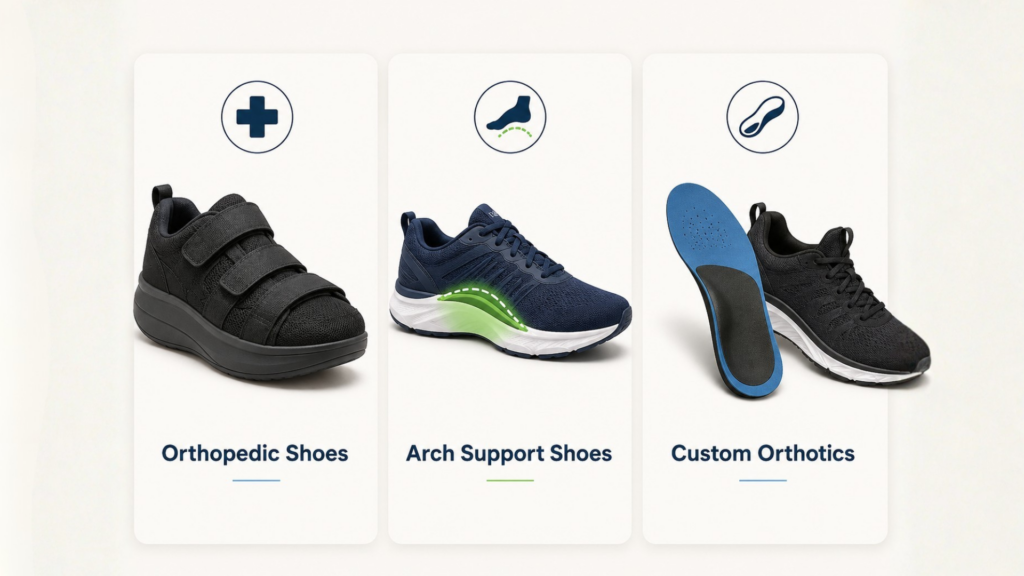
These terms are often used together, but they are not exactly the same.
Orthopaedic Shoes
Orthopaedic shoes are supportive footwear designed for comfort, stability, and pressure relief.
They may help people with foot pain, flat feet, bunions, plantar fasciitis, or long standing demands.
Arch Support Shoes
Arch support shoes have built-in support under the arch area.
They can be useful for people who need more structure than flat shoes, especially if their feet fatigue easily or roll in excessively.
Custom Orthotics
Custom orthotics are medical-grade insoles customised based on a foot assessment.
They may be recommended when general shoe support is not enough, especially for recurring or more complex foot pain.
Some people only need better shoes. Others may need orthotics inside the right shoes.
The important point is this: custom orthotics still need to be paired with suitable footwear. Putting orthotics into unstable or poorly fitted shoes may limit their effectiveness.
What Is the Diagnostic Difference?
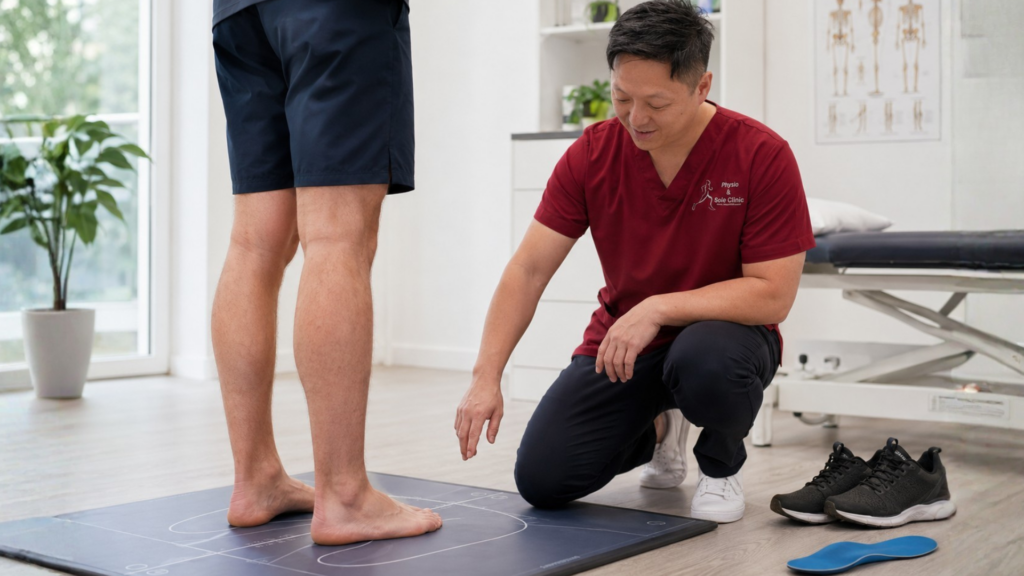
Guessing based on online shoe lists may not solve recurring foot pain.
This is because foot pain is not always caused by the same issue. Heel pain, arch pain, forefoot pain, and toe pain can all come from different structures and movement patterns.
A podiatrist can assess:
- Foot posture
- Gait pattern
- Pressure distribution
- Arch function
- Shoe wear pattern
- Pain location
- Lower limb alignment
- Whether orthotics are needed
This helps identify whether your pain is mainly footwear-related, biomechanical, or linked to an underlying condition.
For example, two people may both have heel pain, but one may need more arch support while the other may need better cushioning, calf flexibility work, or load management.
The right solution depends on the cause of the pain, not just the symptom.
Soft Shoes vs Orthopaedic Shoes vs Custom Orthotics
| Option | What It Offers | Possible Limitation | Best For |
| Soft Shoes | Feel comfortable at first and may reduce pressure temporarily | May lack structure, arch support, or stability | Short-term comfort for mild fatigue |
| Orthopaedic Shoes | Better support, cushioning, stability, and pressure distribution | Must still match the person’s foot type and activity needs | Daily walking, standing, flat feet, heel pain, arch fatigue |
| Custom Orthotics | More targeted support based on assessment | Need suitable shoes to work well | Recurring, complex, or persistent foot pain |
The question is not simply, “What is the most comfortable shoe?”
A better question is, “What support does my foot actually need?”
Where Can I Get Orthopaedic Shoes in Singapore?
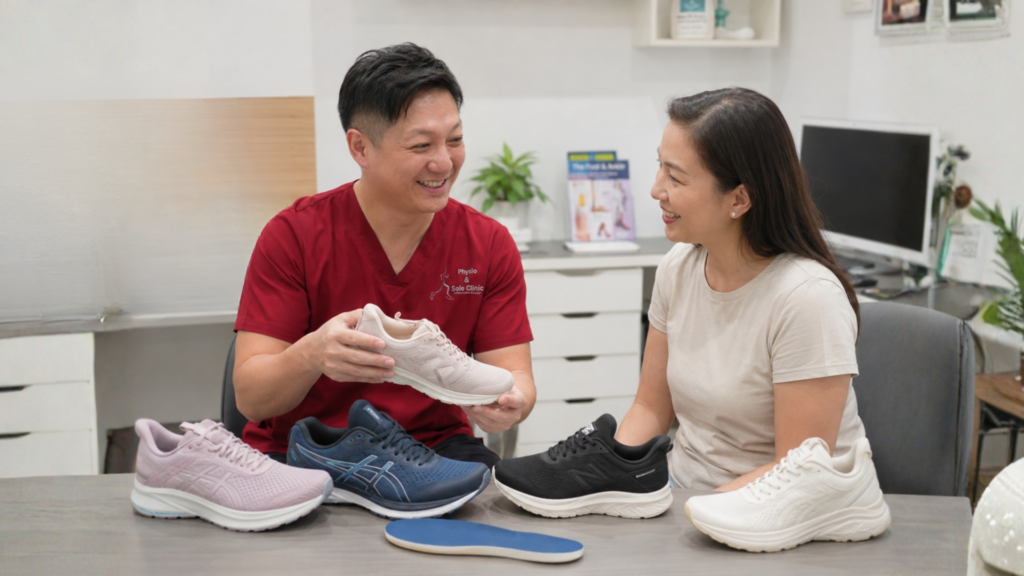
Orthopaedic shoes and supportive footwear can be found through footwear retailers, specialty shoe stores, and podiatry clinics in Singapore.
However, if you are buying orthopaedic shoes because of foot pain, it is better not to rely only on online reviews or general brand recommendations.
A shoe that works for someone else may not work for you if your foot type, pain pattern, or walking style is different.
Before buying, consider:
- What type of pain you have
- Where the pain is located
- How long the pain has been present
- Whether your current shoes wear out unevenly
- Whether you need arch support, cushioning, width, or stability
- Whether you may need orthotics
If pain is persistent, a podiatry assessment can help you understand what type of support your feet actually need.
When Should You See a Podiatrist in Singapore?
You should consider seeing a podiatrist in Singapore if your foot pain lasts more than one to two weeks or keeps returning despite changing shoes.
You should also seek assessment if:
- You have morning heel pain
- You experience recurring arch pain
- You have flat feet with pain or fatigue
- You have bunions, corns, calluses, or pressure points
- Your shoes keep wearing unevenly
- You cannot find shoes that feel comfortable
- Pain affects walking, work, or exercise
- You feel pain after standing or commuting
A podiatry assessment can help identify whether the problem is related to footwear, foot biomechanics, pressure distribution, or an underlying condition.
This is especially useful if you have already tried multiple pairs of shoes but still feel pain.
Frequently Asked Questions
- What are orthopaedic shoes?
Orthopaedic shoes are supportive shoes designed to improve comfort, stability, pressure distribution, and foot alignment during walking or standing. They may include arch support, cushioning, a firm heel counter, a stable sole, and a wider toe box. - Are orthopaedic shoes good for foot pain?
Orthopaedic shoes may help reduce foot pain if the pain is related to poor support, pressure overload, flat feet, plantar fasciitis, bunions, or long hours of standing. However, persistent pain should be assessed by a podiatrist to understand the underlying cause.
- What shoes do podiatrists recommend?
Podiatrists usually recommend shoes based on the person’s foot type, pain location, walking pattern, activity level, and support needs. There is no single best shoe for everyone.
- Are orthopaedic shoes only for elderly people?
No. Orthopaedic shoes are not only for seniors. They may also benefit office workers, healthcare workers, retail staff, teachers, people with flat feet, people with plantar fasciitis, and anyone with recurring foot pain. - How do I know if I need orthopaedic shoes?
You may need more supportive footwear if your feet hurt after walking or standing, your arches feel tired, you have morning heel pain, your shoes wear out unevenly, or your pain keeps returning despite wearing comfortable shoes.
- Where can I get orthopaedic shoes in Singapore?
You can find orthopaedic shoes and supportive footwear through footwear retailers, specialty shoe stores, and podiatry clinics in Singapore. If you have recurring pain, it may be better to get your foot mechanics assessed before buying.
Conclusion
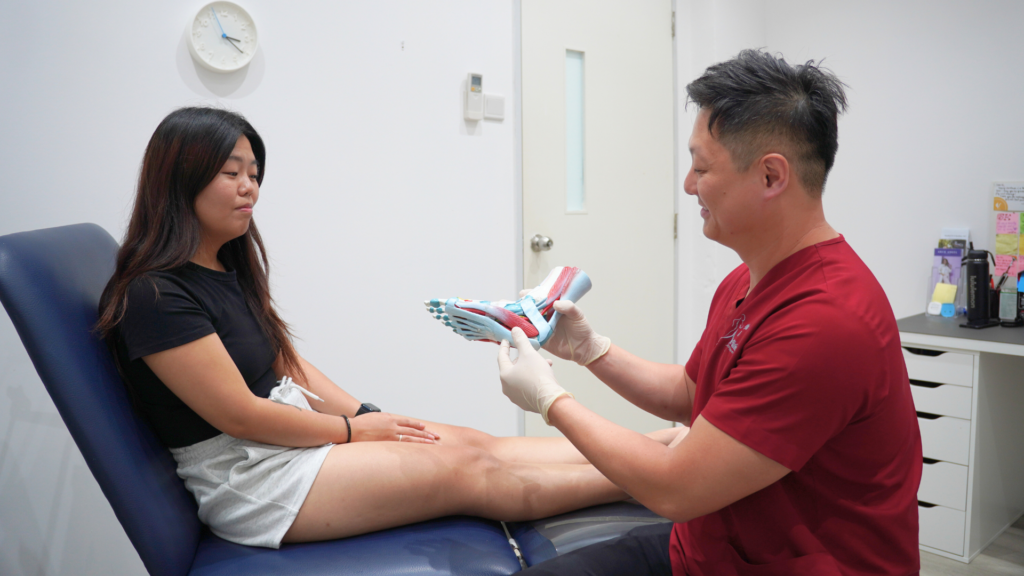
The best orthopaedic shoes in Singapore are not defined by brand, price, or cushioning alone.
The right shoe should match your foot type, pain pattern, walking demands, and biomechanics. Comfort matters, but support, stability, fit, and pressure distribution matter more.
If your foot pain keeps coming back, buying another pair of shoes based on trial and error may not solve the issue.
A proper assessment can help you understand whether you need supportive shoes, arch support, custom orthotics, or a different treatment approach.
If you are looking for orthopaedic shoes because of recurring foot pain, heel pain, arch pain, or flat feet, it may be worth understanding your foot mechanics first.
A podiatry assessment in Singapore can help identify what kind of footwear support your feet actually need before you buy another pair.
Resources from Physio & Sole Clinic
This article is part of Physio & Sole Clinic’s Podiatry & Foot Health Resource Series, created to help patients in Singapore better understand how everyday habits, like walking barefoot at home, can impact foot health, and what to do about it.
You may also find these related resources helpful:
- Podiatry In Singapore: What It Is What It Treats, and Which Type Is Right for You
Understand what a podiatrist does, the conditions they treat, and when it’s time to seek professional care for persistent foot issues. - Physio & Sole Clinic Locations Guide
Find a Physio & Sole Clinic near you across Singapore for convenient access to physiotherapy care. - Heel Pain in Singapore: Why It Keeps Coming Back
Struggling with recurring heel pain? This guide explains common causes like Plantar fasciitis and what actually works for long-term relief. - Custom Orthotics vs Retail Insoles: What’s the Real Difference?
Learn why generic insoles may not be enough — and how custom orthotics are designed to correct the root cause of foot pain, not just cushion it.