



Written by
Kwok Siew Kong
Principal Podiatrist at Physio & Sole Clinic
An experienced podiatrist who spent eight years at Singapore General Hospital (SGH), where he was part of the MSK Specialist Team and worked closely with the Orthopaedics Department. SK has extensive experience managing musculoskeletal foot conditions, advanced wound care, and post-operative recovery, and is passionate about helping patients stay active and mobile through comprehensive foot and lower-limb care.
In Singapore, many adults dismiss morning foot pain as “just ageing” or “tired feet”. But if the pain keeps recurring, especially around the heel or arch, it is worth getting your feet assessed by a podiatrist.
Quick Summary: Why Do Your First Steps Hurt in the Morning?
Morning stiffness can happen when the tissues, joints, or muscles in the feet tighten while you sleep. After hours of rest, your feet suddenly need to support your full body weight when you stand up.
Pain during the first few steps may be linked to plantar fasciitis, especially if the discomfort feels sharp, stabbing, or pulling near the heel or arch.
Plantar fasciitis involves irritation or overload of the plantar fascia, a strong band of tissue that runs along the bottom of the foot. This tissue helps support your arch and absorb load when you walk.
If your morning stiffness comes with recurring heel pain, arch pain, or pain that improves after walking but returns later, it should not be ignored. A podiatry assessment can identify whether the issue is plantar fasciitis, arthritis, joint stiffness, or other foot conditions.
In This Blog:
- Why do your feet feel stiff in the morning?
- How plantar fasciitis causes first-step pain
- How to tell general stiffness from stabbing heel pain
- Whether morning stiffness is a sign of arthritis
- 3 gentle stretches that may help
- When to see a podiatrist in Singapore
Why Are My Feet So Stiff in the Morning?
Your feet may feel stiff in the morning because the tissues and joints have been resting overnight. When you stand up, your feet suddenly have to take your full body weight.
During sleep, the muscles and soft tissues in your feet and calves are not moving much. Your joints may also feel less mobile after several hours of rest.
For some, the plantar fascia may feel tighter after sleep. When you place weight on your feet first thing in the morning, this sudden load can create discomfort around the heel, arch, or sole.
Adults over 35 may notice morning stiffness more often due to reduced tissue flexibility, previous injuries, changes in activity level, or increased daily strain.
This does not mean morning stiffness is always serious. But recurring pain should not be dismissed as “just ageing”, especially if it affects walking or daily activities.
Why Do My First Steps Hurt After Waking Up?
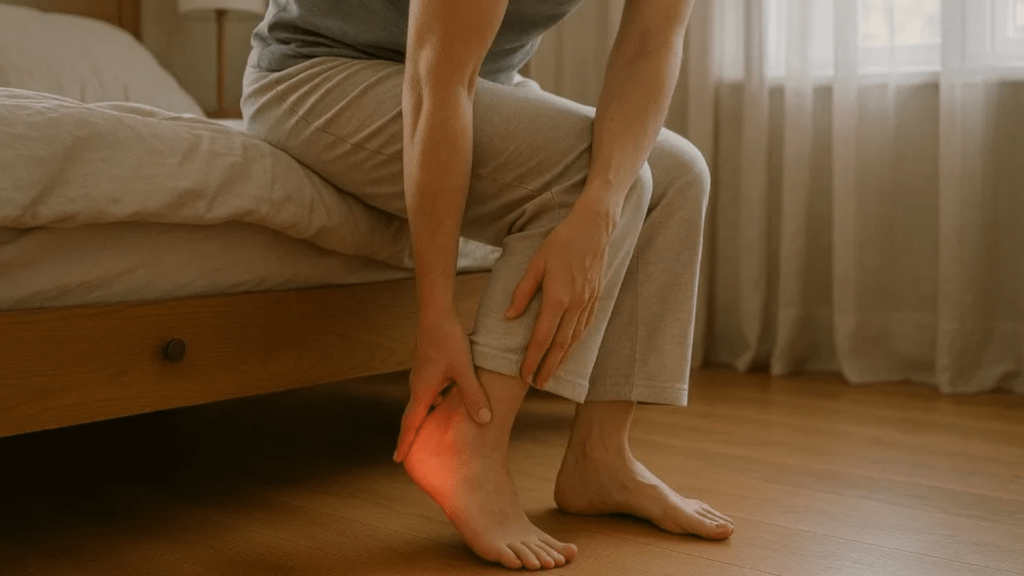
Pain during your first few steps after waking is a common pattern seen in plantar fasciitis.
The pain may feel sharp, stabbing, or pulling near the heel. Some people describe it as stepping onto a bruise. Others feel tightness along the arch or the sole of the foot.
A typical pattern is that the pain feels worse when you first get out of bed, improves after walking for a few minutes, then returns after long periods of sitting, standing, or walking.
This happens because the plantar fascia supports the arch of the foot. When it is irritated or overloaded, it can become more sensitive. After resting overnight, the tissue may tighten. When you step down in the morning, it is suddenly stretched and loaded again.
That sudden change from rest to weight-bearing can trigger heel pain or arch pain.
So if your first steps in the morning hurt but feel better once you “warm up”, plantar fasciitis may be one possible cause.
Is Morning Stiffness a Sign of Arthritis?

Morning stiffness can be associated with arthritis, but it is not always caused by arthritis.
Arthritis-related stiffness may involve joint pain, swelling, warmth, or reduced joint movement. It may affect several joints and last longer in the morning.
Stiffness linked to plantar fasciitis is often more focused around the heel, arch, or bottom of the foot. The pain is usually more noticeable during the first few steps after waking or after a long period of rest.
The key difference is the location, duration, and type of pain.
General joint stiffness may feel like the foot is hard to move. Plantar fasciitis pain often feels sharper and more specific, especially around the heel or arch.
Morning stiffness is a symptom, not a diagnosis. If you are unsure whether your pain is coming from the joint, heel, arch, or soft tissue, a proper foot assessment is important.
How Is Morning Stiffness Linked to Plantar Fasciitis?
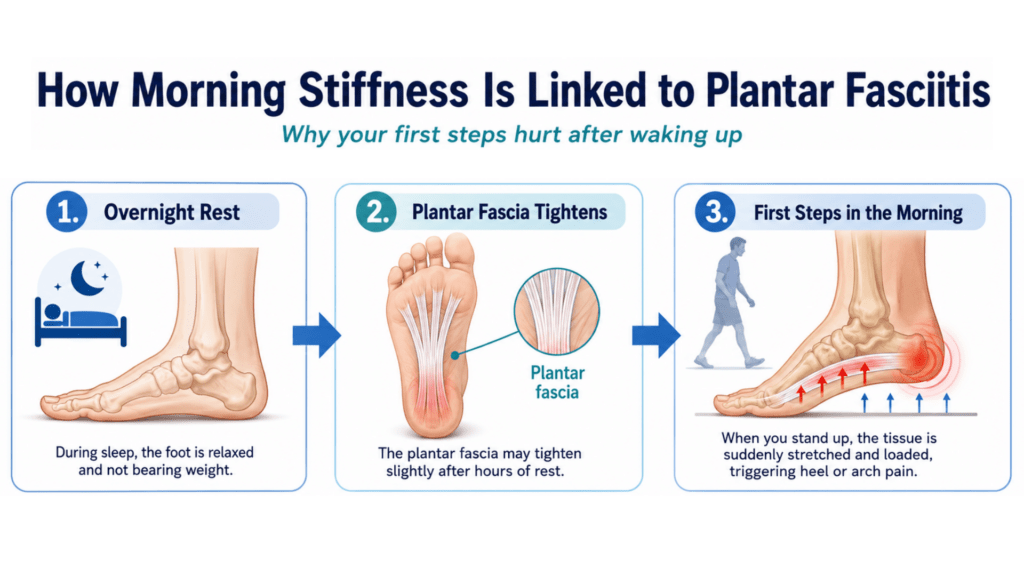
Plantar fasciitis occurs when the plantar fascia becomes irritated or overloaded.
The plantar fascia is a strong band of tissue that runs from the heel to the front of the foot. It plays an important role in supporting the arch and absorbing load during standing and walking.
When this tissue is placed under repeated strain, it can become painful. This may happen due to poor foot mechanics, flat feet, tight calves, unsupportive footwear, sudden changes in activity, or long hours standing and walking.
The overnight pattern is important.
When you sleep, your foot is relaxed and not bearing weight. The plantar fascia may tighten slightly during this period of rest. When you stand up in the morning, the tissue is suddenly stretched and loaded.
This sudden load can trigger heel pain, arch discomfort, or a sharp pulling sensation under the foot.
Morning pain is not random. It often reflects how the plantar fascia responds after rest and sudden loading.
How Can You Tell General Stiffness from Plantar Fasciitis Pain?
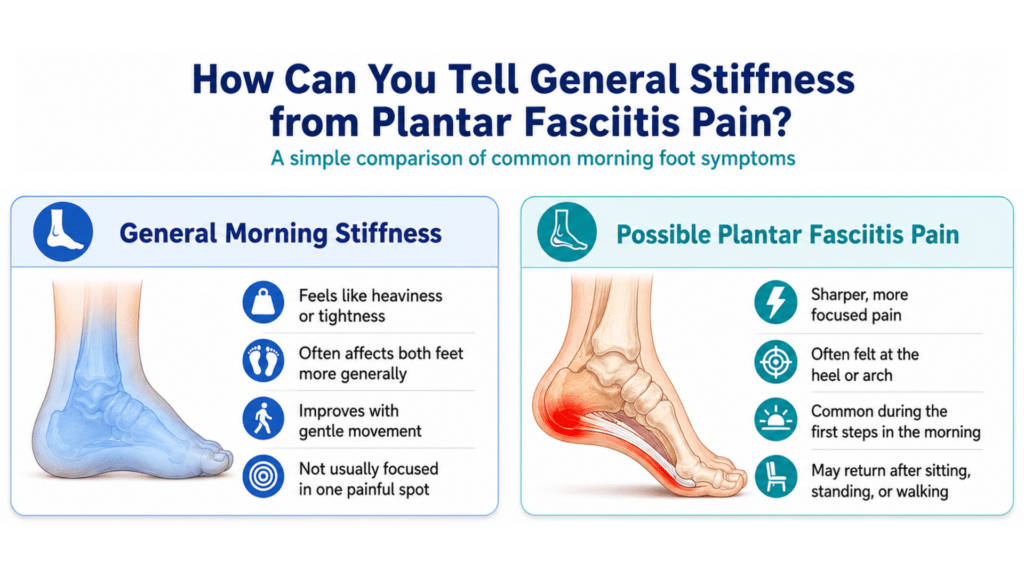
General morning stiffness and plantar fasciitis pain can feel similar at first, but there are some clues.
General morning stiffness often feels like heaviness, tightness, or reduced mobility. It may affect both feet more generally and may improve with gentle movement. It is usually not focused on one painful spot.
Possible plantar fasciitis pain is often sharper and more specific. It may feel like stabbing pain near the heel, pulling along the arch, or pain under the foot during your first few steps in the morning.
It may also return after sitting for a long time, standing for long periods, or walking more than usual.
A simple way to think about it is this:
General stiffness feels like tightness. Plantar fasciitis often feels more focused, sharper, and linked to the heel or arch.
Why Should You Not Ignore Morning Heel Pain?
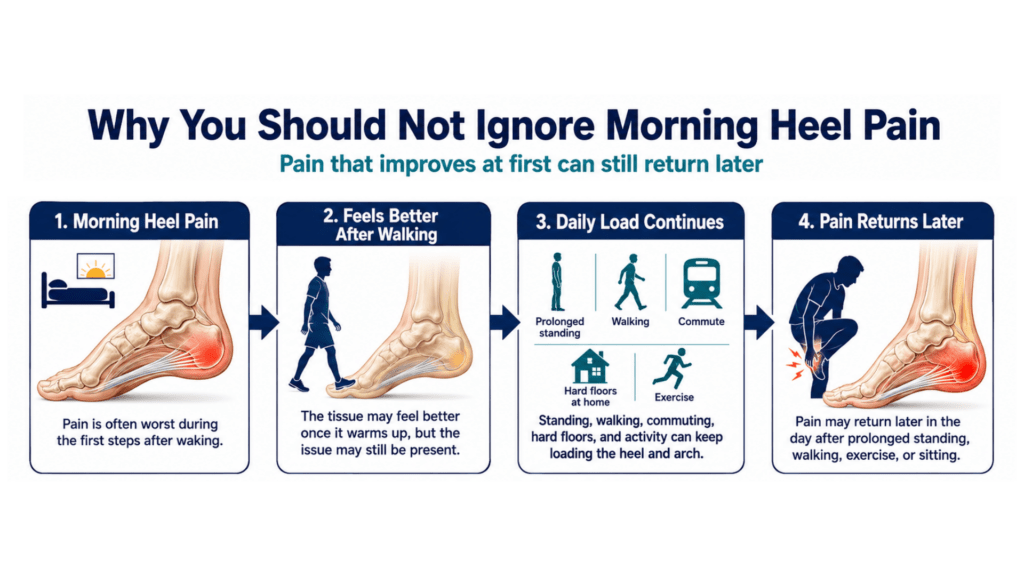
Many people ignore morning heel pain because it improves after walking. But pain that improves temporarily does not always mean the problem has gone away.
With plantar fasciitis, the pain can feel better once the tissue warms up. However, the underlying load issue may still be present.
This means the pain may return later in the day, especially after prolonged standing, walking, exercise, or sitting for a long time.
In Singapore, everyday routines can quietly add strain to the feet. Long hours at work, standing during commutes, walking on hard floors at home, wearing unsupportive slippers, or suddenly increasing weekend exercise can all increase load on the heel and arch.
Over time, the plantar fascia may become more irritated if the root cause is not addressed.
This is why recurring morning heel pain should not be brushed off as “normal tired feet”.
What Are 3 Gentle Stretches for Morning Stiffness?
These stretches may help reduce morning tightness, but they are not a substitute for a proper diagnosis if pain persists.
1. Towel Calf Stretch Before Getting Out of Bed
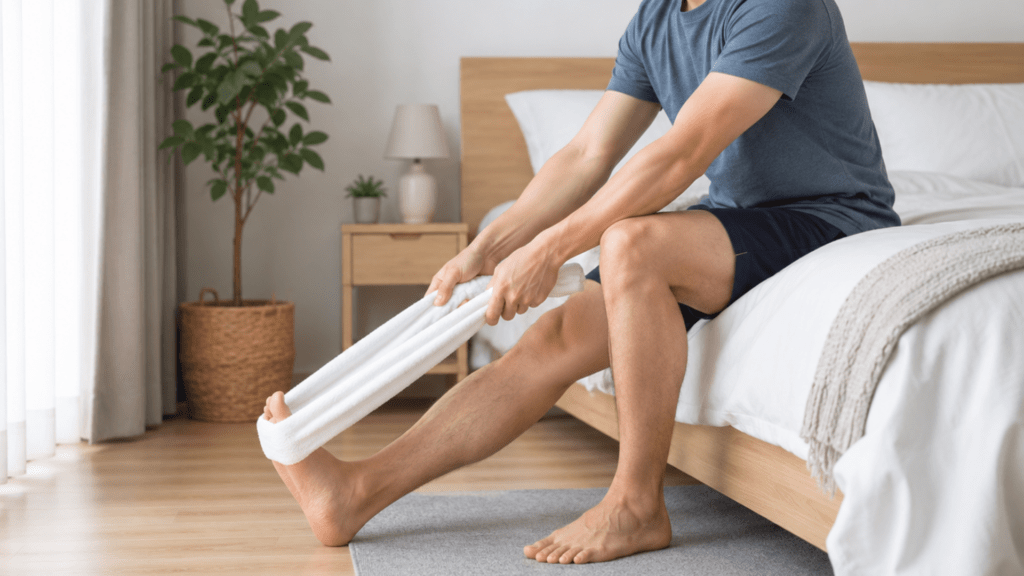
Sit on your bed with one leg straight. Loop a towel around the ball of your foot.
Gently pull your toes towards you until you feel a comfortable stretch in your calf and the sole of your foot. Hold for 20 to 30 seconds.
This may help reduce calf and plantar fascia tension before your first steps.
2. Plantar Fascia Toe Stretch

Sit down and cross one foot over the opposite knee. Gently pull your toes back towards your shin.
You should feel a stretch along the sole of the foot. Hold for 15 to 30 seconds.
This stretch targets the plantar fascia more directly and may help reduce first-step discomfort.
3. Wall Calf Stretch

Stand facing a wall. Place one foot behind the other and keep the back heel on the floor.
Lean forward gently until you feel a stretch in the calf of the back leg. Hold for 20 to 30 seconds.
Tight calves can increase strain on the heel and plantar fascia, so improving calf flexibility may help reduce load under the foot.
Do not force any stretch into pain. If stretching makes your symptoms worse, stop and seek advice from a podiatrist.
When Should You See a Podiatrist in Singapore?
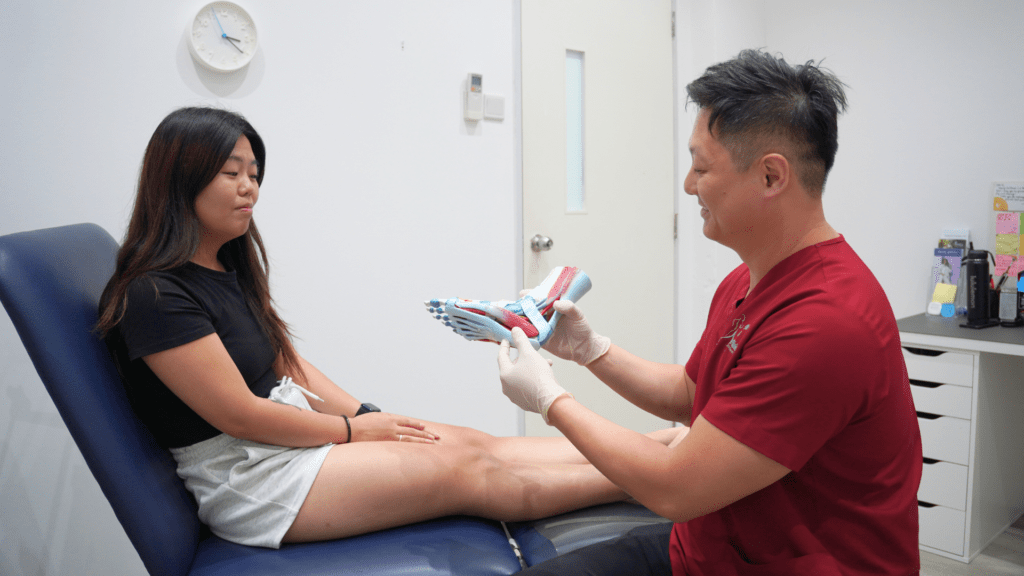
You should consider seeing a podiatrist in Singapore if your morning stiffness lasts more than 1 to 2 weeks, especially if it comes with heel pain or arch pain.
You should also seek assessment if your first few steps in the morning are painful, the pain returns after sitting or resting, or if your heel hurts after standing and walking.
Other signs include one foot being more painful than the other, pain that keeps coming back despite stretching, or symptoms that affect your walking, exercise, or daily routine.
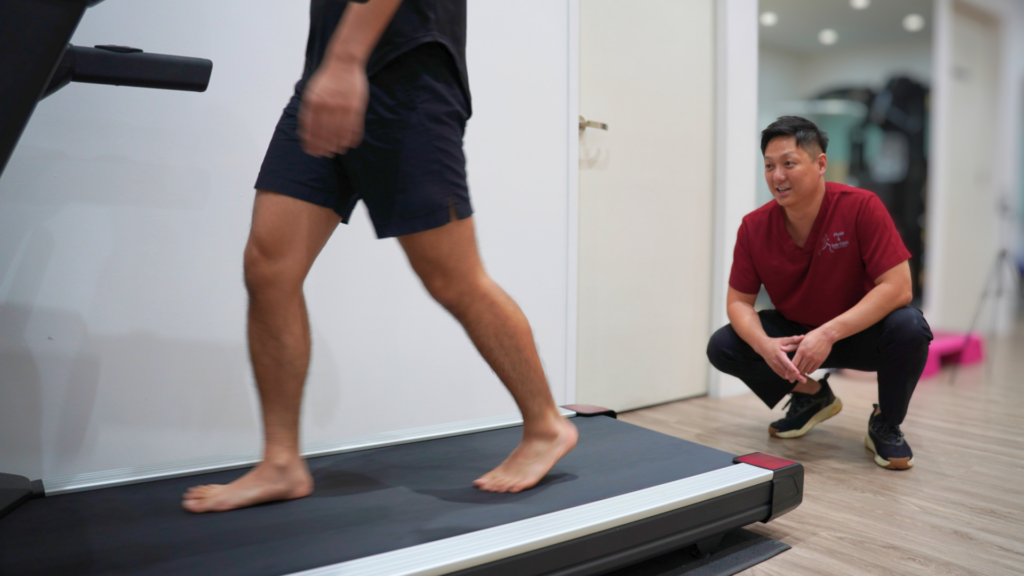
A podiatrist can assess your foot posture, gait, load distribution, footwear, and the specific area of pain. This helps identify whether the pain is coming from the plantar fascia, heel, joints, muscles, or other structures.
This is especially important if you are looking into plantar fasciitis assessment in Singapore or wondering about treating plantar fasciitis in Singapore.
The goal is not just to reduce pain temporarily. It is to understand why the pain is happening in the first place.
Why Is a Podiatry Assessment Important for Morning Stiffness?
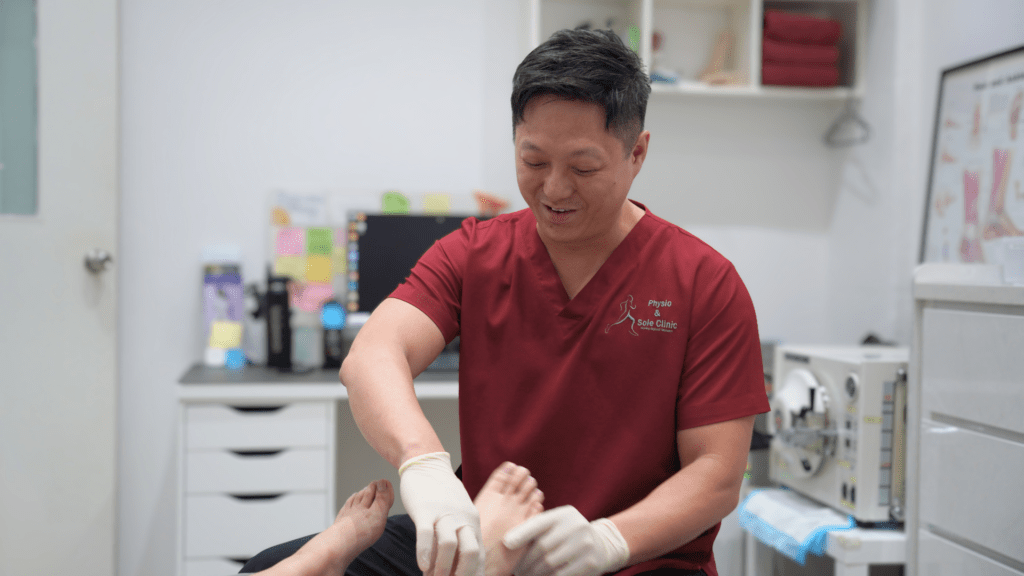
Choosing random stretches, insoles, or footwear may not solve the real issue if you do not know what is causing your morning stiffness.
Some people may have plantar fasciitis. Others may have joint stiffness, calf tightness, flat feet, poor footwear support, or a different condition altogether.
A proper foot assessment can identify where the pain is coming from and how your foot behaves when you stand and walk.
It can also show whether your arch is under strain, whether your heel rolls inwards, whether your footwear is contributing to the problem, and what type of treatment approach may suit you.
The best treatment depends on the cause of your morning stiffness, not just the symptom.
As a podiatrist, I often see patients who tell me their foot pain is worst when they first get out of bed. Many are surprised to learn that this pattern can be linked to plantar fasciitis, especially when the plantar fascia tightens overnight and becomes painful during the first few steps.
What Can You Do Before Your Appointment?

Before your appointment, you can take a few simple steps to reduce strain.
Avoid walking barefoot on hard floors if it worsens your pain. Supportive footwear at home may help reduce load on the heel and arch.
Try gentle stretches before standing up, especially if your first few steps are painful. Avoid sudden increases in walking, running, or high-impact exercise.
You can also track when the pain appears, where it is located, and what makes it better or worse. Detailed information can help your podiatrist understand your symptoms more clearly.
These steps may help manage discomfort, but they do not replace a proper diagnosis.
Frequently Asked Questions About Morning Stiffness and Plantar Fasciitis
- Why are my feet so stiff in the morning?
Your feet may feel stiff in the morning because the muscles, joints, and soft tissues have been resting overnight. When you stand up, your feet suddenly need to support your body weight again. If the stiffness comes with sharp heel pain, plantar fasciitis may be one possible cause. - Is morning stiffness a sign of arthritis?
Morning stiffness can be associated with arthritis, but it is not always due to arthritis. If the pain is focused around the heel or arch and is worse during the first few steps, it may be linked to plantar fasciitis instead. A podiatrist can help assess the cause.
- Why does plantar fasciitis hurt more in the morning?
Plantar fasciitis often hurts more in the morning because the plantar fascia can tighten overnight. When you take your first steps, the tissue is suddenly stretched and loaded, which may trigger heel or arch pain.
- Can stretching help morning stiffness?
Gentle stretching may help reduce tightness in the calf and plantar fascia. However, if pain keeps returning, stretching alone may not be enough. A podiatry assessment can help identify the root cause.
- When should I seek treatment for plantar fasciitis in Singapore?
You should consider seeking treatment if your heel pain lasts more than 1 to 2 weeks, hurts during your first steps in the morning, returns after rest, or affects walking and daily activities.
Conclusion
Morning stiffness is common, but it should not be ignored when it comes with recurring heel pain, arch pain, or sharp discomfort during your first few steps.
For many adults in Singapore, morning foot pain may be linked to plantar fasciitis, especially when the plantar fascia tightens overnight and becomes painful when loaded again in the morning.
The key is not to guess. Morning stiffness can come from different causes, including plantar fasciitis, arthritis, joint stiffness, calf tightness, flat feet, poor footwear, or changes in foot mechanics.
If your pain keeps returning, a proper podiatry assessment can help identify what is really going on.
Resources from Physio & Sole Clinic
This article is part of Physio & Sole Clinic’s Podiatry & Foot Health Resource Series, created to help patients in Singapore better understand common foot symptoms, including morning stiffness, heel pain, and possible signs of plantar fasciitis.
Many people assume that painful first steps in the morning are just part of ageing or tired feet. These resources can help you better understand when foot pain may need professional attention and what support options are available.
You may also find these related resources helpful:
- Podiatry In Singapore: What It Is What It Treats, and Which Type Is Right for You
Understand what a podiatrist does, the conditions they treat, and when it’s time to seek professional care for persistent foot issues. - Physio & Sole Clinic Locations Guide
Find a Physio & Sole Clinic near you across Singapore for convenient access to physiotherapy care. - Heel Pain in Singapore: Why It Keeps Coming Back
Struggling with recurring heel pain? This guide explains common causes like Plantar fasciitis and what actually works for long-term relief. - Custom Orthotics vs Retail Insoles: What’s the Real Difference?
Learn why generic insoles may not be enough — and how custom orthotics are designed to correct the root cause of foot pain, not just cushion it.