Skip to content




Written by
Chee Wai Siong Wesley
Director & Chief Sports Physiotherapist
Wesley Chee is the Director and Principal Sports Physiotherapist at Physio & Sole Clinic. He graduated with a Master Degree in Musculoskeletal & Sports Physiotherapy from University of South Australia in 2010. He specialises in Sports & Musculoskeletal injuries with special interest in treating runners and patients with shoulder problems, and has worked with national teams from the Football Association of Singapore.
Quick Summary
Shin splints are one of the most common running injuries, often caused by increasing training load faster than the body can adapt. This often happens when runners increase mileage too quickly, ignore early pain, or lack strength and proper mechanics. While mild cases can be managed with load reduction and gradual return to running, recurring shin splints usually require a more structured approach. This article explains why shin splints keep coming back, how to recover without stopping completely, and how shin splint physiotherapy helps runners return to training faster while reducing future injury risk.
In this Blog:
- What are Shin Splints?
- Why Do Runners Get Shin Splints?
- Early vs Worsening Signs and Symptoms of Shin Splints in Runners
- Shin Splints vs Stress Fracture: How are They Different?
- Can I Still Run with Shin Splints?
- A Practical Shin Splints Recovery Plan (That Actually Works)
- When Should You See a Physiotherapist?
- Why Visit Physio and Sole Clinic?
- Conclusion
You started running to get fitter… maybe for a 5K, training for HYROX, or your first marathon.
But now, every step comes with a dull ache along your shin.
If this sounds familiar, you’re not alone. Shin splints are one of the most common running injuries, and one of the most misunderstood.
What are Shin Splints?
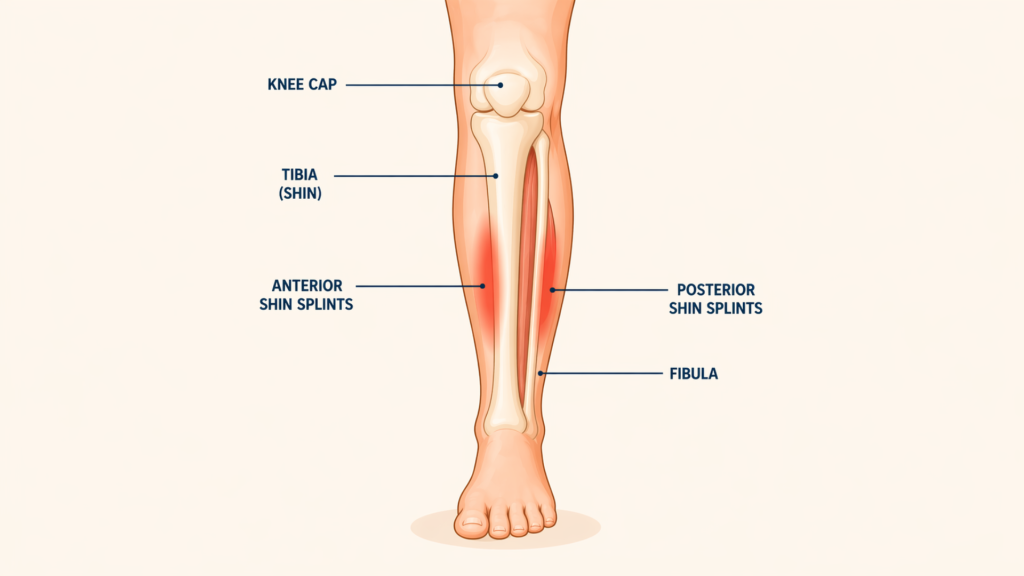
Shin splints, medically known as Medial Tibial Stress Syndrome, refer to pain along the inner edge of the shin bone (tibia). It is an overuse injury where repetitive stress irritates the tibia because the body does not have enough time to recover.
What does shin splint pain usually feel like?
- A dull, aching pain along the inner shin
- Pain during or after running
- Tenderness when pressing on the shin
- Mild swelling (in some cases)
Why Do Runners Get Shin Splints?
The real cause: a load problem

At its core, shin splints are not just an injury, they are a sign your body is struggling to keep up with your training. When your training load increases faster than your body can adapt, the shin becomes overloaded.
Biggest mistakes runners make
Many runners unknowingly put themselves at risk of shin splints by pushing beyond what their bodies can handle.
For beginner runners, this often looks like:
- Starting too aggressively after a period of inactivity
- Increasing distance or frequency too quickly
- Not having enough strength or recovery in place
For marathon runners, the pattern is slightly different:
- High cumulative mileage without enough recovery
- Stacking long runs, speed work, and intense sessions too closely
- Training through fatigue or early pain
Regardless of experience level, ignoring early warning signs or running in worn-out shoes can also increase the risk of shin splints.
Early vs Worsening Signs and Symptoms of Shin Splints in Runners
Early signs
- Pain appears after a run
- Discomfort settles with rest
- Mild tenderness along the shin
Worsening signs
- Pain starts earlier during runs
- Pain lingers after activity
- Discomfort during walking or daily movement
Shin Splints vs Stress Fracture: How are They Different?
Knowing the difference between shin splints and a stress fracture ensures you’re treating the right issue.
| Shin Splints | Stress Fracture |
|---|---|
| Diffused, spread-out pain | Localised, sharp pain |
| Pain improves with rest (early stage) | Pain persists even at rest |
| Linked to training overload | More serious bone injury |
If the pain becomes sharp, localised, or persistent, seek professional help early.
Can I Still Run with Shin Splints?

If the pain becomes sharp, localised, or persistent, seek professional help early.
Short answer is: it depends.
You may continue running if:
- Pain is mild (≤ 4/10)
- Pain does not worsen during the run
- Pain settles within 24 hours
You should stop or modify training if:
- Pain worsens as you run
- Pain affects your running form
- Pain lingers into the next day
Running through worsening pain often leads to a longer recovery time.
A Practical Shin Splints Recovery Plan (That You Can Actually Follow)

If you want to keep running, your goal is not just to rest, it is to recover in a way that allows you to stay active without making the pain worse.
Step 1: Reduce Load (But Stay Active)
Start by adjusting your training, not eliminating it.
- Cut back your running volume and intensity
- Avoid hills and hard surfaces
- Switch some workouts to low-impact cardio (e.g. cycling, swimming)
Step 2: Use Pain Levels as Your Guide
- Mild discomfort (that doesn’t worsen) → continue with caution
- Pain that gets worse during or after activity → reduce your training load
Step 3: Rebuild Strength (The Most Important Step)
Focus on:
- Calf strength (shock absorption)
- Shin muscles (reduce strain on the tibia)
- Hip and glute strength (improve alignment)
- Balance and stability
Building strength in these areas helps your body absorb impact more efficiently and reduces the overall stress placed on your shin.
Step 4: Fix the Root Cause
Once pain settles, address what caused it:
- Training progression: too much, too soon?
- Footwear condition: worn-out or wrong size?
- Running mechanics: overstriding, cadence
- Foot structure: e.g. flat feet
This is where a physiotherapist can help identify the underlying cause and guide you on how to correct it effectively.
Step 5: Gradually Return to Running
- Start with walk-run intervals (e.g. 2 min run + 2 min walk)
- Keep sessions short and easy
- Increase load gradually (≤10% per week)
Avoid jumping straight back to your previous routine.
Step 6: Build Long-Term Habits
- Strength train 2–3x/week
- Progress mileage gradually
- Prioritise recovery days
Over time, these habits will help you build a stronger, more resilient body that is better able to handle the demands of running.
When Should You See a Physiotherapist or Podiatrist?
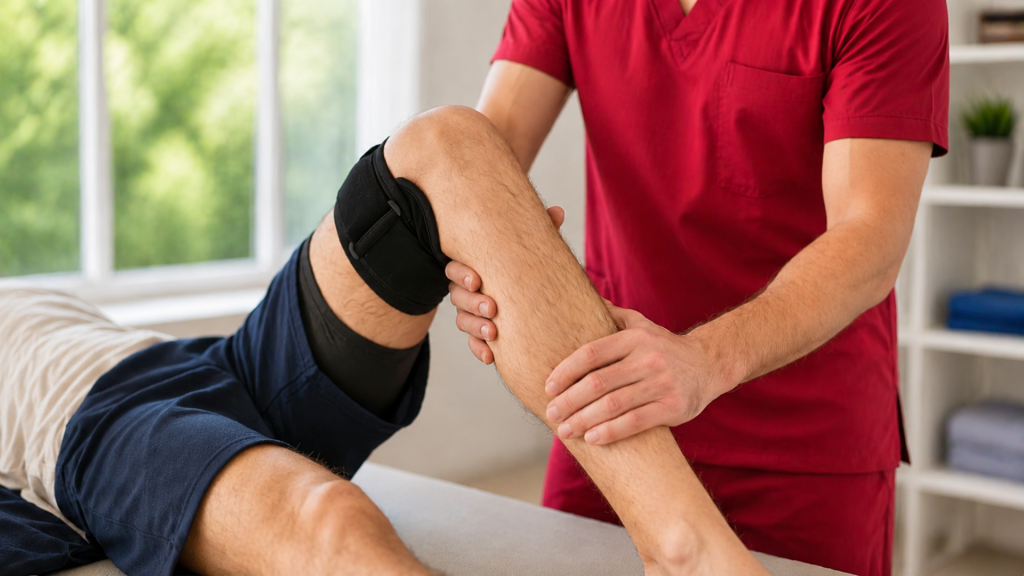
If your shin pain isn’t improving, it’s time to properly assess what’s causing it.
Consider seeking professional help if:
- Pain lasts more than 1–2 weeks despite reducing your training
- Pain keeps coming back each time you run
- Pain is getting worse, sharper, or more localised
At this stage, it’s less about “resting more” and more about understanding what’s actually causing the overload.
Clinics offering sports physiotherapy and integrated care can assess your movement, strength, and running mechanics, while also addressing foot-related factors where needed. This helps you recover more efficiently and return to training with a clearer plan.
If you want to keep running without the cycle of pain → rest → relapse, getting a proper assessment early can make all the difference.
Why Visit Physio and Sole Clinic?
Recovering from shin splints isn’t just about easing pain, it’s about fixing what caused it.
At Physio & Sole Clinic, physiotherapists and podiatrists work together to give you a more complete understanding of your injury.
- Physiotherapists address strength, movement, and running mechanics
- Podiatrists assess foot structure, loading patterns, and footwear
This combined approach allows for a clearer diagnosis and a more targeted rehab plan, helping you return to running sooner and with a lower risk of recurrence.
Instead of managing symptoms alone, you are addressing the underlying cause of your shin pain.
Run Smarter, Not Through Pain
Shin splints don’t mean you have to stop running, but they do mean that something needs to change. The sooner you address the root cause, the faster you can get back to training with confidence.
Whether you’re just starting to run, or building towards a race, the right guidance can help you recover properly and keep training safely.
Take the next step towards pain-free running and a stronger comeback.
Resources from Physio & Sole Clinic
This article is part of Physio & Sole Clinic’s Physiotherapy & Rehabilitation Resource Series, created to help patients better understand their treatment options and make informed decisions about their recovery journey.
You may also find these related resources helpful:
- Physiotherapy in Singapore
Learn how physiotherapy can help manage pain, injuries, and mobility issues.
- Physio & Sole Clinic Locations Guide
Find a Physio & Sole Clinic near you across Singapore for convenient access to physiotherapy care.
- Physiotherapy for Hybrid Athletes in Singapore
A practical guide for hybrid athletes in Singapore on injury prevention, load management, and recovery through physiotherapy.
- How to Prepare Your Feet for a Long Distance Run
Running long distances can place significant stress on your feet. Learn how to prepare properly and prevent common causes of running foot problems.