Skip to content




Written by
Felicia Cher
Senior Musculoskeletal Physiotherapist at Physio & Sole Clinic
A physiotherapist with a unique background in dance and STOTT Pilates, she brings a strong movement-based approach to musculoskeletal, orthopaedic and neurological rehabilitation. She is passionate about helping patients regain function and return to the activities they love.
As a senior musculoskeletal physiotherapist, one of the most common concerns I hear from older adults and their families in Singapore is this:
“I know physiotherapy can help, but is it really okay to do it at home?”
For many seniors, pain, stiffness, balance issues, or recovery after hospitalisation make travelling to a clinic exhausting or even risky. Yet delaying physiotherapy often leads to further loss of strength, confidence, and independence.
This article is written to help seniors and caregivers clearly understand what physiotherapy at home in Singapore involves — how it works, when it’s appropriate, what sessions involve, how much it typically costs, and how to decide if it’s the right option.
When Getting to a Clinic Becomes the Hardest Part

Physiotherapy is most effective when started early and done consistently.
But for many seniors, accessing care isn’t straightforward.
Common challenges include:
- Difficulty walking or standing for long periods
- Fear of falling when travelling
- Dependence on family members for transport
- Fatigue after illness, surgery, or hospital stays
When physiotherapy feels physically or emotionally overwhelming to access, it often gets postponed or stopped altogether.
Why Delaying Physiotherapy Can Make Things Worse
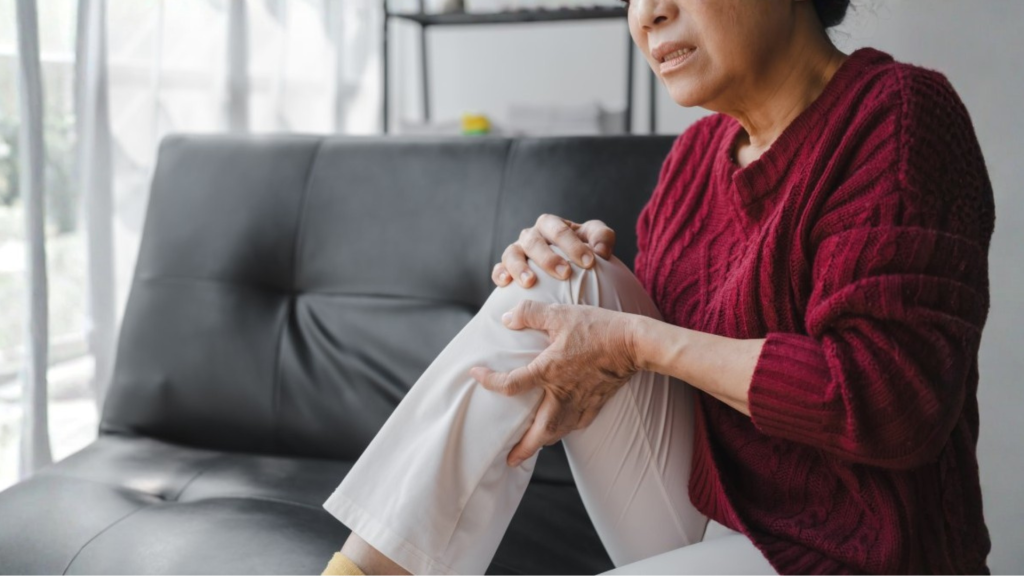
This is the part families don’t always realise.
When movement is reduced:
- Muscles weaken faster with age
- Joints stiffen more quickly
- Balance confidence drops
- Falls risk increases
- Recovery after surgery or illness slows down
Pain and reduced mobility are not inevitable parts of ageing, but they do tend to worsen when rehabilitation is delayed. This is where home-based physiotherapy can make a meaningful difference.
Is It Possible to Do Physiotherapy at Home?

Yes. Physiotherapy can be done safely and effectively at home, and for many seniors, it is the preferred option.
Home physiotherapy involves a licensed physiotherapist visiting the senior’s home to assess, treat, and guide rehabilitation in their own living environment.
At Physio & Sole Clinic, we commonly recommend home physiotherapy for seniors who:
- Have mobility or balance limitations
- Are recently discharged from the hospital
- Are recovering from surgery (e.g., hip or knee replacement)
- Have neurological conditions such as stroke
- Are at higher risk of falls
- Find clinic visits physically taxing
How Physiotherapy at Home Works
Initial assessment
The first session focuses on understanding the senior as a whole person, not just the pain area.
This usually includes:
- Medical and surgical history review
- Assessment of strength, flexibility, balance, and walking
- Pain evaluation
- Observation of how the senior moves in their home
- Identification of environmental risks (e.g., loose rugs, stairs, narrow spaces)
This allows therapy to be highly personalised and relevant to daily life.
Treatment during home sessions
A typical home physiotherapy session may involve:
- Gentle hands-on treatment (when appropriate)
- Strengthening and mobility exercises
- Balance and gait training
- Functional practice (e.g., standing from a chair, bed mobility, stair negotiation)
- Education for caregivers on safe assistance
Because therapy is done at home, exercises are designed around real-life tasks, not just gym-based movements.
How Long Should a Physio Session Be?
Most home physiotherapy sessions for seniors in Singapore last 45 to 60 minutes.
This duration allows:
- Adequate warm-up and rest breaks
- Safe progression of exercises
- Time for education and questions
- Monitoring of fatigue and pain response
For frailer seniors or those with low stamina, sessions may be shorter initially and increased gradually as tolerance improves.
How Many Physio Sessions Per Week Are Needed?
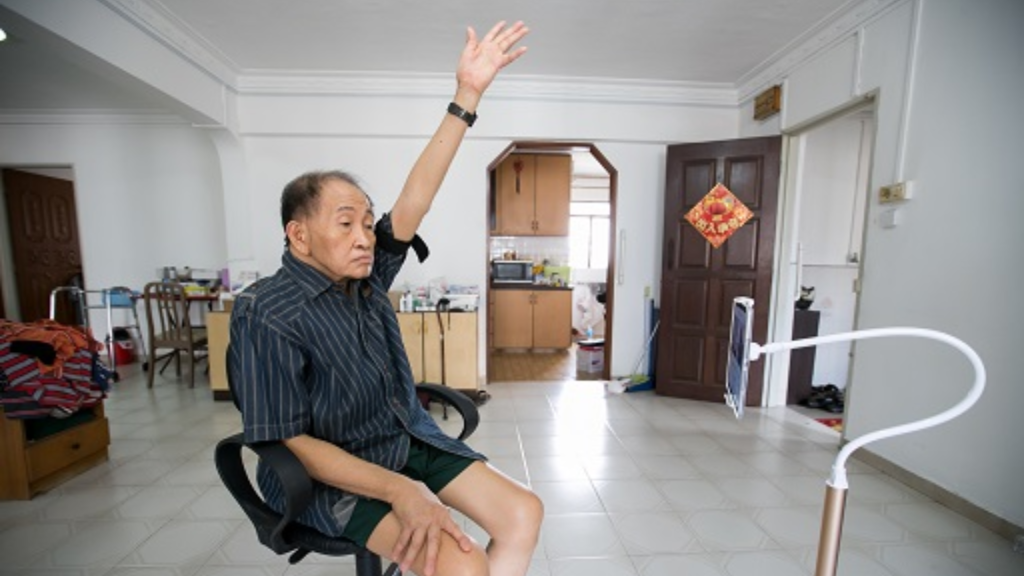
There is no one-size-fits-all answer. Frequency depends on the condition, goals, and recovery stage.
Common recommendations include:
- 1 session per week for maintenance or chronic conditions
- 2 sessions per week for balance training, mobility improvement, or post-hospital recovery
- 2–3 sessions per week for early post-surgical or neurological rehabilitation
As strength and confidence improve, sessions are usually tapered while home exercises continue.
What is The 80/20 Rule in Physiotherapy?
The 80/20 rule is a simple but important concept.
- 20% of progress comes from physiotherapy sessions
- 80% comes from what is done between sessions
This includes:
- Consistently doing prescribed exercises
- Staying active within safe limits
- Applying movement strategies taught during sessions
Home physiotherapy works especially well for seniors because exercises are tailored to their actual living environment, making adherence more realistic.
How Much Does Physiotherapy at Home Cost in Singapore?
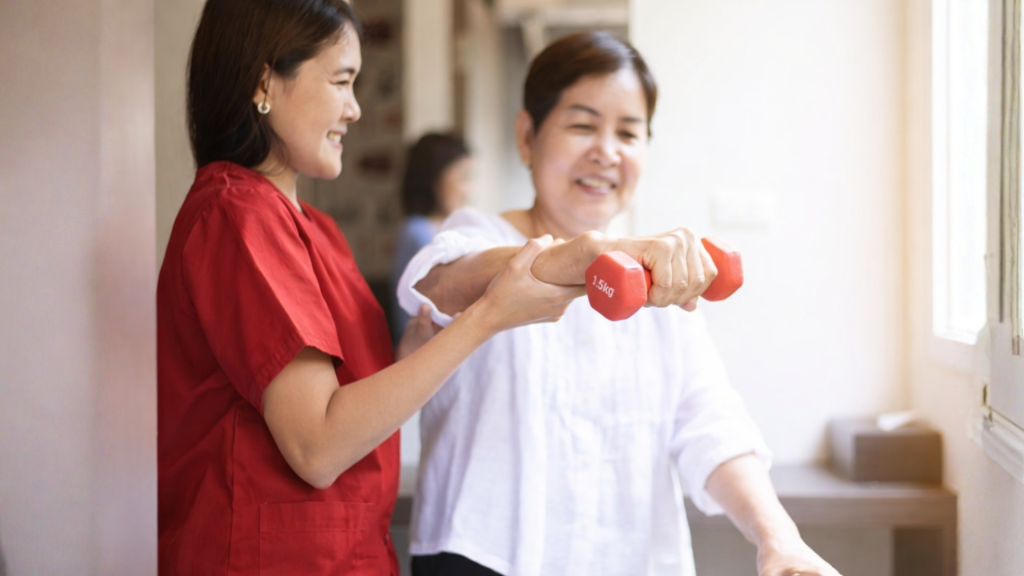
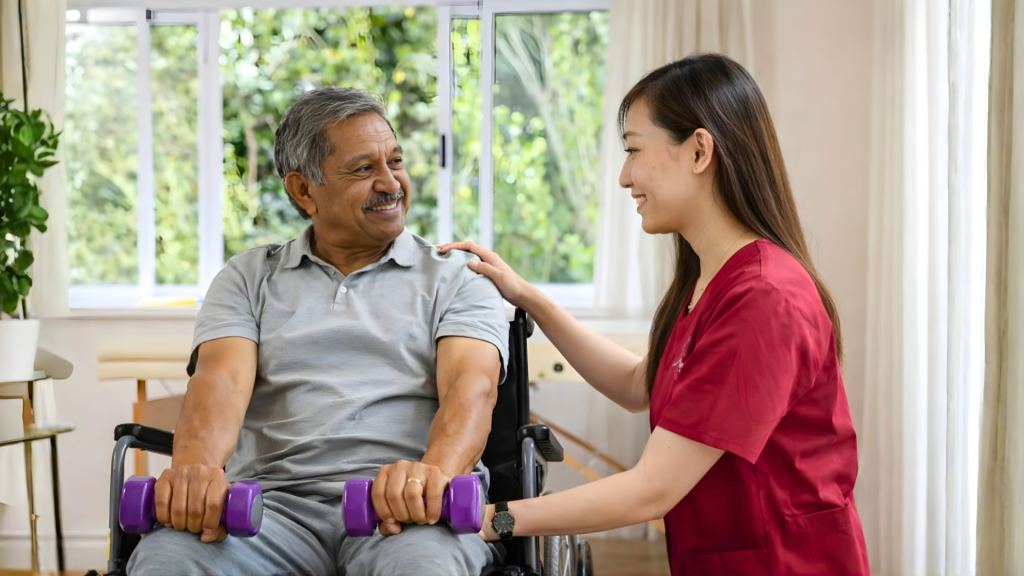
Alt text: Physiotherapist assisting senior woman with light dumbbell strength training at home.
Home physiotherapy typically costs more than clinic-based sessions due to travel time and personalised care.
Costs vary depending on:
- Session length
- Location
- Therapist experience
- Complexity of care
Are there subsidised options?
Some seniors may be eligible for home therapy services through:
- Hospital referrals
- Community care providers
- Agency for Integrated Care programmes
Subsidised services may involve longer waiting times and rotating therapists, while private home physiotherapy offers continuity and scheduling flexibility.
Understanding the Work Behind Each Home Physiotherapy Visit
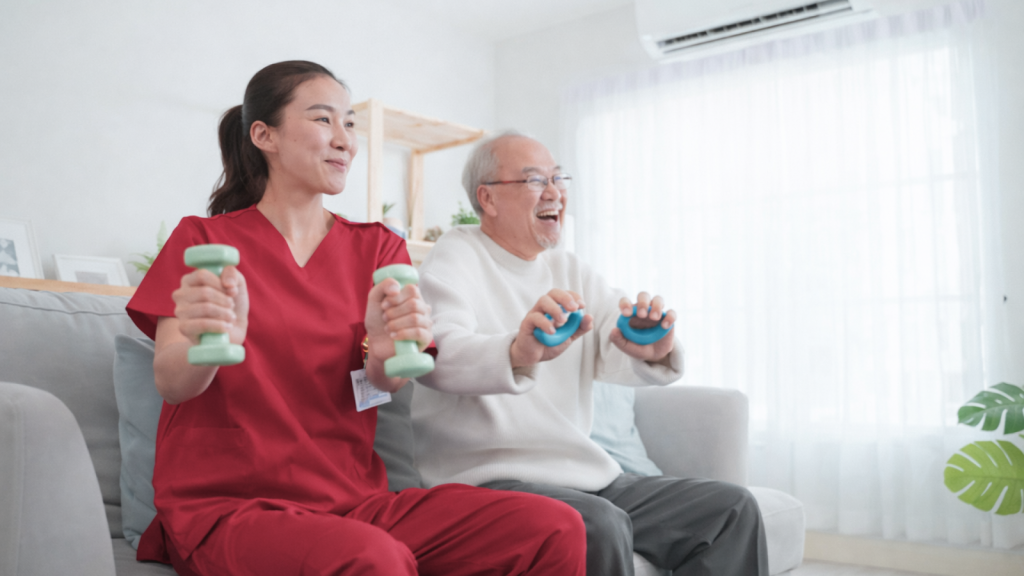
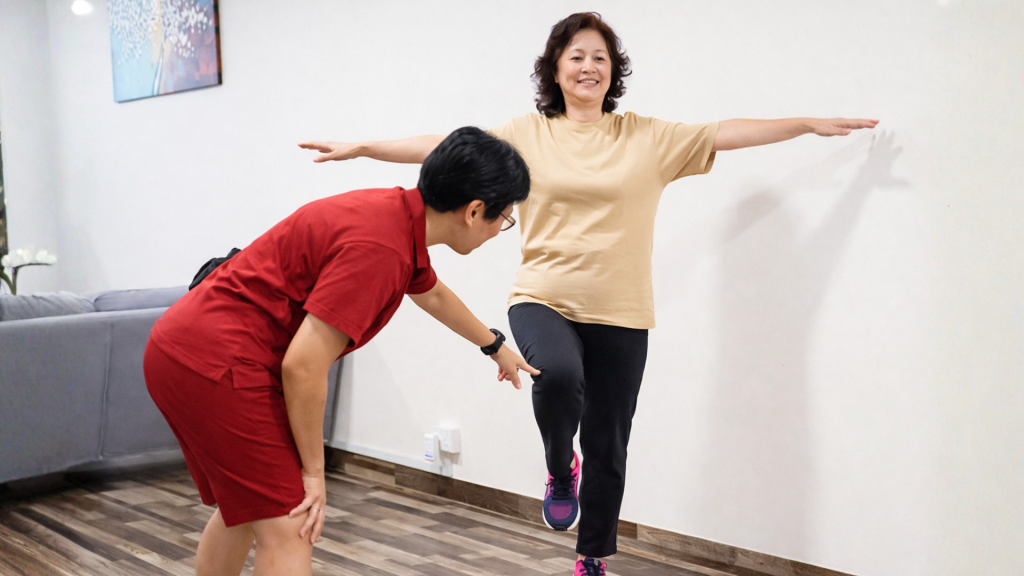
Alt text: Physiotherapist and elderly man doing seated strengthening exercises with small weights.
Physiotherapy involves more than just treatment time.
Each home visit includes:
- Clinical reasoning and care planning
- Hands-on treatment and exercise guidance
- Documentation and communication
- Travel between homes
This is why quality and individualisation matter more than rushing through sessions. A well-structured 60-minute session can be more effective than frequent but generic visits.
Is Physiotherapy at Home Safe for Seniors?
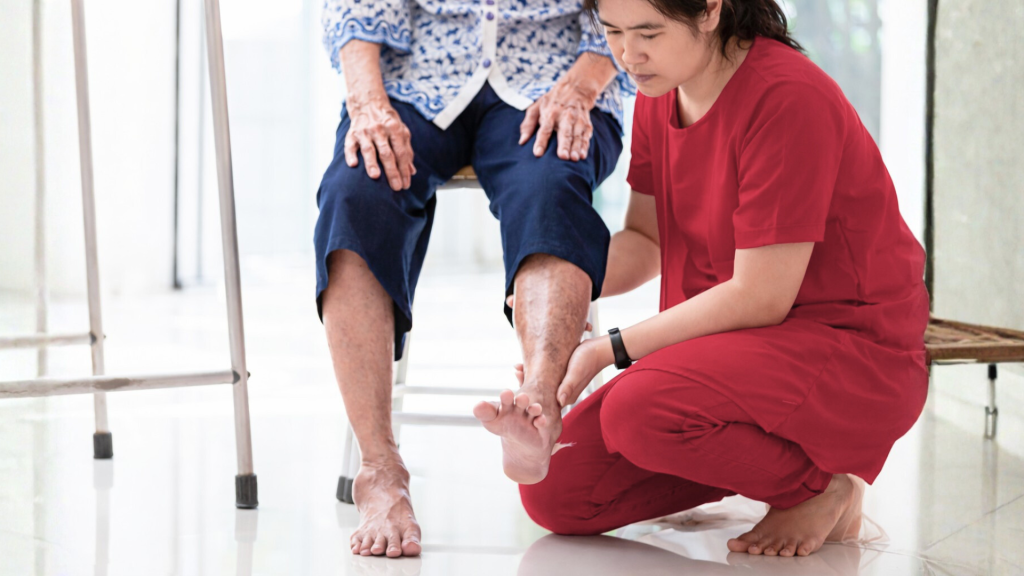
When provided by trained professionals, home physiotherapy is generally very safe.
Safety is enhanced because:
- Exercises are matched to the senior’s ability
- The environment is familiar
- Fall risks can be identified early
- Caregivers can be involved in the process
Physiotherapists are trained to screen for red flags. If symptoms such as sudden severe pain, progressive weakness, unexplained weight loss, or neurological changes appear, referral to a doctor or specialist will be recommended.
When Should You Seek Physiotherapy in Singapore?
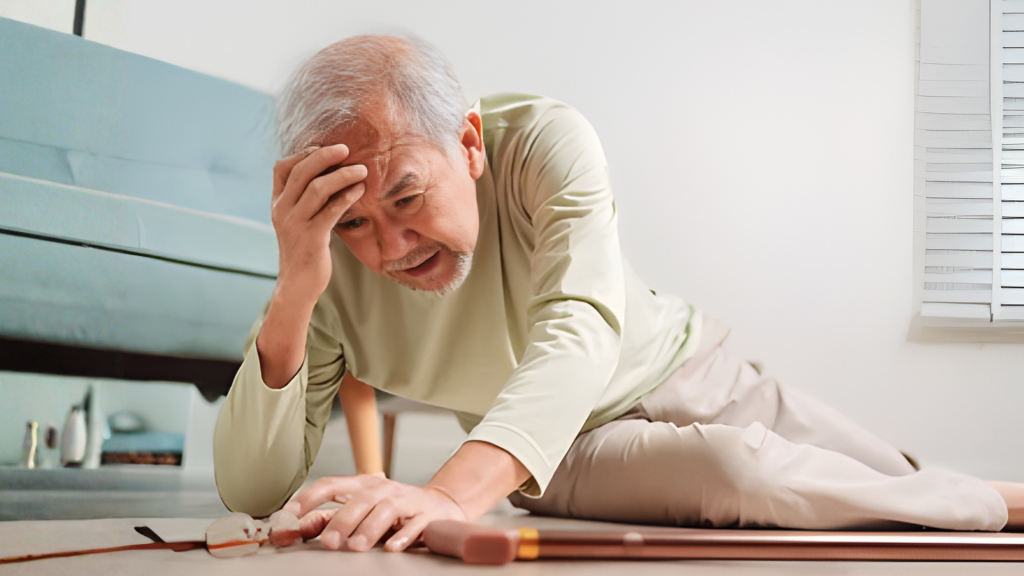
You should consider professional help if a senior:
- Has ongoing pain lasting more than a few weeks
- Is unsteady or has fallen recently
- Is recovering from surgery or hospitalisation
- Avoids movement due to fear or discomfort
- Notices a decline in strength, balance, or overall mobility
Early physiotherapy support can help address these concerns before they progress, improving safety, confidence, and independence at home.
Is Home Physiotherapy Better Than Clinic Care?

Not necessarily.
Home physiotherapy is ideal when:
- Travel is difficult or unsafe
- Functional independence at home is the main goal
- The senior fatigues easily
Clinic-based physiotherapy may be more suitable when:
- Specialised equipment is required
- The senior enjoys getting out of the house
- Higher-intensity rehabilitation is appropriate
Sometimes, a combination of home and clinic sessions works best as recovery progresses.
A Clinician’s Perspective
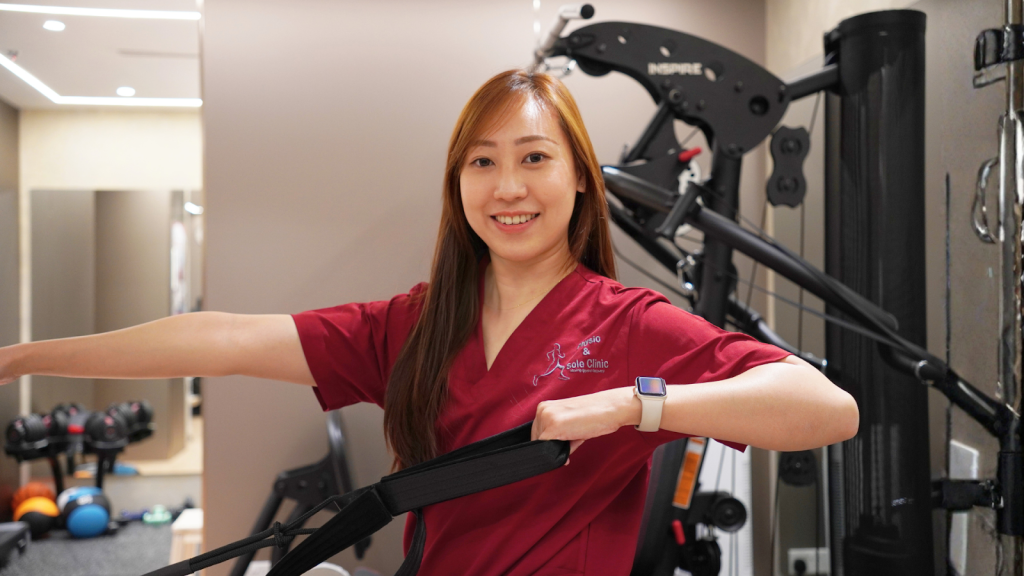
In my clinical experience, seniors often regain confidence faster when therapy is done in their own environment. Practising real-life movements safely and progressively helps rehabilitation feel purposeful rather than intimidating.
Physiotherapy at home isn’t about doing less. It’s about doing what matters most for daily life.
How Physio & Sole Clinic Supports Seniors at Home

At Physio & Sole Clinic, our home physiotherapy services focus on:
- Senior-specific, evidence-based care
- Clear communication with caregivers
- Practical goals tied to daily function
- Safe, gradual progression without over-promising outcomes
Our aim is to support mobility, comfort, and independence in a way that fits each senior’s needs.
Considering Physiotherapy in the Comfort of your Home?
If you are still unsure whether home-based physiotherapy in Singapore is suitable, a professional assessment can help guide the decision.
Book an appointment with us at Physio & Sole Clinic to discover how we can help you regain mobility and maintain your independence with confidence.