

Quick Summary
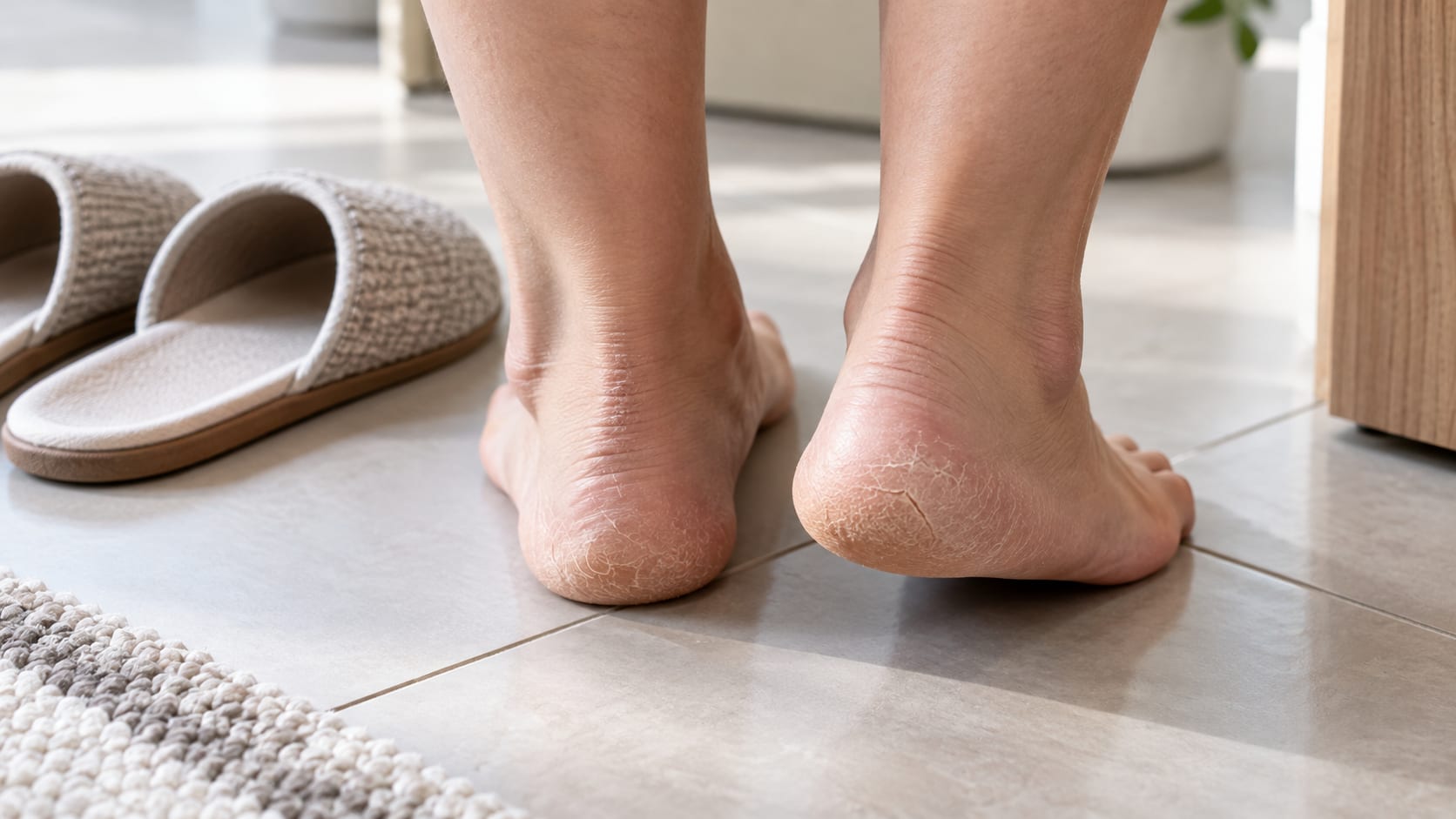
Most cracked heels are due to dry skin, and most respond to daily moisturising and a bit of patience. They look worse than they are.
But a crack is a split in the skin, and skin is the barrier that keeps infection out. In a few groups — people with diabetes above all — that changes what a cracked heel can be. It stops being a cosmetic complaint and becomes a break in the body's defences that needs treatment.
Kelvin graduated with First Class Honours from the University of Southampton in 2010 on a Ministry of Health scholarship, and spent six years as a podiatrist at Singapore General Hospital and Changi General Hospital. A former competitive runner, he works closely with physiotherapists and sports trainers to get patients back on their feet.
Why Do Many People in Singapore Get Cracked Heels?
Not for the reason most articles give. Search this topic, and you will be told cracked heels come from cold, dry weather. That is a temperate-climate explanation, and it does not describe Singapore.
Our cracked heels page — which defines them as "heel fissures", occurring "when the skin on the bottom of your heels becomes dry, hard, and splits" — lists the causes that actually apply here:
- Standing for long periods, especially on hard surfaces
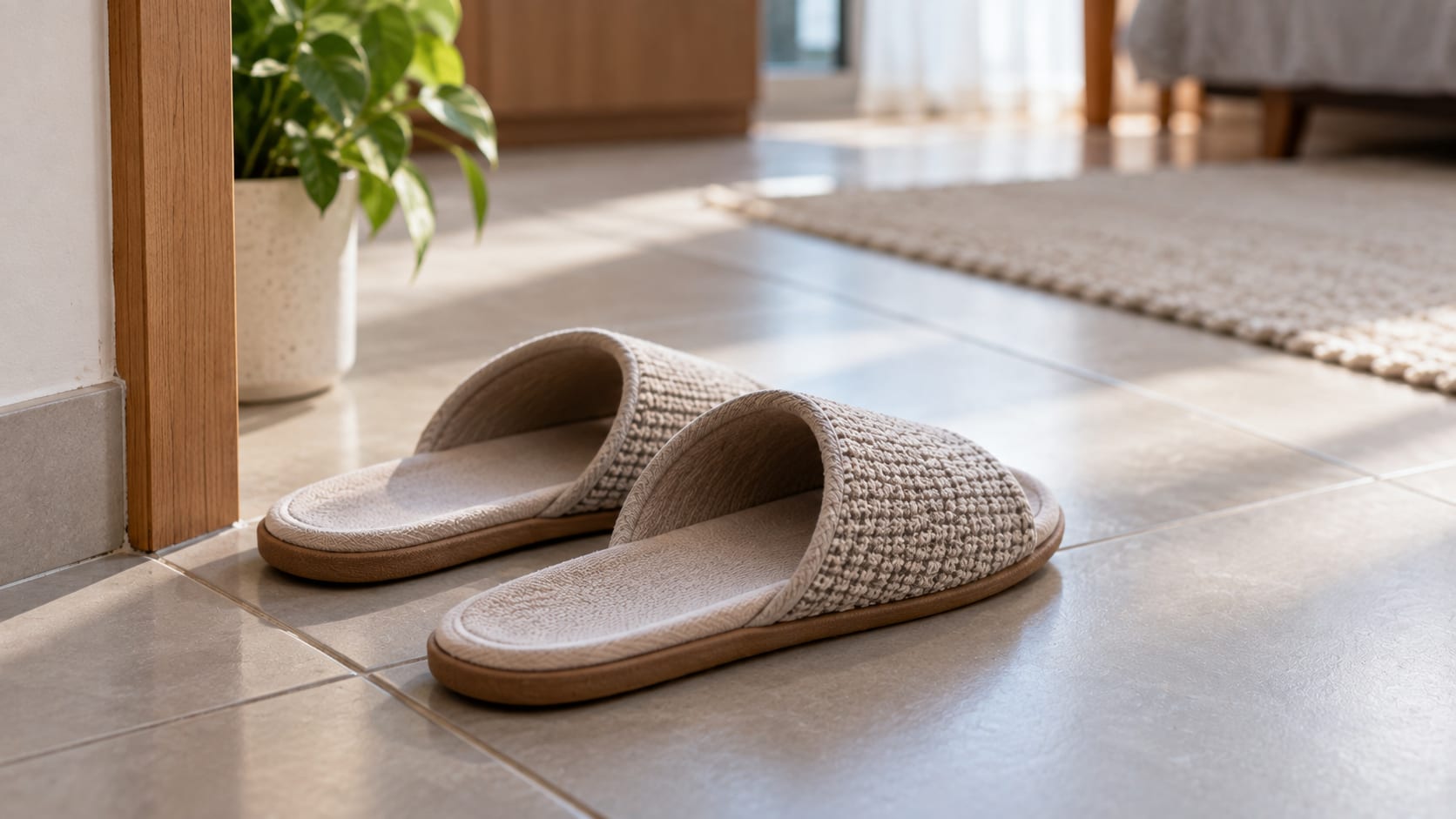
- Walking barefoot or wearing open-backed footwear
- Taking long, hot showers or baths
Those three describe daily life for a lot of people here. Slippers and sandals with an open back are worn year-round. Homes are tiled, and most of us are barefoot in them. And air-conditioned offices and bedrooms dry skin out just as effectively as a cold climate does — the humidity outside does not help the skin that spends the day indoors.
When the skin at the heel is dry and hard, it stops flexing. Every step spreads the heel pad sideways, and skin that cannot stretch splits instead.
What Actually Works at Home?
Moisturising consistently beats moisturising intensively. Twice a day for a month does more than an expensive treatment once a week.
Our condition page recommends applying moisturiser two to three times daily, and gently exfoliating with a pumice stone to remove hard, dead skin. HealthHub's foot care guidance says the same — "use a pumice stone or foot file to gently remove hard skin" (HealthHub — Foot care).
Three things that will make a huge difference:
- File the hard skin first, then moisturise. Creams cannot penetrate thick callus. Softening and reducing the hard skin is what allows the moisturiser to reach living tissue.
- Be gentle and be regular. A pumice stone used a few times a week lightly beats aggressive filing once a fortnight, which may just trigger growth of more hard skin.
- Cover the back of the heel. If open-backed shoes are part of the cause, a closed-back shoe for part of the day gives the skin a chance to rest.
One specific piece of HealthHub guidance is worth quoting exactly, because almost nobody follows it: "Apply moisturiser daily but not between each toe." The heel needs moisture; the spaces between the toes need to stay dry, because trapped moisture there encourages fungal infection instead.
When Is a Cracked Heel a Wound?
When the skin is fully broken — and especially if you have diabetes.
Our condition page puts the distinction plainly: "while minor cracks may only appear unsightly, severe cases can cause pain, bleeding, or even infections, making walking difficult and uncomfortable."
This is the part of the article I would most want people to read. In a diabetic foot, a heel fissure is not a beauty problem. It is a portal. Reduced sensation means it may not hurt, and reduced circulation means it may not heal at the speed you expect — so it can progress a long way before it announces itself.
HealthHub's diabetes foot care guidance is to check the feet daily and watch for "blisters, wounds, corns and calluses" and "redness, swelling, bruises or increased warmth". On infection, it is unambiguous: "if signs of infection are present, such as redness, swelling, increased pain, pus, fever, or the wound starts to smell, seek medical help as soon as possible." For small wounds, it advises seeking help "if there is no improvement after two days."
| What you see | What it means | What to do |
|---|---|---|
| Dry, flaky skin, no split | Early stage | Daily moisturiser, gentle exfoliation |
| Shallow cracks, no bleeding | Common, cosmetic | Home care, review in 2–4 weeks |
| Deep cracks, painful to walk on | Skin barrier compromised | See a podiatrist |
| Any bleeding from a crack | An open wound | See a podiatrist |
| Redness, swelling, warmth, pus, or odour | Possible infection | Seek medical help urgently |
| Any cracked heel and you have diabetes | Treat as a wound from the start | Do not self-treat — have it assessed by a podiatrist |
If you have diabetes, the bottom row overrides every other row. Do not use a pumice stone or any sharp tool on your own feet, and do not wait to see whether it settles.
Our diabetes foot care service and diabetic wound care exist for exactly this, and the reason a podiatrist does the debridement rather than you, is that we can do it without creating a second wound.
What If They Keep Coming Back?
Cracked heels that return no matter what you do are often a symptom rather than the problem.
Alongside lifestyle causes, our condition page lists health conditions that contribute: diabetes, eczema or psoriasis, fungal infections, hypothyroidism, and Sjögren's syndrome or other chronic conditions.
That list is worth taking seriously if home care is not working:
- Eczema and psoriasis affect the skin directly, and heel skin is often involved. These need treating as skin conditions, not just moisturised.
- A fungal infection can present as dry, flaking, splitting skin rather than the obvious itchy rash people expect. If it is fungal, moisturiser alone will not resolve it — see our fungal infection page.
- Hypothyroidism can cause generally dry skin, of which the heels are just the most visible part.
So the useful rule is: if six to eight weeks of consistent daily care has not led to improvement, stop repeating it and find out why. Persisting with the wrong treatment is the most common issue we see with this complaint.
When Should I See a Podiatrist?
When it hurts, when it bleeds, when it keeps returning, or when you have diabetes.
Specifically, book an assessment if:
- The cracks are deep enough to be painful when you walk
- Any bleeding
- There are signs of infection — redness, swelling, warmth, pus or odour
- Home care has made no difference after six to eight weeks
- You have diabetes, or any condition affecting circulation or sensation in the feet
- You cannot safely reach or see your own feet
That last one matters more than it sounds. Reduced flexibility, reduced eyesight, or being unable to reach comfortably means problems are found late, and it is one of the common reasons a manageable heel fissure becomes something worse.
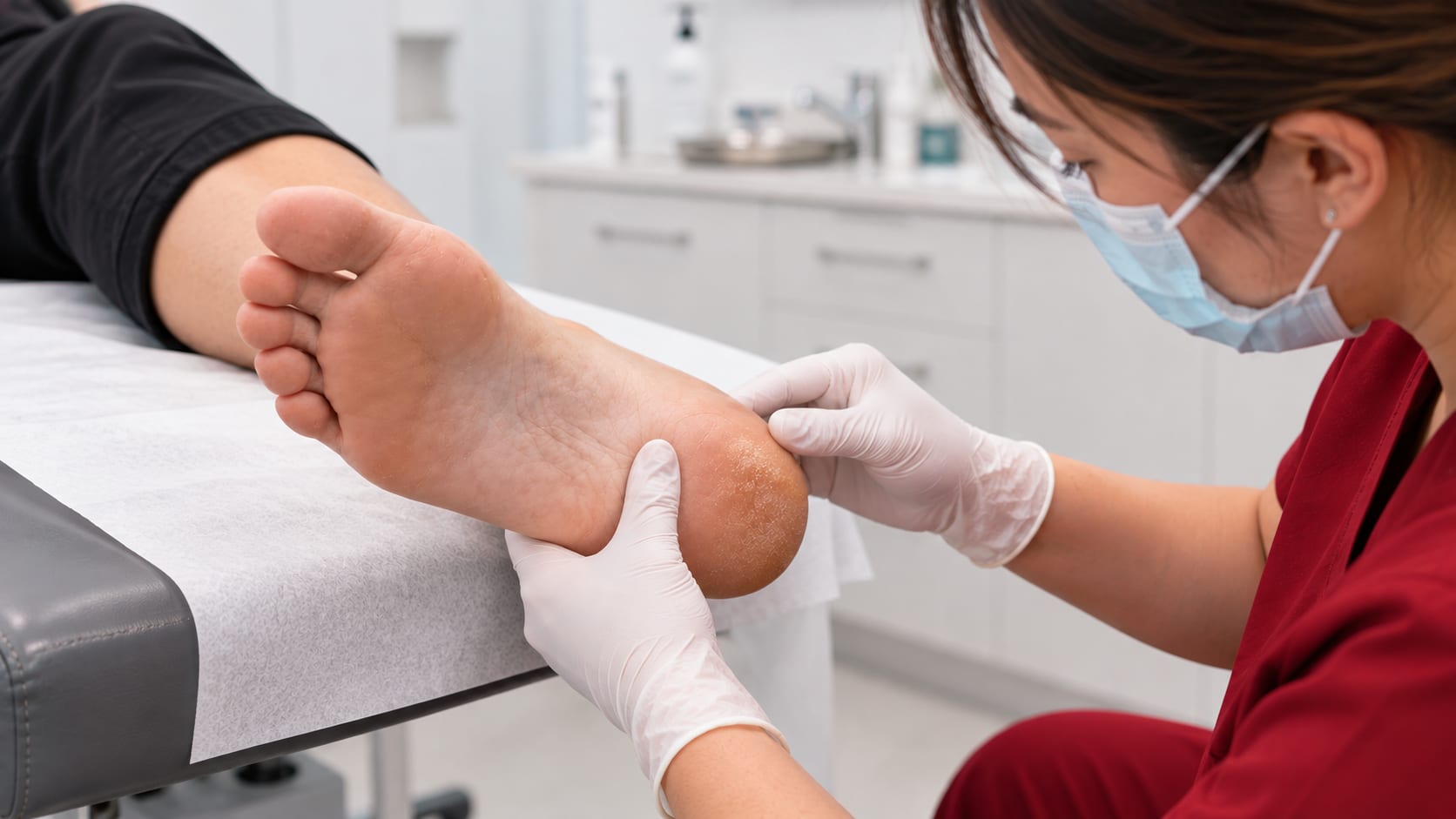
A podiatrist can reduce the hard skin safely in one visit, which achieves in minutes what weeks of home filing does not, and then set up the maintenance that keeps it from rebuilding. Our medical pedicure and corn and callus removal are the usual routes.
Skin That Cannot Stretch Splits
Three things are worth taking from this.
- Most cracked heels are dry skin, and consistency beats intensity. Daily moisturiser and gentle exfoliation, done properly, resolves the majority.
- Bleeding changes the category. A crack that bleeds is an open wound, and it should be treated as one rather than moisturised and ignored.
- Diabetes changes it completely. No self-filing, no waiting to see. A heel fissure in a diabetic foot gets assessed, because the two things that would normally warn you — pain and rapid healing — may both be missing.
Booking a Podiatry Assessment in Singapore?
Physio & Sole Clinic provides podiatry across 11 clinics in Singapore, with no doctor's referral needed for most services.
Our podiatrists can:
- Safely reduce hard skin and treat heel fissures in a single visit
- Assess whether recurring cracks point to a skin condition or fungal infection
- Provide diabetic foot assessment and wound care where the skin is broken
- Set up a maintenance routine so the hard skin does not simply rebuild
If your heels are painful, bleeding, or have not improved despite weeks of care — or if you have diabetes — book an appointment at your nearest clinic.
Find Your Nearest Clinic · Cracked Heels · Diabetes Foot Care
Ready to feel better?
Book a consultation with our podiatry team to get an assessment tailored to you.
Frequently Asked Questions
Usually not. Most are a dry skin problem that responds to daily moisturising. They become a genuine concern when the skin is fully broken, when there is bleeding or infection, or when the person has diabetes — because a crack is a break in the barrier that keeps infection out.
Humidity outside does not moisturise skin that spends the day in air-conditioning. The bigger local factors are open-backed footwear, being barefoot on hard floors at home, standing for long periods, and long hot showers.
With consistent daily care, most improve noticeably within a few weeks. If six to eight weeks of regular moisturising and gentle exfoliation has changed nothing, the cause is likely something other than simple dryness, and it should be assessed.
For most people, yes — gently and regularly rather than aggressively. If you have diabetes, do not use a pumice stone, foot file, blade, or any sharp tool on your own feet. Have hard skin reduced professionally.
No. HealthHub's guidance is to apply moisturiser daily but not between the toes, because moisture trapped there encourages fungal infection. Moisturise the heel and the sole; keep the toe spaces dry.
Either the cause has not changed — open-backed shoes, standing on hard floors, hot showers — or there is an underlying condition such as eczema, psoriasis, a fungal infection or hypothyroidism. Recurrence despite good care is a reason to have it looked at.
Not for most services at a private clinic. Some insurers require a GP or specialist referral before approving a claim, so check your policy if you intend to claim.