

Podiatry condition
Bursitis滑囊炎

In the foot and ankle, the most common site of bursa inflammation is at the back of the heel, and the usual story is someone who has been treated for Achilles tendonitis for months without improving. The two sit millimetres apart and feel similar. They are not the same problem, and they do not respond to the same treatment.
Bursitis at a Glance
| Detail | Information |
|---|---|
| What it is | Inflammation of a bursa, the fluid-filled sac that cushions tendon and bone |
| Most common site in the foot | Behind the heel, where the Achilles meets the heel bone |
| Commonly mistaken for | Achilles tendonitis, or simple heel pain |
| Main driver | Pressure from footwear, or a sudden increase in load |
| GP referral needed? | No |
| First assessment | 30 to 45 minutes |
| Clinicians | Qualified podiatrists |
The Two Bursae Behind the Heel
Almost all heel bursitis involves one of two sacs, and telling them apart changes what is done about it.
- Retrocalcaneal bursitis. The bursa sits in front of the Achilles tendon, between the tendon and the heel bone. Pain is deep, felt on both sides of the tendon rather than on it, and squeezing the area just above the heel bone from both sides at once is usually uncomfortable.
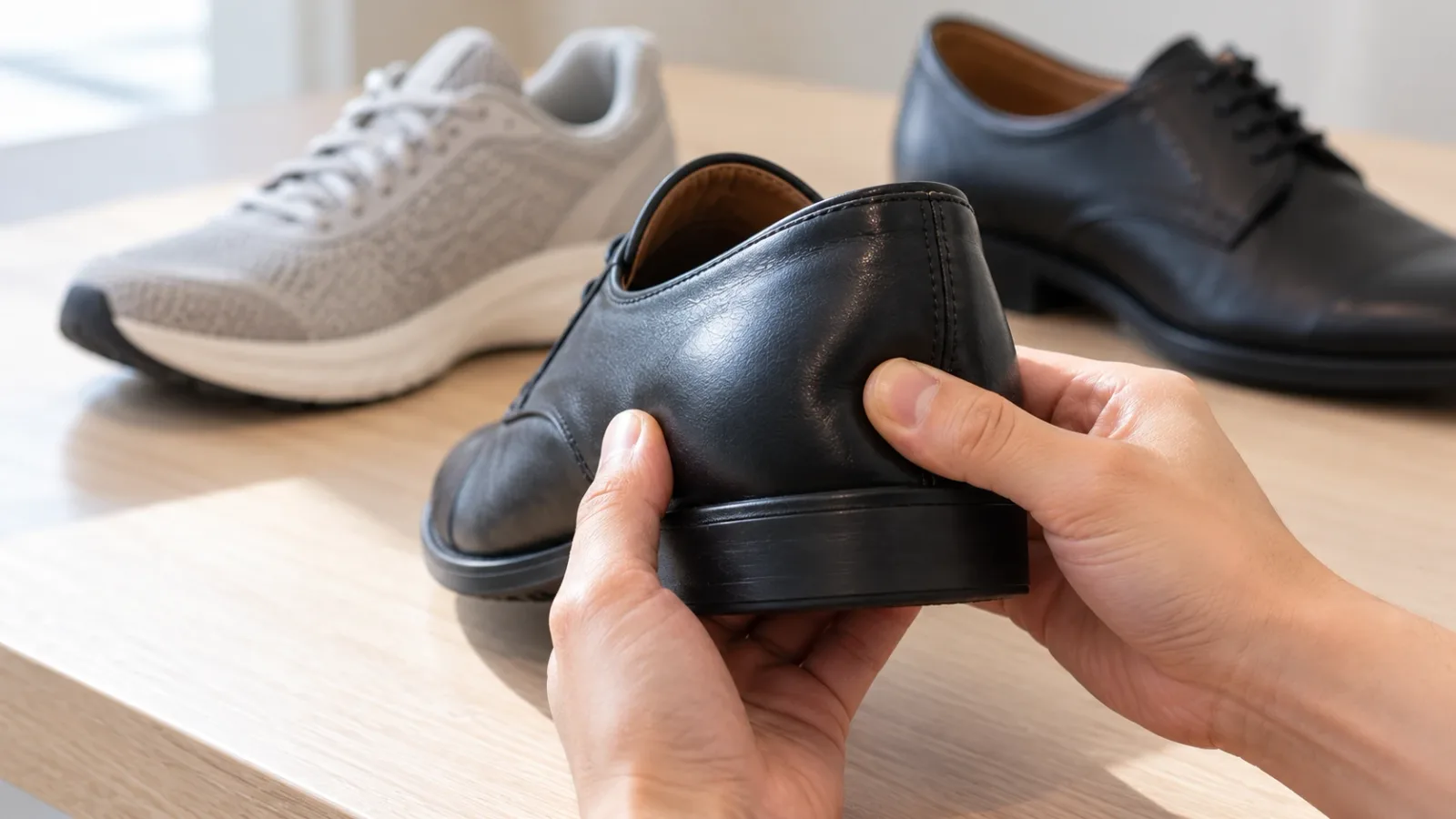
- Subcutaneous calcaneal bursitis. The bursa sits behind the tendon, between the tendon and the skin. This is the one people call a pump bump. It produces a visible, often reddened swelling at the back of the heel that rubs on the heel counter of a shoe.
Both can occur together, and both can occur alongside a genuine Achilles problem, which is part of why the picture gets muddled.
Is It Bursitis, or Is It the Tendon?
This is the question worth getting right, because the answer changes the treatment and the timeline.
Achilles tendinopathy and retrocalcaneal bursitis both hurt at the back of the heel, both are worse after rest and both are aggravated by hills and stairs. A few things separate them:
- Where it hurts to press. Tendon pain is felt on the tendon itself, along its length or at its insertion. Bursal pain sits deeper and slightly in front, and is reproduced by squeezing from both sides rather than pressing from behind.
- What the swelling looks like. Tendinopathy thickens the tendon itself, often a few centimetres above the heel bone. Bursitis produces a softer, more localised fullness, and the subcutaneous kind is visible as a lump.
- How it responds to warming up. Tendon pain classically eases as activity continues and returns afterwards. Bursal pain tends to stay, or worsen, the longer the pressure continues.
- What shoes do to it. Bursitis is strongly associated with the heel counter of the shoe. A stiff heel counter, a new pair, or a change to a shoe with a higher collar are the most common triggers.
If the back of your heel has been treated as a tendon problem for months with no change, the bursa is worth examining before trying another round of tendon loading.
What Causes It
Bursitis is a pressure problem more often than it is an injury:
- Footwear. A rigid or raised heel counter pressing into the back of the heel. Court shoes, dress shoes, ski and skate boots, and new running shoes that have not softened
- A jump in load, such as adding hill running, speed work or a sudden increase in distance
- Haglund's deformity, a bony prominence on the upper back of the heel bone that leaves less room for the bursa and makes shoe pressure worse
- A tight calf, which increases compression of the retrocalcaneal bursa as the ankle bends
- Foot type, with both a high arch and a flat foot changing how the heel sits in the shoe
- Inflammatory arthritis, including rheumatoid arthritis and the spondyloarthropathies, which can inflame a bursa without any mechanical cause at all
That last one matters. Bursitis in several joints at once, or bursitis in someone with no obvious pressure source, is worth investigating medically rather than treating as a footwear problem.
Bursitis Elsewhere in the Body
The foot is not the only site. The same problem occurs at the shoulder, hip, knee and elbow, and the principles are the same even though the management differs:
- Shoulder, where subacromial bursitis commonly accompanies a rotator cuff problem
- Hip, where trochanteric bursitis causes pain on the outside of the hip, often worse lying on that side
- Knee, in front of the kneecap, traditionally in people who kneel for work
- Elbow, at the point of the elbow, where it produces an obvious swelling
These are managed by our physiotherapy team rather than at the podiatry clinic. If your pain is at the hip, knee or shoulder, those pages are the better starting point.
How a Podiatrist Helps
Step 1: Establishing which structure is actually involved
- Palpation that distinguishes the tendon from the bursa in front of it and the bursa behind it
- Assessment of ankle range, calf length and how the heel loads during walking
- Examination of the shoes you actually wear, including where the heel counter sits against the heel
- Checking for a bony prominence, and for signs that point to an inflammatory cause rather than a mechanical one
Step 2: Taking the pressure off
- Changing or modifying footwear, which is the single most effective intervention for the subcutaneous bursa
- Padding or offloading to redistribute pressure away from the inflamed sac
- A temporary heel raise to reduce compression while symptoms settle
- Activity adjustment, so loading continues in a form the bursa tolerates rather than stopping altogether
Step 3: Addressing why it happened
- A calf lengthening and loading programme, since limited ankle dorsiflexion keeps the compression going
- Customised insoles where foot position is part of the cause
- Sports podiatry assessment where training load or running mechanics set it off
- Guidance on reintroducing the footwear or activity that triggered it, rather than avoiding it indefinitely
Where a stubborn case sits alongside an Achilles problem, extracorporeal shockwave therapy is sometimes used for the tendon component. It treats the tendon, not the bursa, which is another reason the distinction matters.
When It Needs More Than Foot Care
Some presentations need medical attention rather than treatment at a podiatry clinic. See a doctor if:
- The area is hot, red, rapidly swollen, or you feel unwell or feverish. An infected bursa is a medical emergency and needs treating urgently rather than over the following week. This is more likely if the skin over it has been broken
- You have diabetes and there is any redness, swelling or break in the skin at the back of the heel
- Several joints are affected at once, or you have other joint pain, morning stiffness lasting more than an hour, or a known inflammatory condition
- There was a clear injury and you cannot push off properly, which needs the tendon itself assessed
- It has not improved after several weeks of reduced pressure and appropriate footwear changes
When Should You See a Podiatrist?
It is worth booking an appointment if pain at the back of the heel has lasted more than a few weeks, if a shoe you need to wear has become intolerable, if there is a visible lump at the back of the heel, or if you have been treating it as Achilles tendonitis without improvement.
You do not need a doctor's referral to see a podiatrist in Singapore.
Frequently Asked Questions on Bursitis
How do I know if it is bursitis or Achilles tendonitis?
Tendon pain is felt on the tendon itself and often eases as you warm up. Bursal pain sits deeper and slightly in front of the tendon, is reproduced by squeezing the heel from both sides, and tends to be driven by the back of the shoe rather than by activity alone. The two can also coexist, which is why an examination settles it more reliably than a symptom checklist.
Is a pump bump the same thing?
A pump bump is the visible swelling of the bursa sitting between the Achilles and the skin, usually with a bony prominence underneath it. The swelling can settle with pressure relief. The bone underneath does not change, so footwear remains the thing that keeps it comfortable.
Will rest fix it?
Rest helps while the pressure source continues, and the problem returns when you go back to the same shoes or the same training. Bursitis is better thought of as a loading and footwear problem than as something that heals with time off.
Do I need a scan?
Usually not. Most cases are diagnosed by examination. Imaging is more useful when the picture is unclear, when an inflammatory cause is suspected, or when symptoms have not responded to appropriate treatment.
Can I keep running?
Often yes, in modified form. Reducing hills and speed work, changing to a shoe with a softer or lower heel collar, and continuing at a level the heel tolerates usually works better than stopping completely, because complete rest does nothing about the cause.
Do I need a referral to see a podiatrist for bursitis?
No. You can book a podiatry assessment directly at any of our clinics in Singapore.
Personalised care
Ready to get back on your feet?
Our podiatrists can assess your symptoms and build a care plan around your goals.
Cashless care options
Insurance
We work with leading insurers to make eligible physiotherapy and podiatry visits more convenient.









Direct billing is subject to your membership terms. Our clinic team can help check your panel eligibility.