Physiotherapy condition
Cervical Radiculopathy颈神经根病变

The distinguishing feature is that the arm is usually the louder complaint. Ordinary neck pain stays in the neck and shoulders. When pain, pins and needles or weakness follow a line down the arm and into particular fingers, a nerve root is the more likely source, and the assessment is a different one.
Cervical Radiculopathy at a Glance
| Detail | Information |
|---|---|
| Most common cause | Disc herniation in younger adults, age-related degenerative narrowing from middle age onward |
| Typical recovery | 4–8 weeks of progressive management, though some take 3–6 months or longer |
| Session duration | 45–60 minutes |
| GP referral needed? | No |
| Insurance accepted | Multiple panels |
| Clinicians | AHPC-registered |
What Causes Cervical Radiculopathy?
Herniated disc. The most common cause in younger people. A disc in the neck bulges outwards and presses on or irritates a nearby nerve root. This is the same mechanism as a slipped disc lower down the spine.
Degenerative changes. Ageing of the cervical spine narrows the space a nerve root passes through: thickening of the facet joints and surrounding ligaments, bone spurs around the vertebrae, and disc degeneration all reduce that clearance. This is the more usual cause from middle age onward.
Daily habits and work. Long hours in the same neck position, like looking down at a phone or screen, can leave your neck feeling tight and stiff. This doesn't directly pinch a nerve, but it can make symptoms flare up or feel worse once a nerve is already irritated. Other things linked to higher risk include smoking, heavy lifting at work, and having had neck problems before.
What Does Cervical Radiculopathy Feel Like?
Pain following a nerve path. Neck pain, often on one side, travelling down the arm along a defined route rather than spreading vaguely. It is commonly provoked by looking upwards or turning towards the painful side.
Numbness and tingling. Pins and needles or loss of sensation in the arm, hand or specific fingers.
Muscle weakness. The muscles supplied by the affected nerve can weaken, which tends to be noticed as difficulty with grip, or with wrist and hand movements.
Relief with the arm overhead. Many people find that resting the hand on top of the head eases the arm symptoms. It is a recognised feature of nerve root irritation and worth mentioning at assessment.

Red flags. Seek urgent medical attention if you experience:
Numbness or weakness in both arms, or in the legs
Loss of balance, unsteadiness, or difficulty with fine movements such as buttoning a shirt
Changes in bladder or bowel control
Neck pain following trauma such as a fall, collision or blow to the head
Severe headache with fever and neck stiffness
Arm or neck pain with chest pain, breathlessness or sweating
Rapidly worsening arm weakness
Dizziness, double vision, slurred speech or fainting together with neck pain
Unexplained weight loss, a history of cancer, or constant severe pain that is worse at night
Some of these point to compression of the spinal cord rather than a single nerve root. Others suggest a fracture, infection or a problem with the heart or blood vessels. All need prompt medical assessment rather than physiotherapy.
How Does Physiotherapy Help Cervical Radiculopathy?
Step 1: Assessment
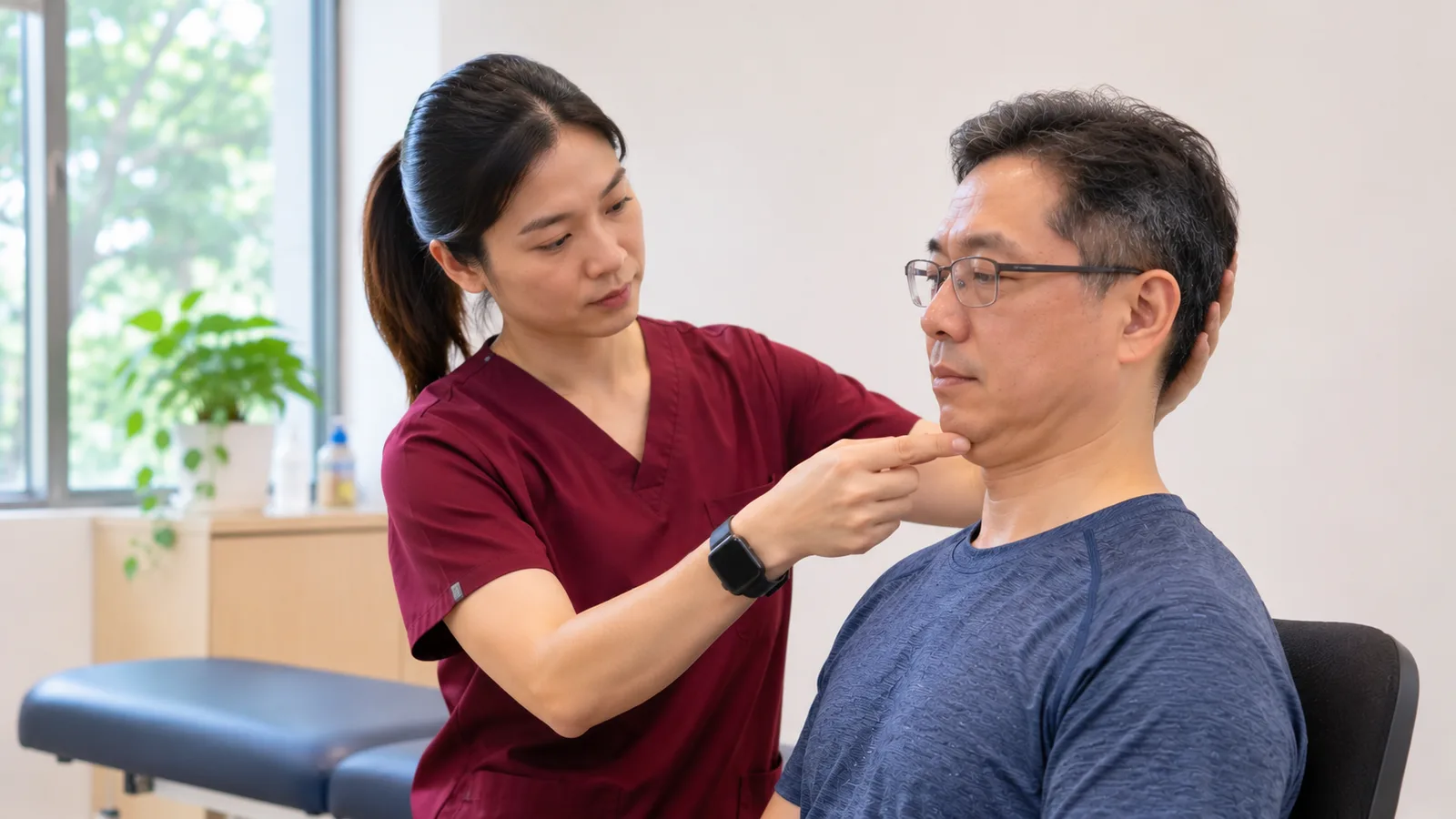
Neurological screening: reflexes, sensation and muscle power in the arms, to establish which nerve root is involved and whether strength is affected
Active and passive cervical range of motion testing
Cervical joint mobility assessment, including the movements that reproduce and relieve the arm symptoms
Postural analysis: head position, thoracic curvature and shoulder alignment
Step 2: Settling the Nerve
Activity and position modification: identifying what provokes the symptoms and removing it, which is a very important part of helping things settle
Manual therapy: cervical joint mobilisation and soft tissue release of the neck musculature, to reduce pain and restore segmental movement
Cervical traction: can be considered for some people with persistent arm pain. Research findings are mixed, so it is used selectively and in combination with other treatment
Pain-relieving modalities such as heat or transcutaneous electrical nerve stimulation (TENS)
Step 3: Strengthening and Return to Normal Loading
Gentle neck and shoulder movement starts early, within what is comfortable. As the symptoms improve, strengthening of the neck, shoulder and shoulder blade muscles is built up gradually. Targeted stretching is used alongside it where muscle tightness is contributing to the pressure on the nerve.
Deep neck flexor activation
Scapular stabiliser strengthening: lower trapezius and serratus anterior
Thoracic spine mobility, since upper back stiffness forces the neck to compensate
Workstation assessment where desk posture is part of the picture
What Results Can You Expect?
Most people improve over several weeks to a few months, and the outlook is generally good. Many notice meaningful relief within the first 4–8 weeks, though full recovery can take 3–6 months or longer. If symptoms are severe or not improving, your doctor or physiotherapist may discuss other options such as medication, injections or, rarely, surgery.
Symptoms can come back after they settle. Ongoing neck and shoulder exercise can help reduce the chance of flare-ups, and our physiotherapist can advise what suits you. More of our clients have recently chosen Clinical Pilates as a structured way to keep building strength and control in the neck and shoulder blade muscles.
When Should You See a Physiotherapist?
Neck pain with pain, numbness or tingling radiating into the arm or hand
Weakness in the arm, grip or hand
Neck pain that is worse when looking up or turning towards the painful side
Symptoms that have not begun to settle within a week or two
Any of the red flags above, which warrant urgent medical attention rather than physiotherapy
Book an appointment at any of our 11 clinic locations across Singapore. No GP referral is needed.
Frequently Asked Questions on Cervical Radiculopathy
Is cervical radiculopathy the same as a pinched nerve?
Effectively, yes. "Pinched nerve" is the everyday term for a nerve root in the neck being compressed or irritated. Cervical radiculopathy is the clinical name, and the "radicular" part refers to symptoms travelling along the path of that nerve root.
How is it different from ordinary neck pain?
Ordinary neck pain stays in the neck and shoulders. Cervical radiculopathy produces symptoms that travel down the arm along a specific nerve path, often with numbness, tingling or weakness rather than pain alone. The two can occur together, and the assessment is what separates them.
Will I need an X-ray or MRI?
Not usually. The condition can generally be diagnosed clinically from the pattern of symptoms and a neurological examination. Imaging is considered if you have red flags, progressive or significant weakness, signs of spinal cord involvement, or no improvement after around six weeks of care, or if an injection or surgery is being considered. Scans often show disc bulges and wear-and-tear in people with no symptoms at all, so results are always read alongside the examination.
Does it need surgery?
Most cases are managed without surgery. Surgery is considered where symptoms do not respond to conservative treatment, or where there is progressive weakness or evidence of spinal cord involvement. That is a decision made with a specialist, and your physiotherapist can arrange a referral where it is warranted.
Can I exercise with cervical radiculopathy?
Usually yes, with modification. Overhead pressing and heavy loading through the arms often need to be paused while the nerve settles. Low-impact activity is generally encouraged, and specific strengthening is reintroduced once the arm symptoms have calmed.
Which nerve causes symptoms in which fingers?
Each nerve root supplies a defined area. As a general guide, C6 tends to produce symptoms in the thumb and index finger, C7 in the middle finger, and C8 in the ring and little fingers. The pattern is one of the things your physiotherapist uses to identify the level involved.
Related Articles
Personalised care
Ready to get back on your feet?
Our physiotherapists can assess your symptoms and build a recovery plan around your goals.
Cashless care options
Insurance
We work with leading insurers to make eligible physiotherapy and podiatry visits more convenient.









Direct billing is subject to your membership terms. Our clinic team can help check your panel eligibility.