Physiotherapy condition
Hamstring Injury腘绳肌损伤

The frustrating part is rarely the first injury. It is the second one, three weeks after going back to sport, because the first was treated as a pulled muscle that needed rest rather than a muscle that needed rebuilding.
Hamstring Injury at a Glance
| Detail | Information |
|---|---|
| What is injured | One of the three hamstring muscles at the back of the thigh |
| Classic symptom | Sudden pain at the back of the thigh during sprinting or a high kick |
| Typical recovery | A few weeks for a minor strain; longer where the injury is close to the hip |
| GP referral needed? | No |
| Insurance accepted | Multiple panels |
| Clinicians | AHPC-registered |
What Is a Hamstring Injury?
The hamstrings are three muscles running down the back of the thigh: biceps femoris on the outside, semitendinosus and semimembranosus on the inside. They start at the sitting bone, cross both the hip and the knee, and work hardest when they are lengthening under load rather than shortening.
That is the vulnerable moment. In the last part of a sprinting stride, the leg swings forward, the knee straightens, and the hamstring has to decelerate it while being stretched. Most hamstring injuries happen in that instant, not while pushing off.
A hamstring injury means some of the muscle fibres, or the tendon they attach through, have been overloaded past what they could tolerate. How much, and where along the muscle, is what decides how long it takes to recover.
Is It Your Hamstring, or Your Back?
This is the question worth answering early, and the one most often skipped when the pain is obviously at the back of the thigh.
The sciatic nerve runs from the lower back, past the sitting bone and down the back of the thigh, directly alongside the hamstrings. Irritation anywhere along that path can be felt in the same place as a hamstring tear. So can a problem at the sitting bone itself.
A few patterns help tell them apart:
- How it started. A true hamstring strain has a moment: a sprint, a stretch, a kick, often with a sensation of something going. Back-referred pain usually builds without a clear event.
- What it feels like. A strain is a localised, sore, mechanical pain that hurts when you load it. Nerve-referred pain is more often a line of pain, burning or tingling, and can extend past the knee into the calf or foot.
- What provokes it. A strain hurts when you stretch or contract the hamstring. Back-driven pain changes with sitting, bending or coughing instead.
- Where exactly. Pain right on the sitting bone that is worse with prolonged sitting and driving points towards the tendon at its attachment, which behaves differently from a mid-muscle tear and is rehabilitated differently.
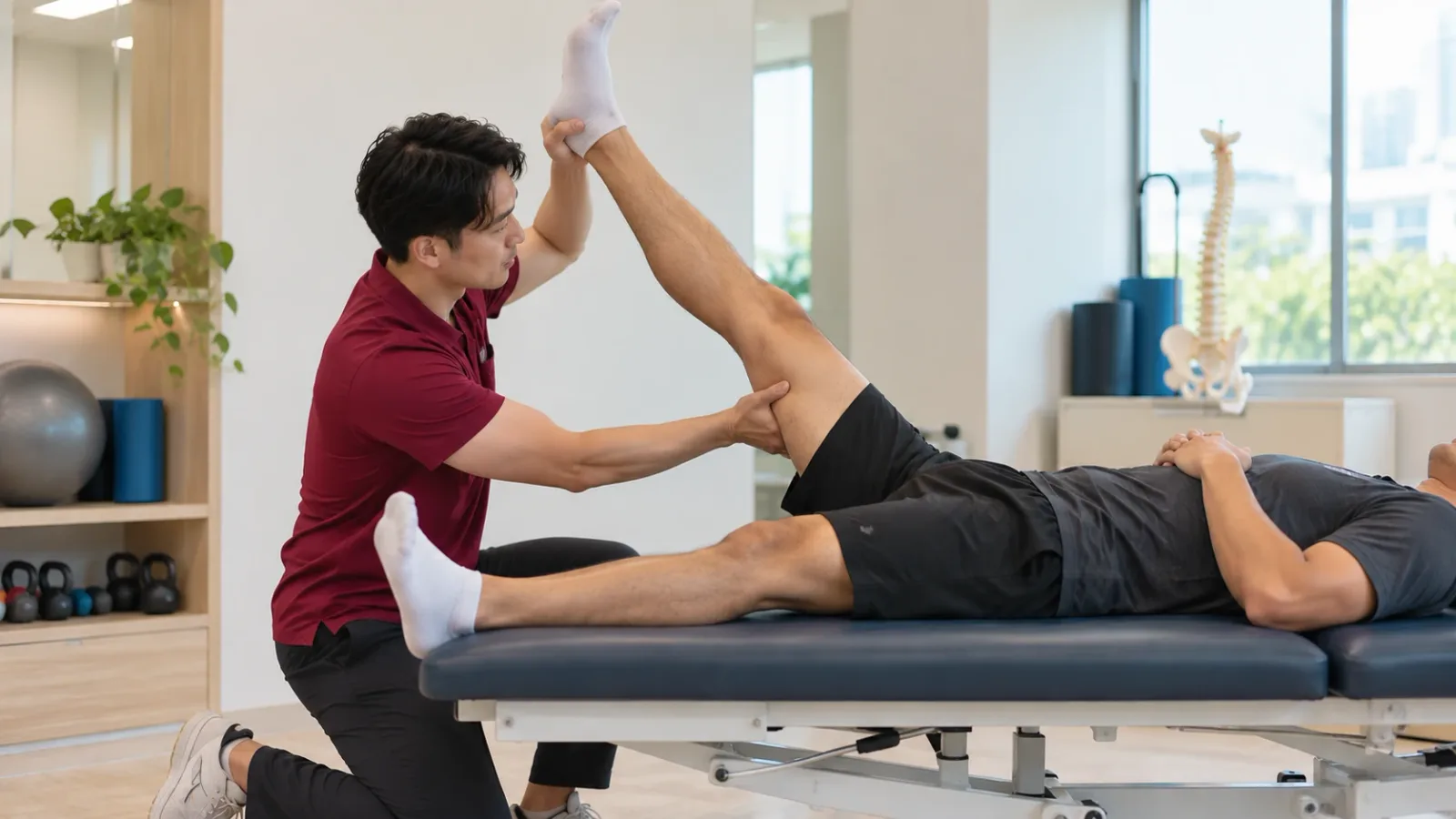
Both can be present at once, which is why the assessment looks at the lower back, the hip and the hamstring rather than only the sore part.
What Does It Feel Like?
Most people describe a sudden sharp pain at the back of the thigh, sometimes with a pulling or tearing sensation, and have to stop what they are doing immediately.
What follows over the next few days gives a rough sense of severity:
- Minor. Tightness and soreness, walking is normal, you can jog gently but not sprint. Often no bruising.
- Moderate. Clear pain on walking, a limp, pain when you bend the knee against resistance, and bruising appearing after a day or two as blood tracks down the thigh.
- Severe. Difficulty weight bearing at all, significant swelling and bruising, and marked weakness.
Bruising that appears below the injury is normal and follows gravity. It usually looks worse than the injury is.
Where the injury sits matters as much as how bad it is. Injuries close to the sitting bone, and those that happen during a slow stretch such as a high kick or a split, generally take longer to settle than one in the middle of the muscle during a sprint.
What Causes It?
Hamstring injuries are rarely bad luck alone. The common contributors are:
- A previous hamstring injury. This is the strongest single predictor, which is why how the first one is rehabilitated matters so much
- Not enough eccentric strength, meaning strength while the muscle is lengthening under load, which is the exact demand that injures it
- Fatigue, with injuries clustering late in matches and late in training sessions
- A sudden jump in sprinting load, such as returning to a sport after a break, or adding speed work quickly
- Limited hip mobility or weak gluteal muscles, which leave the hamstring doing more of the work at the hip
- Lower back or pelvic problems that change how the hamstring is recruited
How Physiotherapy Helps
Step 1: Working out what was injured, and where
- A history that establishes the mechanism, because a sprinting injury and a stretching injury behave differently
- Examination to locate the injury along the muscle, including how close it is to the sitting bone
- Strength and flexibility testing compared with the other leg
- Screening of the lower back, pelvis and hip so a referred or contributing problem is not missed
Step 2: Settling it without losing strength
- Early protected loading rather than complete rest, because muscle that is not loaded loses strength quickly and heals less well organised
- Manual therapy and soft tissue work to the thigh, hip and lower back as symptoms allow
- Dry needling where protective muscle tension around the injury is limiting movement
- Gentle range of movement work within a pain-free range
- Guidance on walking, sitting and daily activities, particularly where the injury is near the sitting bone and sitting is uncomfortable
Step 3: Rebuilding it so it holds
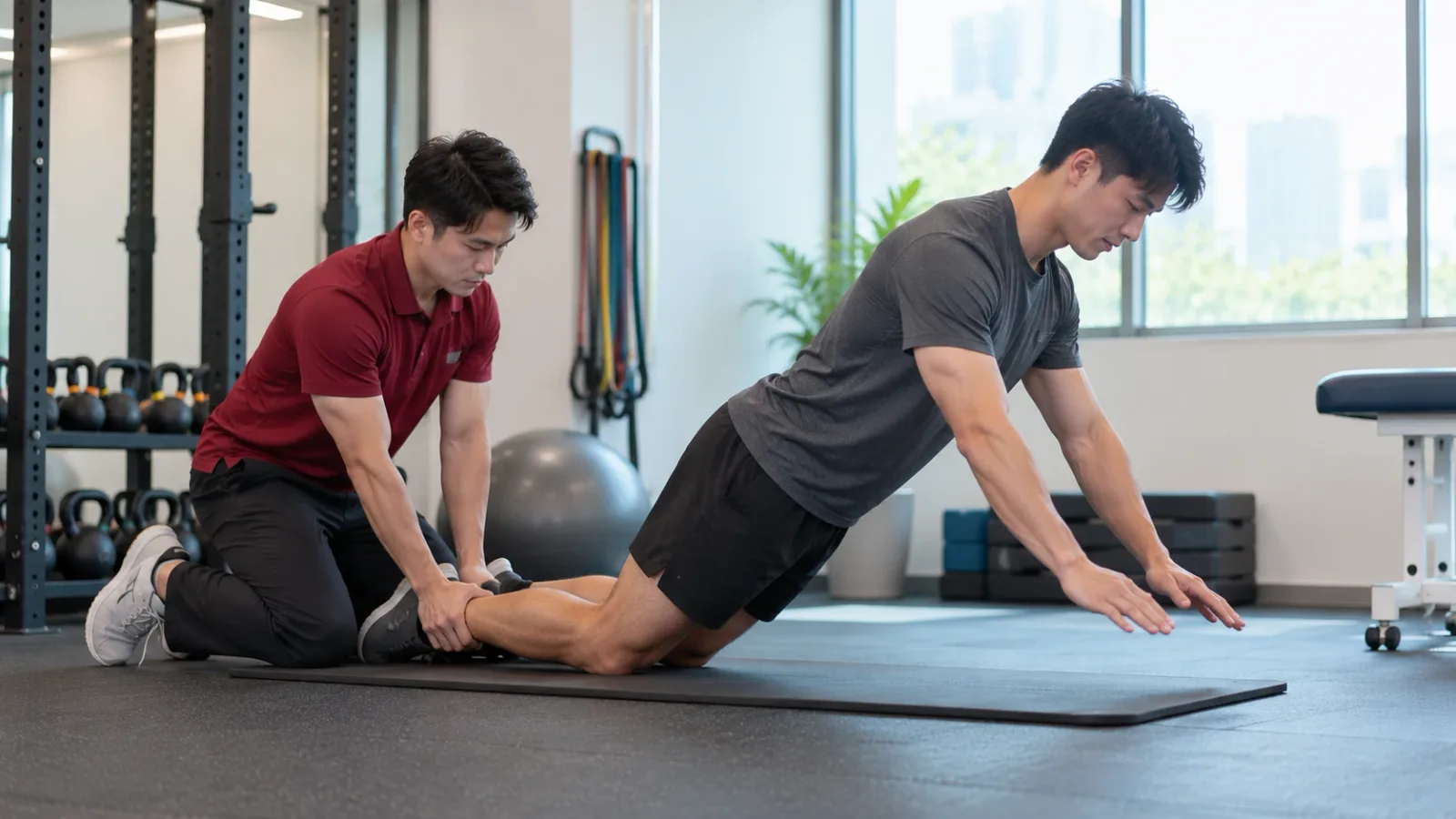
- Progressive eccentric strengthening, loading the hamstring while it lengthens, which is the demand that injured it and the one it has to be able to meet again
- Strength through the whole chain, including gluteals, calf and trunk, so the hamstring is not covering for something else
- A graded running programme, building from jogging through to full-speed sprinting rather than jumping straight back
- Sport-specific drills that reproduce the movements of your sport before you meet them in a game
- Objective return-to-sport testing, comparing strength and sprinting between legs, so the decision to return is based on what the leg can do rather than how long it has been
Why Hamstring Injuries Come Back
Re-injury is the defining problem with hamstrings, and most recurrences happen soon after returning to sport.
The reason is usually straightforward. Pain settles well before strength returns. A hamstring can feel completely normal walking, jogging and even training, and still be measurably weaker than the other side at the specific moment it is most vulnerable. Returning at that point means returning to the same demand with less capacity than before.
This is why rehabilitation continues after the pain has gone, and why return to sport is better decided by testing than by a date in the calendar.
When Physiotherapy Is Not the Answer
Some hamstring injuries need a medical or surgical opinion rather than rehabilitation alone. Seek one if:
- There was a loud pop at the sitting bone, with extensive bruising and real difficulty walking, which can indicate the tendon has pulled away from the bone
- You cannot bear weight on the leg
- There is numbness, pins and needles, or weakness extending into the calf or foot
- The pain came on without any injury, or wakes you at night and is not related to movement
- Symptoms have not improved at all despite several weeks of appropriate rehabilitation
A proximal tendon injury in particular is time-sensitive, so it is better assessed early than waited on.
When Should You See a Physiotherapist?
Early is better. Sooner means the right diagnosis, loading that starts at the right level, and a plan built around your sport.
It is worth booking an assessment if you felt a sudden pain at the back of the thigh during activity, if you have been managing a tight or sore hamstring that keeps returning, or if you have had a hamstring injury before and want to reduce the chance of the next one.
You do not need a doctor's referral to see a physiotherapist in Singapore.
Frequently Asked Questions on Hamstring Injury
How long does a hamstring injury take to heal?
It depends on how much of the muscle is involved and where. A minor strain in the middle of the muscle may settle in a few weeks, while an injury close to the sitting bone, or one that happened during a slow stretch rather than a sprint, usually takes longer. An assessment gives a far more useful estimate than a general figure.
Should I rest or keep moving after a hamstring injury?
Protected movement, started early, generally does better than complete rest. Rest alone allows the muscle to lose strength and heal less well organised. The skill is in loading it enough to help and not so much that it sets things back, which is what the early rehabilitation is for.
Why does my hamstring keep going?
Usually because it went back to sport before it had recovered its strength, not because of bad luck. Pain settles well before capacity does, and a hamstring that feels fine can still be weaker than the other side. A previous hamstring injury is the strongest predictor of the next one, which is why the first rehabilitation matters.
Is it a hamstring strain or sciatica?
A strain usually has a clear moment of injury and hurts when you load or stretch the hamstring. Nerve-related pain more often builds gradually, can burn or tingle, may extend past the knee, and changes with sitting or bending rather than with running. They can occur together, so an assessment checks the back and hip as well as the thigh.
Can I stretch a hamstring injury better?
Stretching alone does not rebuild the strength that was lost, and aggressive stretching early can irritate a healing muscle, particularly where the injury is near the sitting bone. Gentle movement has a place, but progressive strengthening is what makes the muscle able to tolerate sprinting again.
Do I need a scan?
Not usually. Most hamstring injuries are diagnosed and managed on clinical assessment. Imaging is more useful when a proximal tendon injury is suspected, when the injury is severe, or when recovery is not following the expected course.
Do I need a referral to see a physiotherapist for a hamstring injury?
No. You can book a physiotherapy assessment directly at any of our clinics in Singapore.
Related Articles
Personalised care
Ready to get back on your feet?
Our physiotherapists can assess your symptoms and build a recovery plan around your goals.
Cashless care options
Insurance
We work with leading insurers to make eligible physiotherapy and podiatry visits more convenient.









Direct billing is subject to your membership terms. Our clinic team can help check your panel eligibility.