

Quick Summary
Most slipped discs get better without surgery. In many cases the disc itself shrinks over a few months, and physiotherapy and exercise are the usual starting point.
Surgery can relieve leg pain faster, but a few years on the results look similar to people who did not have it. It tends to come up if there is no improvement after about six weeks of proper treatment, or if the nerves are being seriously affected.
A few warning signs, like losing control of your bladder or bowels, need urgent medical help.
What is a slipped disc?
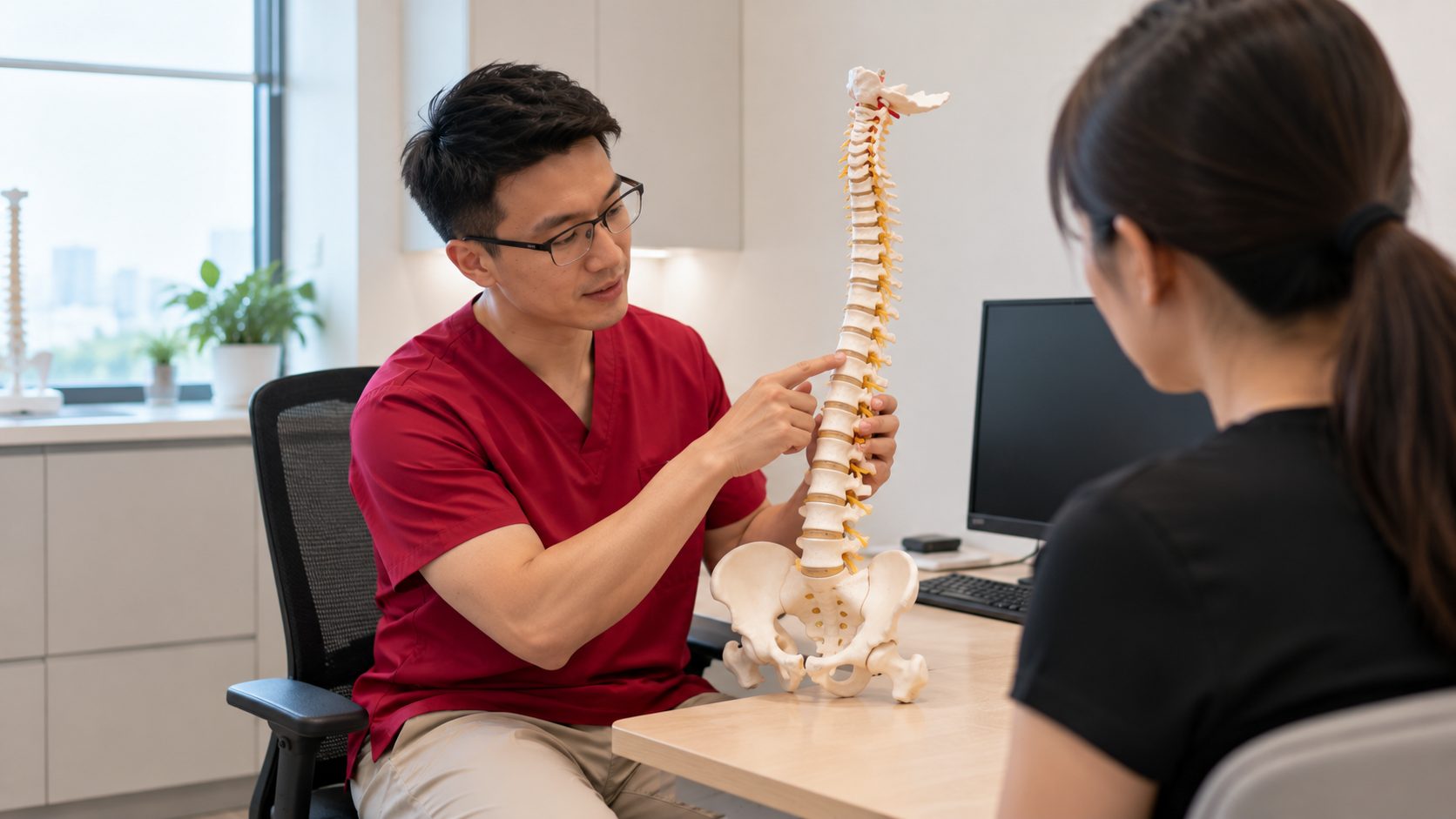
A slipped disc is a disc in your spine that has bulged or pushed out of its normal position and may be pressing on a nearby nerve.
In fact, the disc does not actually slip out of place. Doctors often use the words "herniated disc" or "disc bulge" instead.
If you would like the full picture of the symptoms, and how it differs from spinal stenosis, read our guide to herniated disc vs lumbar stenosis. This article focuses on a different question: what happens next?
Can a slipped disc heal on its own?
Often, yes. Most slipped discs improve without surgery.
- A systematic review of how lumbar disc herniation is managed found that most cases heal with conservative care, although stubborn ones may need surgery or an interventional procedure [1].
- A separate review reports that more than half of herniations shrink on their own, and that a noticeable reduction in size is often seen within three to six months of conservative management [2].
Some discs shrink more easily than others. According to the same review, fragments that have pushed further out tend to resorb more readily than small bulges that are still contained, and younger people are more likely to see it happen [2]. How quickly your pain settles can still be different from how quickly the disc changes, and everyone recovers at their own pace.
What helps while it heals?
Staying gently active, with the right exercises, is usually better than staying in bed.
Guidelines advise exercise and physiotherapy, because both have been shown to help in the conservative treatment of lumbar radicular pain [1]. Your doctor can advise on pain relief alongside that if you need it. Keeping up regular exercise and a healthy weight can help too [1].
Guidelines disagree about bed rest. Some suggest a few days of it, others do not encourage it at all except in extreme circumstances, and the higher-quality guidelines do not recommend it [1].
At our clinic, the physiotherapist will usually build a programme around what hurts and what you need to do day to day. We explain more on our lower back pain page.
When is surgery considered?
Surgery is usually a backup plan, not the first step.
Research shows it eases leg pain and disability more in the short term, but at long-term follow-up the outcomes become comparable with conservative care [3]. There is no agreement in the literature on the best time to operate, so the decision is made case by case with your doctor [3].
As a rough guide, one study quoted in the review of lumbar disc herniation says that where an MRI confirms the herniation and there is no improvement after six weeks of conservative therapy, surgery is recommended [1]. It may come up sooner if there is a progressive or significant nerve problem in a limb, such as weakness in a leg or foot that keeps getting worse [2].
What warning signs need urgent help?
Seek medical help immediately if you lose control of your bladder or bowels, or feel numb around your groin or inner thighs. This is known as cauda equina syndrome, and it is treated as a neurosurgical emergency [2]. Severe weakness in both legs is another warning sign. These are rare, but they should never be left to see if they settle.
How do we treat a slipped disc at Physio & Sole Clinic?
We start with a proper assessment, then build a plan around what is bothering you.
Depending on what we find, your physiotherapist may use a mix of:
- An exercise programme tailored to your pain, strength and daily routine
- Movement re-training to help you move comfortably again
- Manual therapy to improve how the joints move
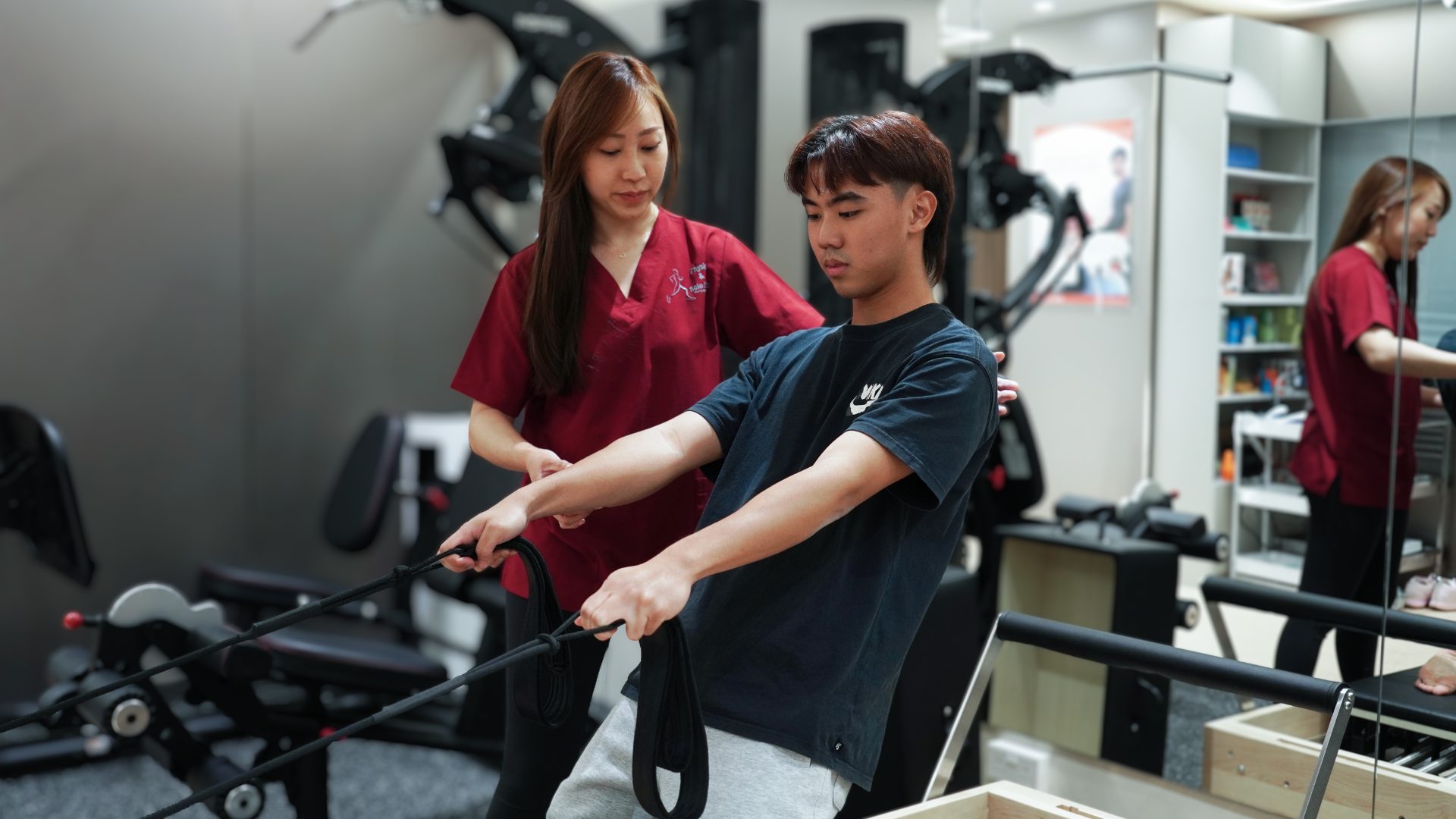
- Clinical pilates to rebuild control and strength, especially if the pain keeps coming back
- Electrical stimulation to help with pain relief
If we think you need medication or a scan, we can refer you to a doctor or an orthopaedic specialist. If the pain shoots down your leg, you may also find our guides to sciatica and sciatica relief for office workers useful.
Getting Back to Normal Without the Worry
A slipped disc can sound scary, but for most people it improves with time and the right care. Knowing what to expect, and which warning signs to watch for, makes it much easier to recover with confidence.
Booking Your Back Pain Physiotherapy in Singapore?
Read more about how we assess and treat lower back pain, then book an appointment at any of our 11 clinics. You can also check our pricing and insurance details first.
References
- Awadalla AM, Aljulayfi AS, Alrowaili AR, et al. Management of Lumbar Disc Herniation: A Systematic Review. Cureus 2023;15(10):e47908.
https://pmc.ncbi.nlm.nih.gov/articles/PMC10683841/ - Golubovic J, et al. Lumbar Disc Herniation: A Narrative Review. NeuroSci 2026;7(2):30.
https://pmc.ncbi.nlm.nih.gov/articles/PMC13010770/ - Ambaliya S, et al. Timing of Surgery for Lumbar Disc Herniation. Brain and Spine 2026;6:105917.
https://pmc.ncbi.nlm.nih.gov/articles/PMC12908051/
Ready to feel better?
Book a consultation with our physiotherapy team to get an assessment tailored to you.
Frequently Asked Questions
Often it can. Reviews of the research find that most cases improve with conservative care, and that more than half of herniations shrink on their own, often noticeably within three to six months.
Usually not at first. Surgery tends to come up if there is no improvement after about six weeks of treatment, or if there are serious nerve problems.
Guidelines disagree, and the higher-quality ones do not recommend it. Staying gently active and doing the right exercises is usually the better approach.
It eases leg pain and disability sooner, but research shows that at long-term follow-up the results become comparable with conservative care.
Losing control of your bladder or bowels, numbness around your groin or inner thighs, or severe weakness in your legs need urgent medical attention.