

Physiotherapy condition
ACL Injury前十字韧带损伤

An anterior cruciate ligament injury is one of the few knee problems where almost everybody wants the same two questions answered straight away: do I need surgery, and how long until I am back. The first is a decision made with a surgeon, not a physiotherapist. The second has no single answer, which is why it is worth understanding what actually drives it.
ACL Injury at a Glance
| Detail | Information |
|---|---|
| What is injured | The anterior cruciate ligament, one of two ligaments crossing inside the knee |
| Classic symptom | A pop or a giving-way sensation, then swelling within hours |
| How it happens | Usually without contact: twisting, pivoting or landing awkwardly |
| Who decides on surgery | An orthopaedic surgeon, not a physiotherapist |
| GP referral needed? | No |
| Insurance accepted | Multiple panels |
| Clinicians | AHPC-registered physiotherapists |
What Is an ACL Injury?
The anterior cruciate ligament runs diagonally through the middle of the knee and stops the shin bone sliding forward on the thigh bone. It also helps restrain the knee from rotating too far. That is why an ACL injury shows up as instability rather than simply pain: the knee can feel fine walking in a straight line and unreliable the moment you turn.
Injuries are usually graded by how much of the ligament is torn, from a sprain that stays intact to a complete rupture. The grade matters less than two other things: how unstable the knee actually is, and whether anything else was damaged at the same time. The ACL often does not tear alone, and the meniscus and the medial collateral ligament are the common companions.
Most ACL injuries in Singapore happen without anyone touching the player. Football, basketball, netball, floorball and badminton all involve the cutting and landing that loads the ligament, and the injury tends to happen on a decelerating step rather than at full speed.
How Do You Know It Is Your ACL?
You often cannot be certain without a scan, but a few features point towards it.
- A pop at the moment of injury, heard or felt. This is common with ACL tears, but it also happens with other knee injuries, and many ACL tears happen without one
- Swelling within a few hours rather than the next day, because the ligament bleeds into the joint
- A sense that the knee is not trustworthy, particularly turning, pivoting or going down stairs
- Being unable to continue playing, even when the pain settles after a few minutes
Get it looked at promptly rather than waiting if you cannot straighten the knee fully, if it locks or catches, if you cannot put weight on it, or if the knee gave way and has swollen quickly. A knee that will not straighten can mean a torn meniscus is caught in the joint, and that is assessed differently and sooner.
Diagnosis is based on a clinical examination, and an MRI is often used to confirm it and to check for other injuries such as a meniscal tear. A physiotherapist can examine the knee, including the ligament stability tests, tell you what the findings suggest and start treatment. Referral for a scan and the decision about surgery sit with a doctor.
Do You Need Surgery?
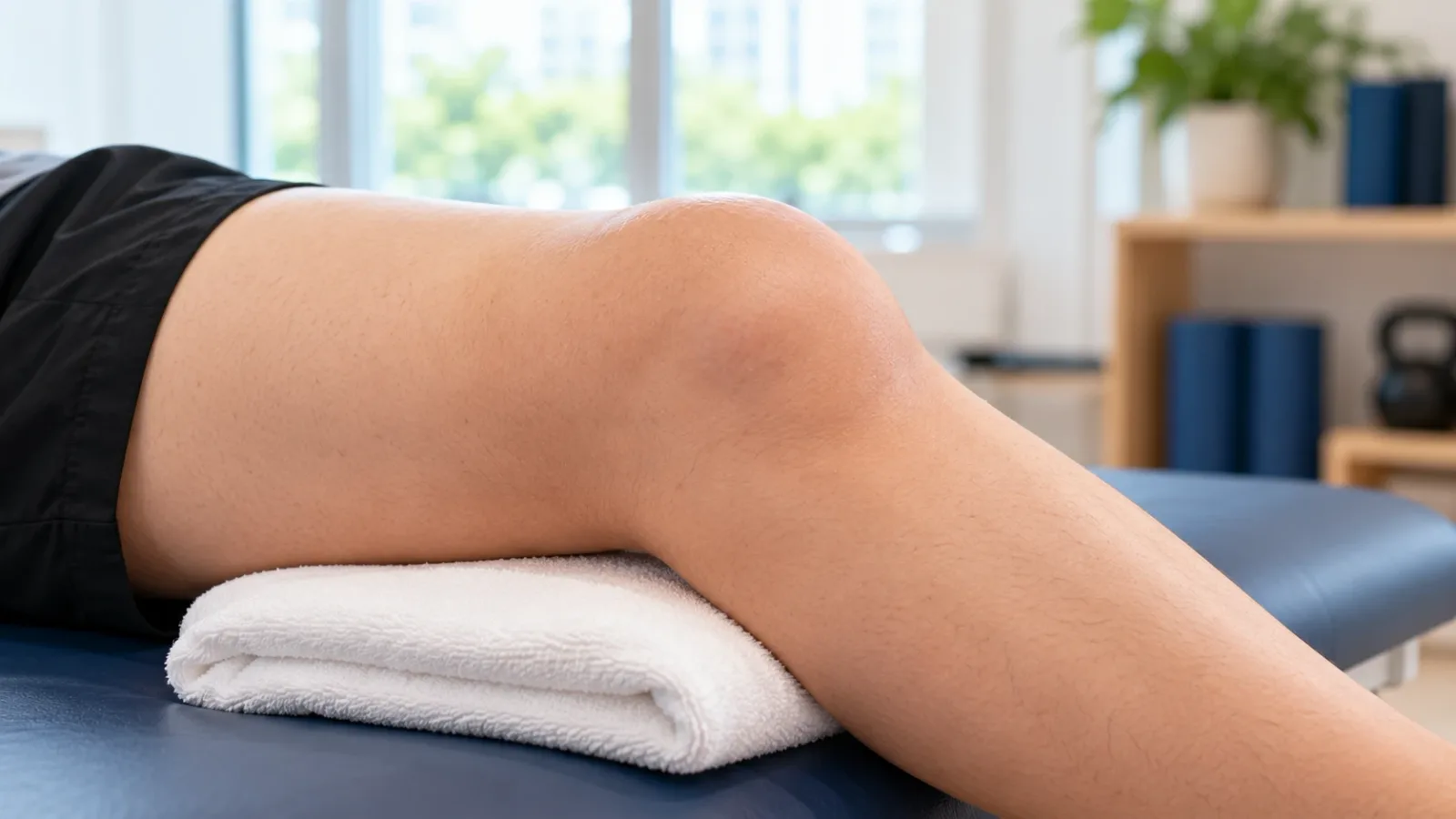
Not everyone with a torn ACL has a reconstruction, and that surprises people. The decision is made by an orthopaedic surgeon, and it turns on what you need the knee to do rather than on the scan alone.
Reconstruction is more often recommended where the knee gives way in daily life, where the sport you want to return to involves pivoting and cutting, or where the meniscus or another ligament was damaged at the same time. A course of rehabilitation first is more often considered where the knee is stable in a straight line, where the activities that matter to you do not involve hard changes of direction, and where strength returns well.
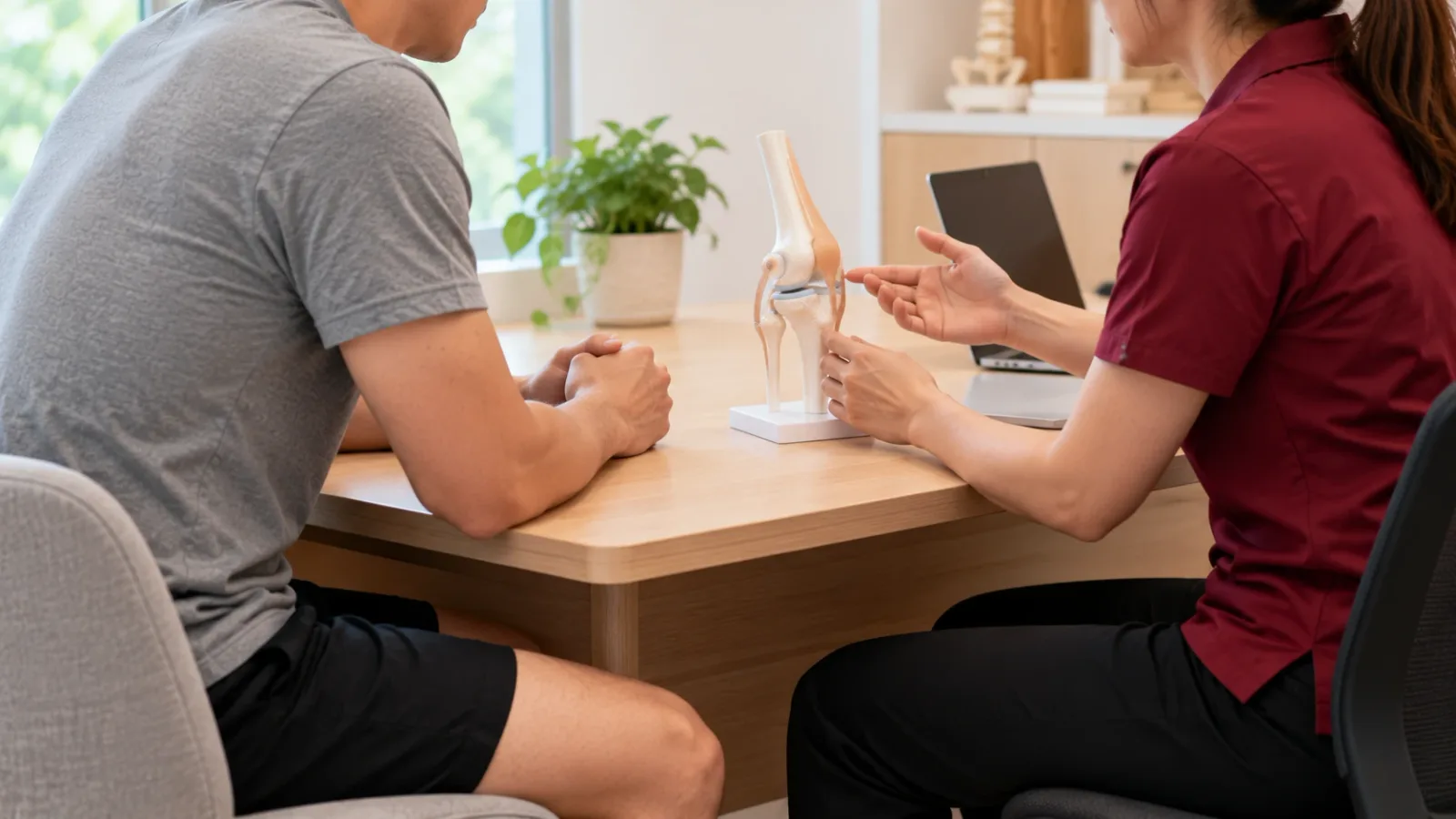
What is not in doubt is that physiotherapy is part of the answer either way. A reconstruction without rehabilitation leaves a repaired ligament in a leg that cannot use it, and choosing not to have surgery is only a reasonable choice if the muscles around the knee are rebuilt to compensate.
What Physiotherapy Does
There are three different jobs here, and which one applies depends on where you are.
Before surgery, if you are having it
- Getting the swelling down and the knee straightening fully, because a stiff knee going into surgery is a stiff knee coming out of it
- Rebuilding quadriceps activation, which switches off remarkably quickly after an ACL injury
- Walking normally again without a limp, so the pattern does not have to be unlearned later
After surgery
- Protecting the graft while restoring movement, in the order and at the pace your surgeon sets
- Rebuilding strength, then power, then the ability to change direction and land safely
- Testing before return to sport rather than guessing, comparing strength and hop performance with the other leg and, where available, with your pre-injury or expected levels, because the uninjured leg may also have lost some strength
Without surgery
- The same strength and control work, with more emphasis on the muscles that can stabilise a knee the ligament no longer stabilises
- Honest reassessment, because a knee that keeps giving way during rehabilitation is information worth taking back to the surgeon
The week-by-week picture after a reconstruction is a subject of its own, and our guide to the ACL recovery timeline sets out the phases and the milestones that matter more than the dates.

Why the Knee Still Feels Wrong Months Later
This is the part people are least prepared for, and it is common rather than a sign something has gone wrong.
Pain usually settles long before function does. The quadriceps on the injured side can remain measurably weaker for months without feeling weak, and strength on its own does not restore the confidence to trust the knee in a game. People often describe a knee that is fine in the gym and uncertain on grass.
It is also why finishing rehabilitation early is a common and avoidable mistake. The risk of a second ACL injury, to either knee, stays raised for around two years after returning to sport, and is highest in younger athletes going back to pivoting sports. Research suggests that waiting until at least nine months and passing strength and hop tests both lower that risk, so returning on the strength of a date alone is best avoided.
When Should You See a Physiotherapist?
See a doctor first if the injury is new and undiagnosed, or if your knee locks, will not straighten, or cannot take weight.
It is worth booking a physiotherapy assessment if you are waiting for surgery and want to go in better prepared, if you have had a reconstruction and your rehabilitation has stalled or finished without any testing, if you decided against surgery and the knee still feels unreliable, or if you were discharged months ago and sport still does not feel safe.
You do not need a doctor's referral to see a physiotherapist in Singapore. If you are already under a surgeon, we work to their protocol rather than around it.
Frequently Asked Questions on ACL Injury
Can physiotherapy heal a torn ACL?
No, not in a way that restores stability. A torn ACL typically does not heal back into a working ligament, and physiotherapy does not change that. What physiotherapy changes is whether the knee is stable and strong enough to do what you need. For some people that is enough to avoid surgery, and for everyone who has surgery it strongly influences how well the result works.
How do I know if I have torn my ACL or just sprained my knee?
A pop at the time, swelling within hours and a feeling of the knee giving way all point towards the ligament rather than a simple sprain. None of them is conclusive, which is why a new knee injury with those features is worth getting assessed rather than waiting out.
Should I start physiotherapy before my operation?
Many surgeons recommend it, and the reasoning is straightforward: a knee that goes into surgery swollen and stiff with a quadriceps that has switched off takes longer to recover afterwards. Check with your surgeon, since the plan should fit the date of your operation.
When can I run again?
That depends on criteria rather than weeks, and it is set by how the knee performs on testing. Our ACL recovery timeline guide covers how the phases are usually sequenced.
Will I definitely injure the other knee?
No, but the risk of a further ACL injury, on either side, stays higher for the first couple of years back than it is for someone who has never had one. That is the argument for finishing rehabilitation properly rather than stopping when the knee feels normal.
Do you treat ACL injuries if I had surgery elsewhere?
Yes. Bring the operation notes or the surgeon's protocol if you have them, and we will work to it.
Related Articles
Personalised care
Ready to get back on your feet?
Our physiotherapists can assess your symptoms and build a recovery plan around your goals.
Cashless care options
Insurance
We work with leading insurers to make eligible physiotherapy and podiatry visits more convenient.









Direct billing is subject to your membership terms. Our clinic team can help check your panel eligibility.