Skip to content



Written by Chee Wai Siong Wesley, Director & Chief Sports Physiotherapist at Physio & Sole Clinic
If you’ve been told you have knee osteoarthritis, you’re not alone, and more importantly, you’re not broken.
As a physiotherapist, I meet many active adults who walk into the clinic worried that knee osteoarthritis automatically means less movement, giving up sports, or eventually needing surgery. Some have already been told to“just live with it”, while others are afraid that walking or exercising will “wear their knee out even more.”
The truth is far more reassuring.
With the right knee osteoarthritis treatment, many people continue walking, exercising, travelling, and living active lives for years, often with less pain and more confidence than before.
Let me walk you through what knee osteoarthritis really means, what helps (and what doesn’t), and where knee physiotherapy fits in, especially in Singapore’s context.
The Problem: Knee Pain That Slowly Limits Your Life

Knee osteoarthritis often starts quietly.
- A dull ache after long walks
- Morning stiffness that eases after moving
- Discomfort when climbing stairs or getting up from a chair
- Swelling after sports or a long day on your feet
At first, many people push through it because they’re active, busy, and used to coping.
But over time, pain begins to dictate decisions:
- “Maybe I’ll skip that walk.”
- “I’ll stop playing that sport.”
- “I don’t want to make it worse.”
This is where fear creeps in.
Misinformation Makes It Worse Than It Needs to Be

One of the biggest problems with knee osteoarthritis isn’t the cartilage changes; it’s the misunderstanding around them.
Common myths I hear in the clinic:
- “Walking will destroy my knee.”
- “Exercise makes arthritis worse.”
- “Osteoarthritis means surgery is inevitable.”
- “There’s nothing much you can do.”
These beliefs often lead to less movement, which ironically causes:
- Weaker thigh and hip muscles
- Poor knee support
- Reduced joint nutrition
- More stiffness and pain
Pain increases, activity drops, confidence falls, and the cycle continues.
This is exactly where proper knee osteoarthritis treatment makes a real difference.
What Is the Best Cure for Osteoarthritis in the Knee?

Let’s address this honestly.
There is no single ‘cure’ that reverses knee osteoarthritis completely. Cartilage changes are largely irreversible.
But here’s the key point many people miss:
Osteoarthritis can be managed extremely well.
The most evidence-supported treatments worldwide consistently include:
- Education
- Exercise
- Load management
- Physiotherapy-led care
In fact, international and local guidelines recognise knee physiotherapy as a first-line treatment, not a last resort.
The goal isn’t to “cure” arthritis, it’s to:
- Reduce pain
- Improve strength and movement
- Restore confidence
- Delay or avoid invasive procedures where possible
And for active adults, this approach works remarkably well.
Is It Good to Walk With Osteoarthritis in the Knees?

Short answer: Yes, when done properly.
Walking is one of the most natural and beneficial activities for knee osteoarthritis when the knee is supported and conditioned correctly.
Walking helps:
- Lubricate the knee joint
- Improve circulation and joint nutrition
- Maintain mobility and cardiovascular health
What doesn’t help is:
- Sudden spikes in walking volume
- Poor strength around the knee and hips
- Ignoring pain signals repeatedly
This is where knee physiotherapy comes in.
A physiotherapist helps you:
- Adjust walking volume safely
- Improve muscle support
- Modify techniques if needed
- Build tolerance progressively
Many patients are surprised that their pain improves after structured walking, not by avoiding it.
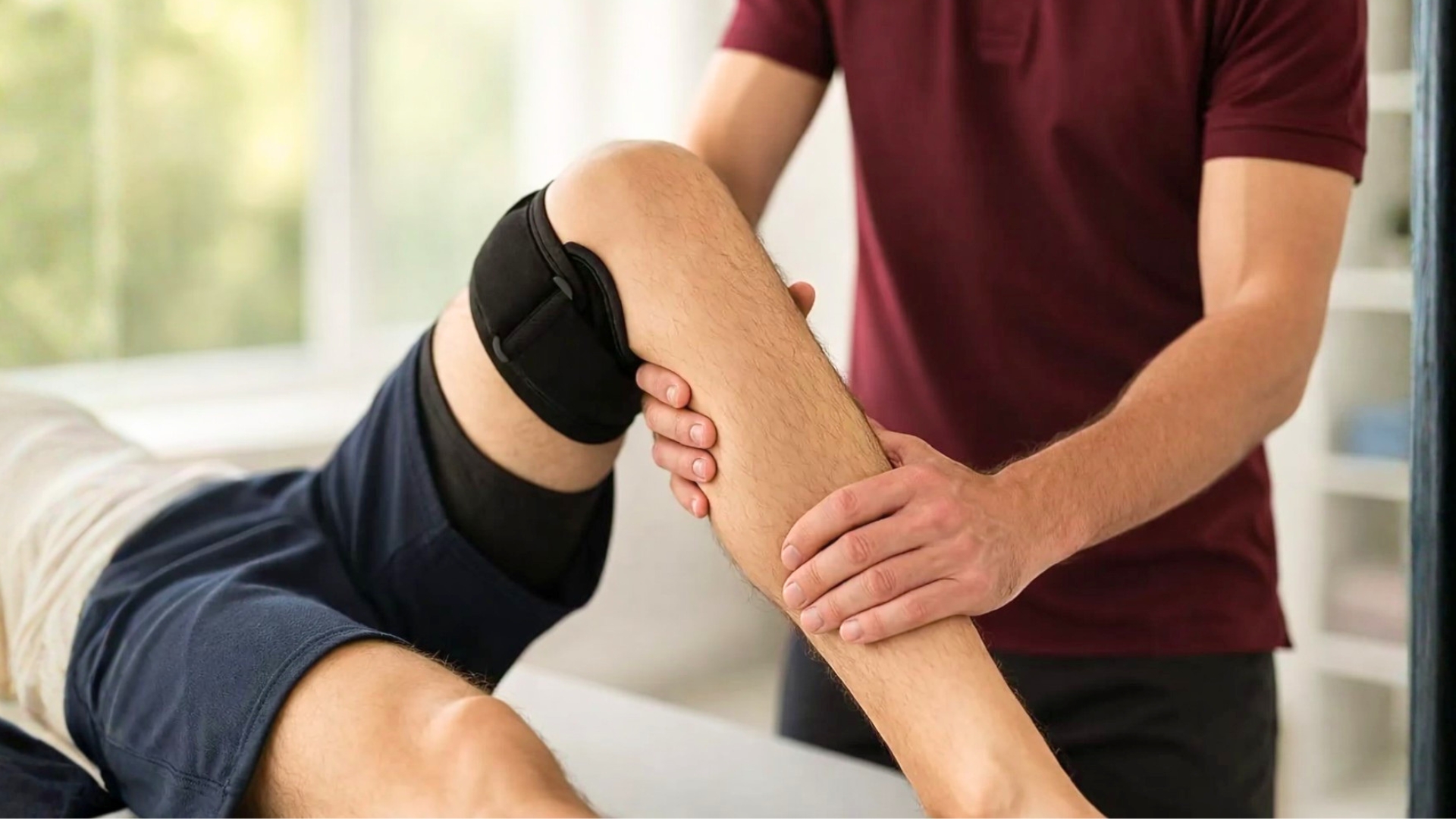
How Knee Physiotherapy Treats Osteoarthritis (Beyond “Exercises”)

A common misconception is that knee physiotherapy is just a few generic exercises.
In reality, effective knee osteoarthritis treatment is structured, progressive, and highly individualised.
In my practice, physiotherapy focuses on:
1. Strength Where It Matters
The knee doesn’t work alone.
We target:
- Quadriceps (front of thigh)
- Hamstrings
- Gluteal muscles
- Calf muscles
Stronger muscles = less load on the knee joint during daily activities.
2. Movement Quality
Poor movement patterns increase joint stress.
Physiotherapy helps correct:
- How you squat
- How you climb stairs
- How you walk, jog, or change movement direction
Small adjustments can significantly reduce knee strain
.
3. Load Management
Many active adults don’t need less activity; they need better-managed activity.
We guide:
- How much is too much
- How to space activities
- How to progress safely without flare-ups
4. Pain Reduction Strategies
Depending on the presentation, this may include:
- Manual therapy
- Taping or bracing advice
- Education on flare-up control
What Exercise Helps Osteoarthritis?

This is one of the most common questions, and for good reason.
The best exercises for knee osteoarthritis are not random. They are specific, progressive, and purposeful.
Common categories include:
- Strengthening exercises
- Thigh and hip strengthening
- Thigh and hip strengthening
- Low-impact aerobic exercise
- Walking, cycling, swimming
- Walking, cycling, swimming
- Mobility exercises
- To reduce stiffness
- To reduce stiffness
- Balance and control work
- Especially important as we age
- Especially important as we age
There is no single “best” exercise, the best programme is the one that:
- Matches your current ability
- Progresses safely
- Fits your lifestyle
This is why physiotherapy-guided exercise consistently outperforms unsupervised routines.
How to Prevent Osteoarthritis in the Knees (Or Slow It Down)

While some risk factors like age and genetics can’t be changed, many modifiable factors can.
Prevention and slowing progression focus on:
- Maintaining healthy leg strength
- Keeping a healthy body weight
- Staying physically active
- Managing training loads wisely
- Addressing knee pain early
One important point I stress with active adults:
Pain is information, not weakness.
Early physiotherapy intervention often prevents small issues from becoming long-term limitations.
Physiotherapy vs Injections vs Surgery: How Do They Compare?

Here’s a simplified comparison many patients find helpful:
| Treatment Option | What It Does | Best Used When |
| Knee Physiotherapy | Improves strength, movement, and pain control | First-line for most active adults |
| Injections | Temporary pain relief | Short-term symptom relief |
| Surgery | Structural change | Severe cases when conservative care fails |
Physiotherapy doesn’t rule out other options, but it often delays or reduces the need for them.
In Singapore, many patients are surprised to learn they don’t need to “wait until it’s very bad” before seeing a physiotherapist.
When Should You See a Physiotherapist in Singapore?

You should consider knee physiotherapy if:
- Knee pain lasts more than 2–3 weeks
- Pain limits walking, exercise, or daily activities
- You experience repeated flare-ups
- You’re unsure how to stay active safely
- You want to avoid unnecessary escalation
Early assessment often leads to faster and better outcomes.
A Clinician’s Perspective

As someone who works daily with active adults, I’ve seen how empowering proper education and physiotherapy can be.
Many patients come in fearful, and leave realising:
- Their knee is stronger than they thought
- Movement is still possible
- Pain doesn’t equal damage
- They are not “on a downhill slope”
That mindset shift alone is powerful.
Final Thoughts: Knee Osteoarthritis Doesn’t Have to Stop You

Knee osteoarthritis is common, but disability is not inevitable.
With the right knee osteoarthritis treatment, especially physiotherapy-led care, many active adults continue doing what they love with confidence and control.
If you’re unsure how to move forward, getting a professional assessment is often the clearest next step.
Ready to Take the Next Step?
If knee pain is holding you back, a personalised assessment can help you understand what your knee needs, and what it doesn’t need.
At Physio & Sole Clinic, our physiotherapists work with active adults across Singapore to manage knee osteoarthritis safely, practically, and effectively.
A clear plan makes all the difference.