

Quick Summary
A meniscus tear does not automatically mean you need surgery. Research suggests that, for certain sudden meniscus injuries in younger adults and for wear-and-tear tears in older adults, physiotherapy can achieve outcomes similar to surgery over the long term. However, some tears need more urgent assessment. If your knee becomes truly locked and you cannot fully straighten it, seek prompt medical attention, as a displaced tear may be blocking joint movement.
The best treatment depends on the type of tear, your symptoms, your activity goals and how your knee responds to rehabilitation.
A highly experienced sports physiotherapist with a strong background in musculoskeletal and sports rehabilitation, Wesley brings a performance-driven and evidence-based approach to injury management. He has a special interest in treating runners and shoulder conditions, and is passionate about helping patients recover, prevent injuries, and return to the activities they enjoy.
What Is the Meniscus?
The meniscus is a C shaped piece of tough, rubbery cartilage that cushions your knee. Each knee has two: one on the inner side and one on the outer side. Together, they help distribute your body weight, absorb impact and improve the stability of your knee joint.
Think of them as your knee's built-in shock absorbers. They help your knees cope with everyday activities, whether you are climbing the stairs at your HDB block, walking to the MRT, squatting to pick something up or playing your favourite sport.

How Does a Meniscus Tear Happen?
A meniscus tear can happen suddenly during an injury or develop gradually over time. Sometimes it is a combination of both.
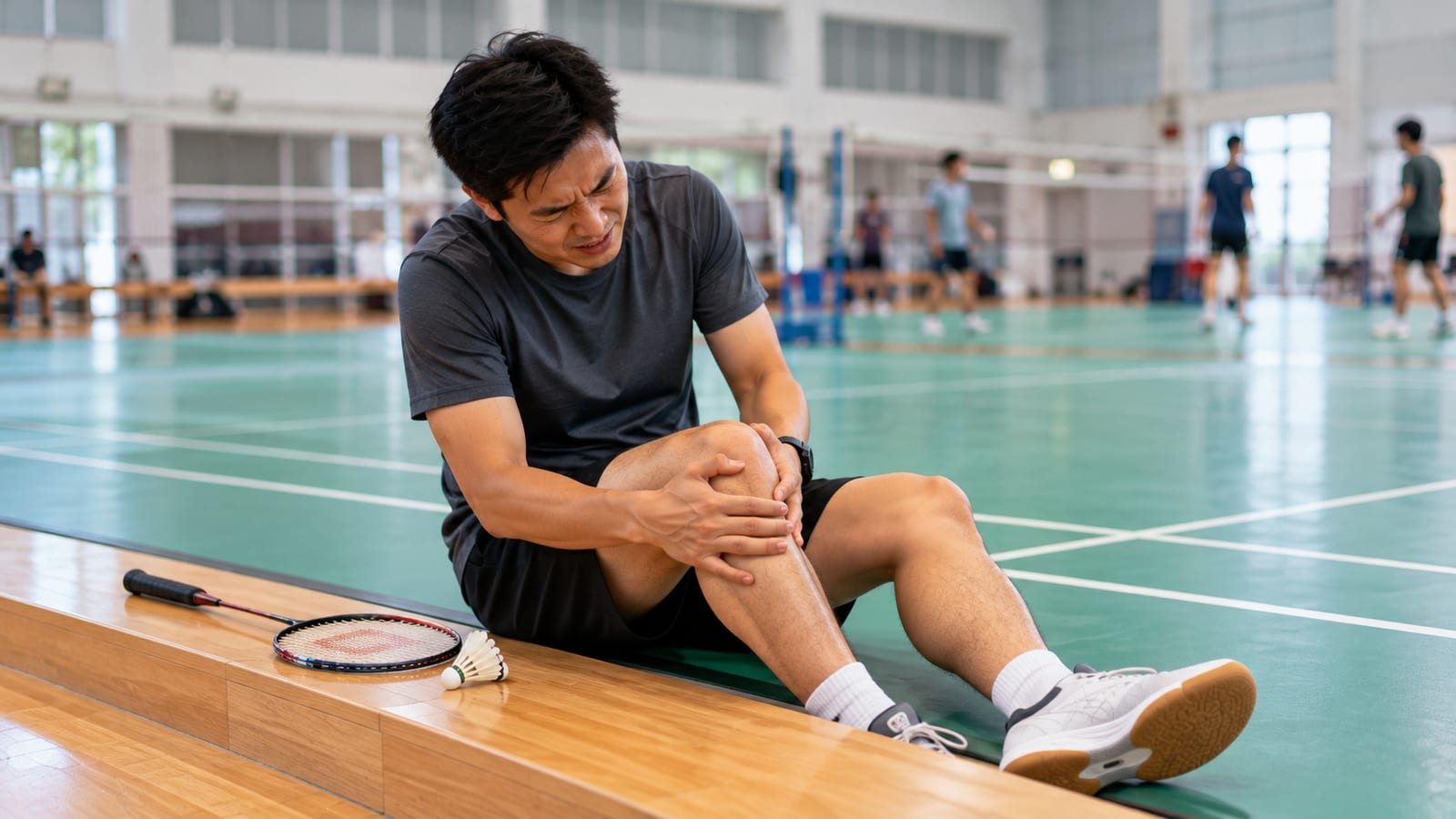
In younger, active adults, a tear often happens during sports such as futsal, badminton or pickleball. A sudden twist, pivot or awkward landing can put too much stress on the meniscus, causing it to tear. You may feel pain immediately, sometimes with swelling or difficulty moving your knee.
In older adults, the meniscus gradually becomes less resilient as part of the ageing process. Everyday movements such as squatting, kneeling or turning while standing can sometimes be enough to trigger a tear in tissue that has already weakened. There may be no obvious injury, and symptoms can develop gradually.
Age is not the only factor, though. People of any age can experience a meniscus tear, and the way it happens can influence which treatments are most appropriate.
What Does a Torn Meniscus Feel Like?
Two classic symptoms are pain along the knee joint line and knee locking. The joint line is the area along the inner or outer side of your knee, where your thigh bone meets your shin bone. If your meniscus is torn, you may feel pain in this area, particularly when twisting, squatting, kneeling or turning on your planted foot. Some people also experience swelling, clicking, catching or a feeling that the knee is giving way.
One important symptom to look out for is a truly locked knee. This means your knee gets physically stuck and you cannot fully straighten it, rather than simply feeling stiff or painful when you try. A displaced meniscus tear can sometimes block normal knee movement, so this needs prompt medical assessment.
Not every meniscus tear causes these symptoms, and not every knee problem is caused by a meniscus tear. Pain, clicking and stiffness can occur with other knee conditions too. A physiotherapist can assess your symptoms, movement and knee function to help determine whether a meniscus injury may be contributing to your problem and whether further medical assessment is needed.
Do You Need Surgery for a Meniscus Tear?
Not always. The right treatment depends on the type of tear, your symptoms and how the injury happened.
If you are young and the tear follows a sudden injury: a trial of adults aged 18 to 45 with a recent, MRI-verified, isolated tear found that early surgery was no better than physiotherapy for knee function after two years. Read the study here. For some people, starting with physiotherapy is a reasonable option. However, certain tears may need prompt surgical assessment.
If it is a degenerative tear, usually in middle age or older: research suggests that surgery and physiotherapy lead to similar outcomes in the longer term. One review found no meaningful difference in pain at 12 and 24 months or in knee function. Another review found that the overall benefits of surgery were limited.
One honest caveat: physiotherapy does not work for everyone. In one study, around 20 to 30% of people who initially chose physiotherapy went on to have surgery. Read the study.
The bottom line: a meniscus tear does not automatically mean you need surgery, but it should be properly assessed. A healthcare professional can help determine whether physiotherapy, surgery or another treatment is most appropriate for your knee.
What If Your Knee Is Locked?
If your knee gets stuck and you cannot fully straighten it, seek medical assessment promptly. This can happen when a torn piece of meniscus blocks the joint.
The studies above excluded people with a locked knee, so their findings may not apply to you. As one review explains, surgery may be recommended when a tear physically blocks knee movement.
Do not wait for it to resolve on its own. A locked knee needs prompt assessment to determine the cause and the right treatment.
How Do We Help a Torn Meniscus at Physio & Sole Clinic?
We start by assessing your knee, understanding your symptoms and finding out what you need to get back to. Your treatment plan may include:
- Strengthening exercises to improve the strength and support of the muscles around your hips and knees.
- Manual therapy to help improve joint movement where appropriate.
- Gait analysis to assess how you walk or run and how your knee handles load.
- Customised insoles if your foot mechanics or leg alignment may be contributing to your symptoms.
- A gradual return to sport, tailored to your recovery and goals, whether you play badminton, futsal or pickleball, or enjoy jogging.

Not every meniscus tear needs the same treatment. If your assessment suggests you need further investigation, imaging or an orthopaedic opinion, we will advise you on the appropriate next steps.
For more on knee health, explore our guides to knee pain myths, knee osteoarthritis and common pickleball injuries.
Frequently Asked Questions
What is a meniscus tear?
It is a tear in the cartilage that cushions your knee. It can happen after a sudden injury, develop gradually with age, or result from a combination of factors.
Do I need surgery for a torn meniscus?
Not always. Research suggests that physiotherapy can be as effective as surgery for many people, but the right treatment depends on the type of tear, your symptoms and clinical assessment.
What does a torn meniscus feel like?
Common symptoms include pain along the sides of the knee joint, swelling and difficulty moving the knee. Some people also experience catching or locking.
What if my knee is locked?
Seek medical assessment promptly if your knee gets stuck and you cannot fully straighten it. A tear that blocks knee movement may require surgical treatment.
Can I keep playing sport with a torn meniscus?
It depends on your symptoms, the type of tear and how well your knee functions. A physiotherapist can help assess your knee and guide your return to sport when appropriate.
Getting Back on Your Feet
Being told you have a torn meniscus is worrying, but the research is reassuring: for most people, surgery is not the only way forward. Getting the right assessment early helps you choose a plan you can trust.
Booking Your Knee Physiotherapy in Singapore?
Read more about how we assess and treat knee injuries, then book an appointment at any of our 11 clinics. You can also check our pricing and insurance details first, or message Ask Emma on Telegram with a quick question.
Ready to feel better?
Book a consultation with our physiotherapy team to get an assessment tailored to you.