
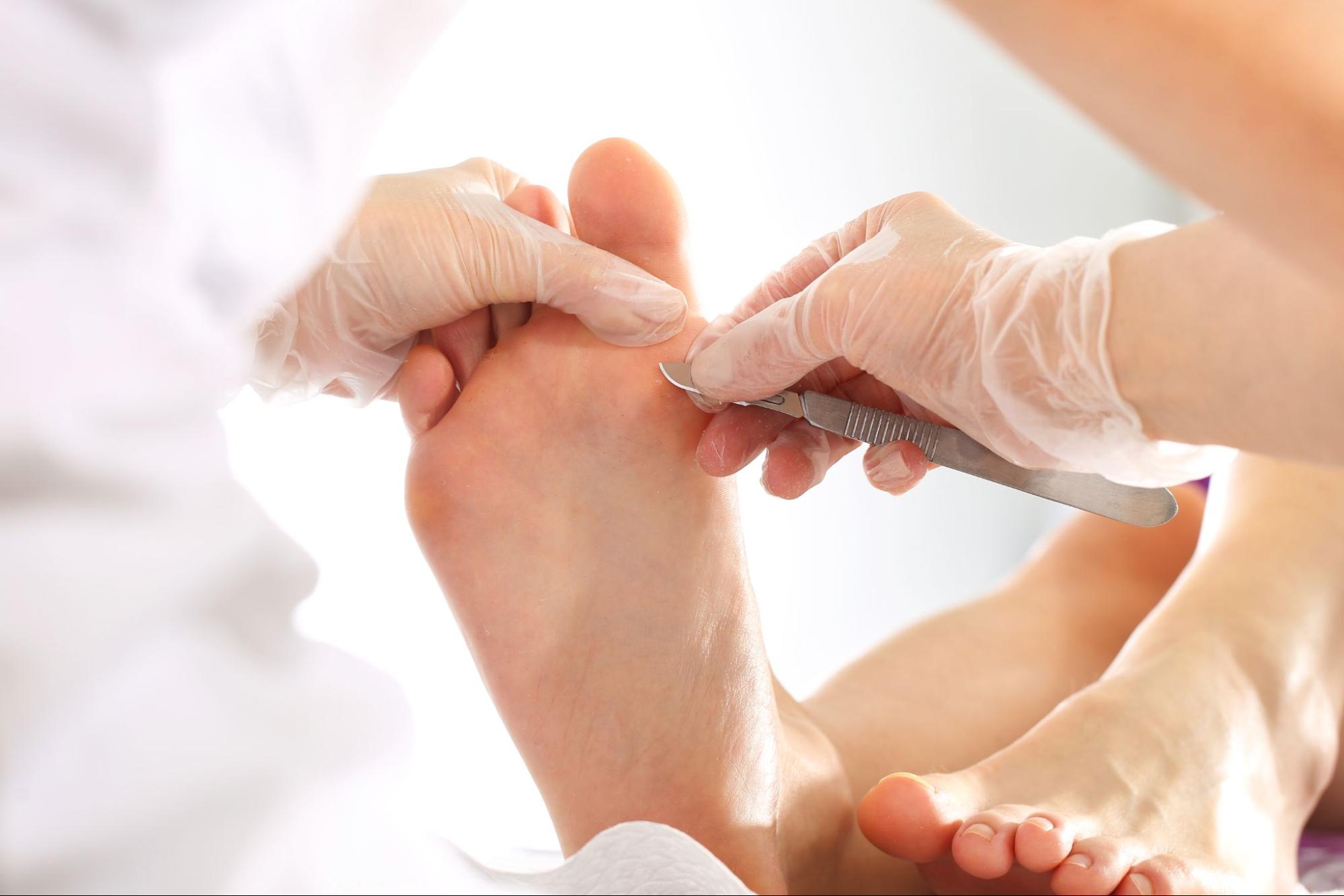
Podiatry condition
Corns and Warts胼胝/老茧/鸡眼/足底疣
| Appearance/Symptom | Differences | |
|---|---|---|
| A lump or bump on the foot | Corn | Wart |
| 1) Circular in shape | 1) Cluster of small bumps, irregularly shaped | |
| 2) Yellowish in colour when it is dry | 2) Pale-coloured, more white than yellow | |
| 3) No black dots, has smooth skin lines | 3) Dry, crusty surface with small black dots, no visible skin lines | |
| Multiple lesions on feet | 4) Appears in the same region on both feet | 4) Different spots on the feet, often only on one foot and not the other. |
| 5) Does not spread, no adjacent lesions | 5) There can be more than one lesion in close proximity to each other due to spreading of wart infection. | |
| Pain | 6) Pain on direct pressure | 6) Pain on pinching the area |
| Base of lesion | 7) No bleeding during removal | 7) Bleeds profusely on removal of hard skin |
| 8) Core of lesion can be thoroughly removed by a podiatrist, but hard skin will recur due to excessive pressure on area | 8) Once the ‘root’ is removed and the wart is treated fully, there will not be any hard skin growing on that area | |
| Management Plan | 9) Requires regular treatment by podiatrist to prevent pain | 9) Average of 4-8 weekly sessions of debridement, application of acid and cryotherapy for complete resolution |
Warts
Warts are caused by the Human Papilloma Virus (HPV). The virus hides within, divides and replicate within human cells . The virus attacks the skin through direct contact, entering through possibly tiny cuts and abrasions in the outermost layer of skin.
Photo of a Wart
After infection, warts may not become visible for several weeks or months until it grows big enough to pinch on the underlying nerves to cause pain or discomfort. Treatment varies. At Physio & Sole Clinic, we engage in sharps debridement and the application of concentrated salicyclic acid and cryotherapy, which is the most effective evidence-based practice in treating warts.
Corns
Corns are specially-shaped callus of dead skin. Corns and calluses generally form when the skin tries to protect an underlying area from injury, pressure or rubbing.
Unsure whether the lesion on your foot is a wart or a corn? We can help! Feel free to snap a photo of the affected area and send it to us by Whatsapp. Just click on the button below!
Frequently Asked Questions on Corns and Warts
How can I tell if it's a corn or a wart?
Corns are usually circular, yellowish when dry, with smooth skin lines and no black dots, and they hurt most under direct pressure. Warts tend to be a cluster of irregularly shaped bumps with a dry, crusty surface flecked with small black dots, and they hurt more when pinched. Warts also bleed when the hard skin is removed, while corns generally do not — if you're unsure, a podiatrist can confirm which one you have.
Can I remove a corn or wart myself at home?
We don't recommend it. Home removal, including with over-the-counter corn plasters or blades, can injure the surrounding skin and, for warts, risks spreading the infection to other areas of the foot. A podiatrist can safely debride the lesion and treat the underlying cause rather than just the surface.
Are warts contagious?
Yes. Warts are caused by the Human Papilloma Virus (HPV), which spreads through direct contact and can enter through small cuts or abrasions in the skin — which is also why they can spread to other parts of your own feet if left untreated.
Why does my corn keep coming back after I remove it?
A corn forms because the skin is protecting itself from ongoing pressure or friction, usually from footwear or the way you walk. Removing the hard skin treats the symptom, but the corn will recur unless the source of pressure is also addressed, which is why podiatrists recommend regular treatment alongside footwear or gait advice.
How many treatment sessions do warts usually need?
Full resolution of a wart typically takes an average of 4 to 8 weekly sessions, combining sharps debridement with the application of concentrated salicylic acid and cryotherapy. This is the most effective evidence-based approach, though the exact number of sessions depends on how established the wart is.
Personalised care
Ready to get back on your feet?
Our podiatrists can assess your symptoms and build a care plan around your goals.
Cashless care options
Insurance
We work with leading insurers to make eligible physiotherapy and podiatry visits more convenient.









Direct billing is subject to your membership terms. Our clinic team can help check your panel eligibility.