Physiotherapy condition
IT Band Syndrome髂胫束综合征

The frustrating part is how it is usually treated. Most people arrive having spent weeks stretching and foam rolling the outside of the thigh, because the name suggests a tight band that needs loosening. That is not what the problem is, which is why it is not working.
IT Band Syndrome at a Glance
| Detail | Information |
|---|---|
| What it is | Irritation of the tissue under the iliotibial band where it crosses the outer knee |
| Classic symptom | Outer knee pain arriving at a predictable distance into a run |
| Who gets it | Runners and cyclists most often, but also anyone increasing load quickly |
| Commonly mistaken for | A tight band needing stretching, or a meniscus problem |
| GP referral needed? | No |
| First assessment | 45 minutes |
| Clinicians | AHPC-registered physiotherapists |
What the Iliotibial Band Actually Is
The iliotibial band is a thick sheet of connective tissue running down the outside of the thigh, from the hip to just below the knee. It is not a muscle. It is anchored along the thigh bone for most of its length, and it is about as stretchable as a seatbelt.
That matters for treatment. A structure that strong and that tethered does not lengthen because it was rolled or stretched, which is why months of both so often change nothing. What is actually irritated is the tissue underneath the band where it passes over the bony bump on the outside of the knee: a layer of fat and connective tissue that is richly supplied with nerves and becomes sensitive when it is compressed repeatedly.
So the question is not how to loosen the band. It is why the band is being compressed against the knee that hard, that often.
Why It Happens
The compression gets worse when the knee is bent to around thirty degrees, which is roughly where it sits at footstrike. Anything that increases load at that point, or increases how often it happens, drives the problem:
- A jump in training. More distance, more frequency, or a new block of hill or speed work, without the time in between for tissue to adapt
- Downhill running, which both increases the load and holds the knee near that angle for longer
- Slower, longer runs in some people, because the knee spends more time in the aggravating range than it does at faster paces
- Weak hip abductors, so the pelvis drops and the thigh falls inwards on each step, increasing tension across the outside of the knee
- Running style, particularly a narrow stride where the feet cross towards the midline
- Track running always in the same direction, or a consistently cambered road surface
- Foot position, where the way the foot loads changes what the knee does above it
Most cases are a load problem with a hip contribution. That combination is why rest alone fixes it temporarily and the pain returns in the same week you get back to where you were.
How to Tell It Apart from Other Outer Knee Pain
Several things cause pain on the outside of the knee, and the treatment differs:
- The timing is the biggest clue. IT band syndrome typically arrives at a reproducible point into the activity, not at the start, and settles quickly on stopping. Pain that is there from the first step, or that is worse the morning after, points elsewhere.
- Where it is. IT band pain sits on the bony point on the outer knee, slightly above the joint line. Lateral meniscus pain sits on the joint line itself and is often worse with twisting or squatting rather than with running.
- What it does on stairs. Going downstairs is frequently worse than going up, because of the knee angle.
- Swelling. Significant swelling inside the knee is not typical and suggests something else is going on.
If the knee locks, gives way or swells, that needs assessing before any running programme, because those point at the joint rather than at the tissue outside it.
How Physiotherapy Helps
Step 1: Finding out why the load got too high
- Assessment of hip abductor and gluteal strength and, separately, of whether that strength is actually used under fatigue
- Review of your training: what changed, when, and by how much
- Watching you run, not only examining you lying down
- Checking foot and ankle mechanics, since what the foot does changes what the knee does
Step 2: Settling the pain
- Reducing the specific things that aggravate it, which is usually hills, downhill and the longest runs, rather than stopping completely
- Manual therapy and soft tissue work to the hip and thigh musculature, to reduce symptoms while the cause is addressed
- Dry needling where the surrounding muscles are a significant part of the picture
- Taping for temporary relief during the return to running
Step 3: Fixing the cause
- Progressive hip and gluteal strengthening, loaded enough and continued long enough to change what happens at footstrike
- Running retraining where stride width or cadence is contributing
- A structured return to running, rebuilding distance and then hills in a sequence rather than at once
- Clinical Pilates where control rather than raw strength is the limiting factor
- Shockwave therapy in stubborn cases that have not responded to loading

Why Stretching and Foam Rolling Disappoint
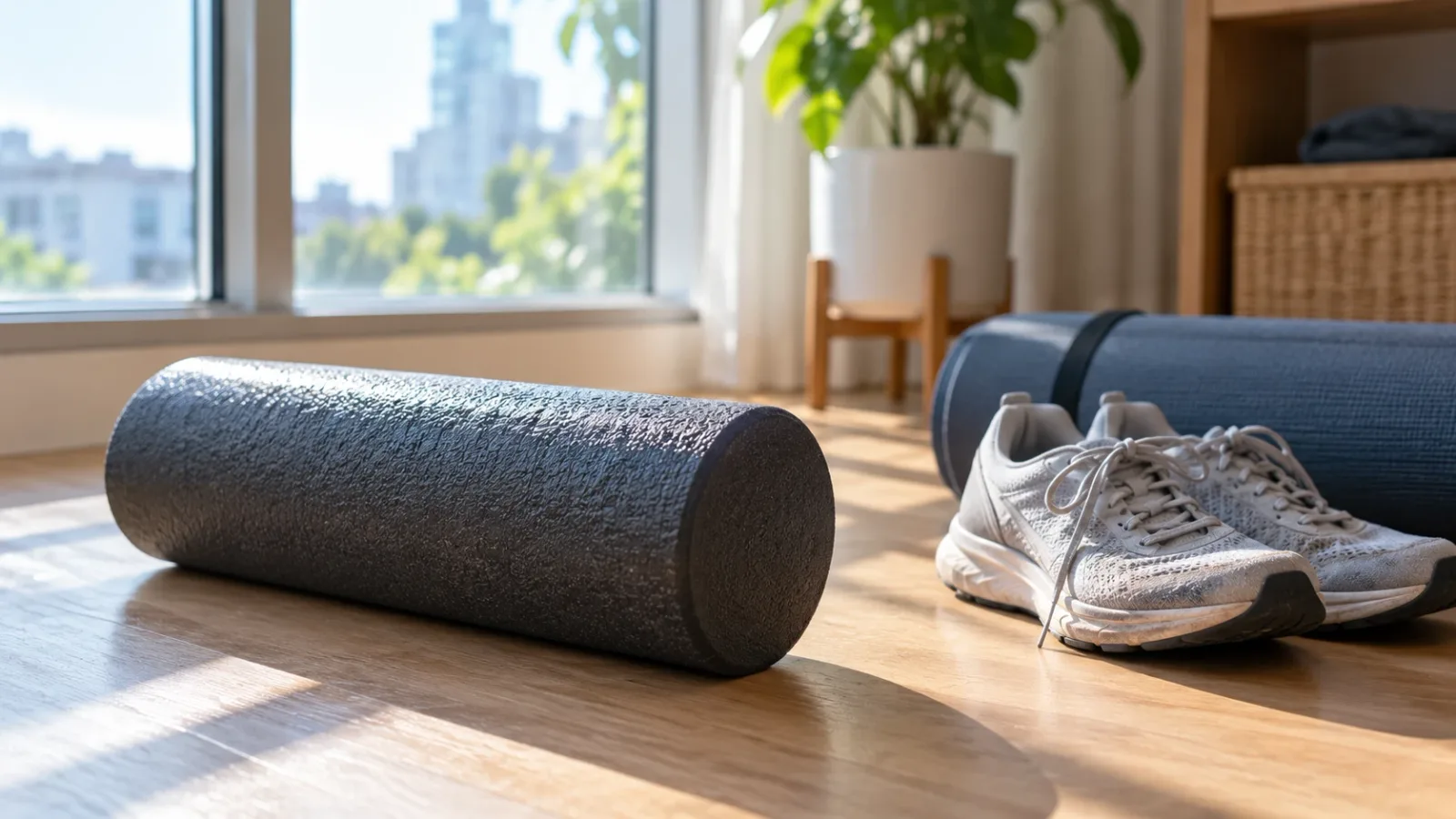
They are not useless. Rolling the outside of the thigh can reduce symptoms for a while, and most people find it feels better immediately afterwards.
What they do not do is change the band's length, because the band does not meaningfully lengthen, and they do not change the hip strength or the training load that caused the compression. That is why the relief lasts until the next long run. Used as symptom relief alongside strengthening, they are reasonable. Used as the treatment, they are the reason this condition has a reputation for dragging on for months.
When Should You See a Physiotherapist?
It is worth booking if outer knee pain has started arriving at the same point in your runs, if it has not settled after two weeks of reduced training, if it has begun appearing when you walk or go downstairs, or if you have an event coming up and need the return planned rather than guessed.
You do not need a doctor's referral to see a physiotherapist in Singapore.
Frequently Asked Questions on IT Band Syndrome
Can I keep running with IT band syndrome?
Often yes, in modified form. Reducing hills, downhill sections and the longest runs, while continuing at a distance that stays pain-free, usually works better than stopping completely, because complete rest does nothing about the hip strength or the loading pattern that caused it.
Why does it hurt at the same distance every time?
Because it is a cumulative compression problem rather than a single injury. The tissue tolerates a certain number of loading cycles before it becomes symptomatic, and that number is fairly consistent until the underlying capacity changes.
Should I foam roll the IT band?
It can help the symptoms and it will not do any harm. It will not lengthen the band, and on its own it rarely resolves the problem. Treat it as pain relief rather than as treatment.
How long does it take to get better?
Most people improve substantially within four to eight weeks when the training load is managed and strengthening is done properly. Cases that have been going on for months, or where the running load returns too quickly, take longer.
Is it the same as runner's knee?
No, although the two get confused. Runner's knee usually refers to pain at the front of the knee, around or under the kneecap. IT band syndrome is on the outside. They can occur together, which is one reason an assessment is more reliable than a symptom checklist.
Do I need a scan?
Usually not. The diagnosis is made from the history and the examination. Imaging is more useful when the picture is unclear or when something inside the joint is suspected.
Related Articles
Personalised care
Ready to get back on your feet?
Our physiotherapists can assess your symptoms and build a recovery plan around your goals.
Cashless care options
Insurance
We work with leading insurers to make eligible physiotherapy and podiatry visits more convenient.









Direct billing is subject to your membership terms. Our clinic team can help check your panel eligibility.