
Quick Summary
Pain on the outer side of the hip, especially when you walk or lie on that side at night, is often a problem called greater trochanteric pain syndrome (GTPS). It used to be blamed on an inflamed cushion of tissue called a bursa. Research now points more to irritated tendons in the buttock muscles. It is most often seen in women aged 40 to 60. Exercise and managing how much load your hip takes are the main treatments, and researchers still do not agree on the single best approach. Because arthritis in the hip and problems in the lower back can feel similar, a proper assessment by a physiotherapist helps you avoid treating the wrong thing.

What is outer hip pain?
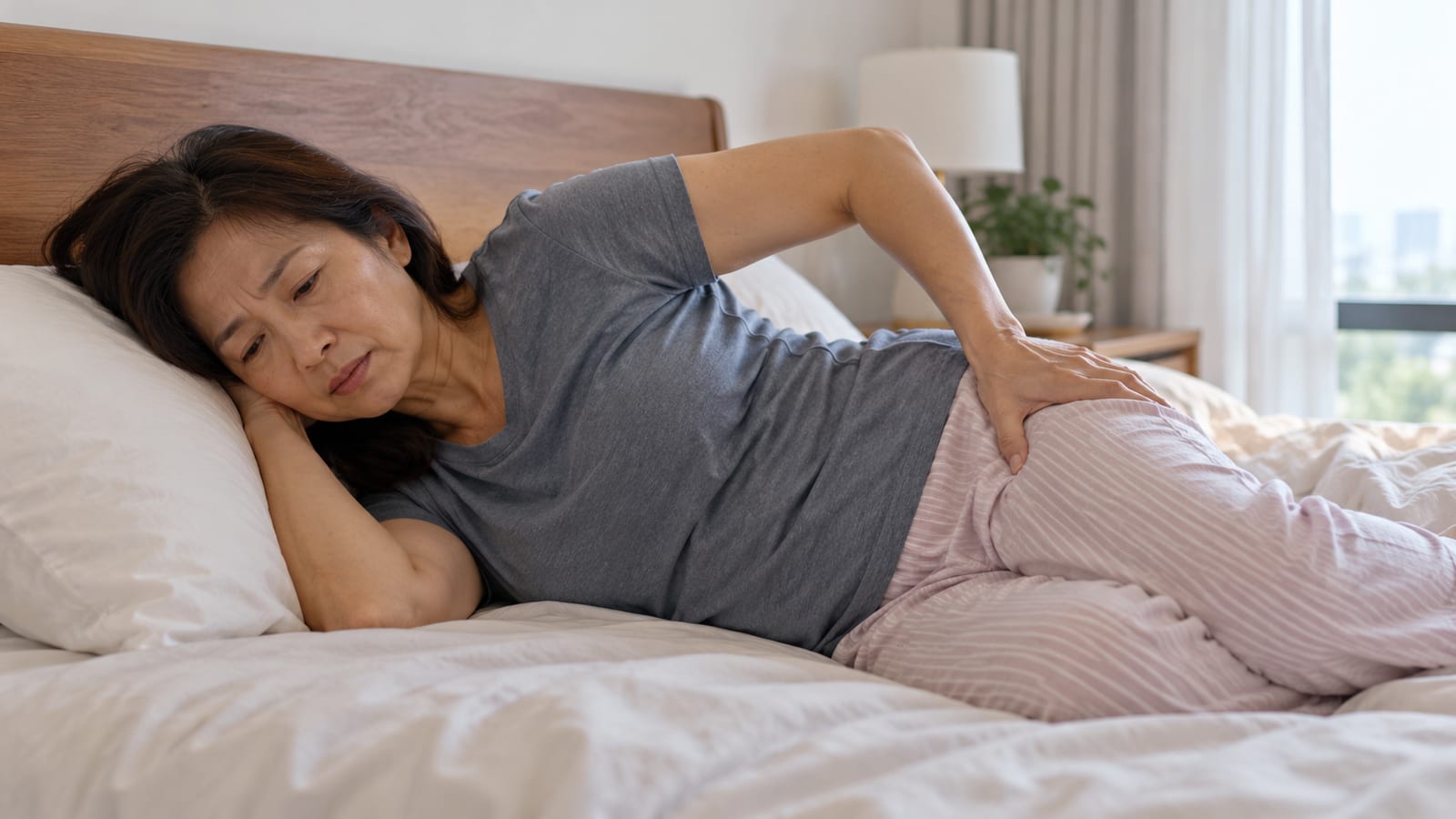
A common cause of pain on the outer side of the hip is a condition called greater trochanteric pain syndrome, or GTPS for short. Doctors see it a lot. In fact, 1 in every 5 to 10 people who see a GP about hip pain turns out to have it. The pain is usually felt right over the bony bump on the side of your hip. You may find that spot tender to touch, and sometimes the area looks a little swollen. You might also experience discomfort when walking, climbing stairs or standing on one leg.
You might also have heard it called hip bursitis. That is the older name for it, and we will explain below why doctors now think differently.
Is it bursitis or something else in the hip?
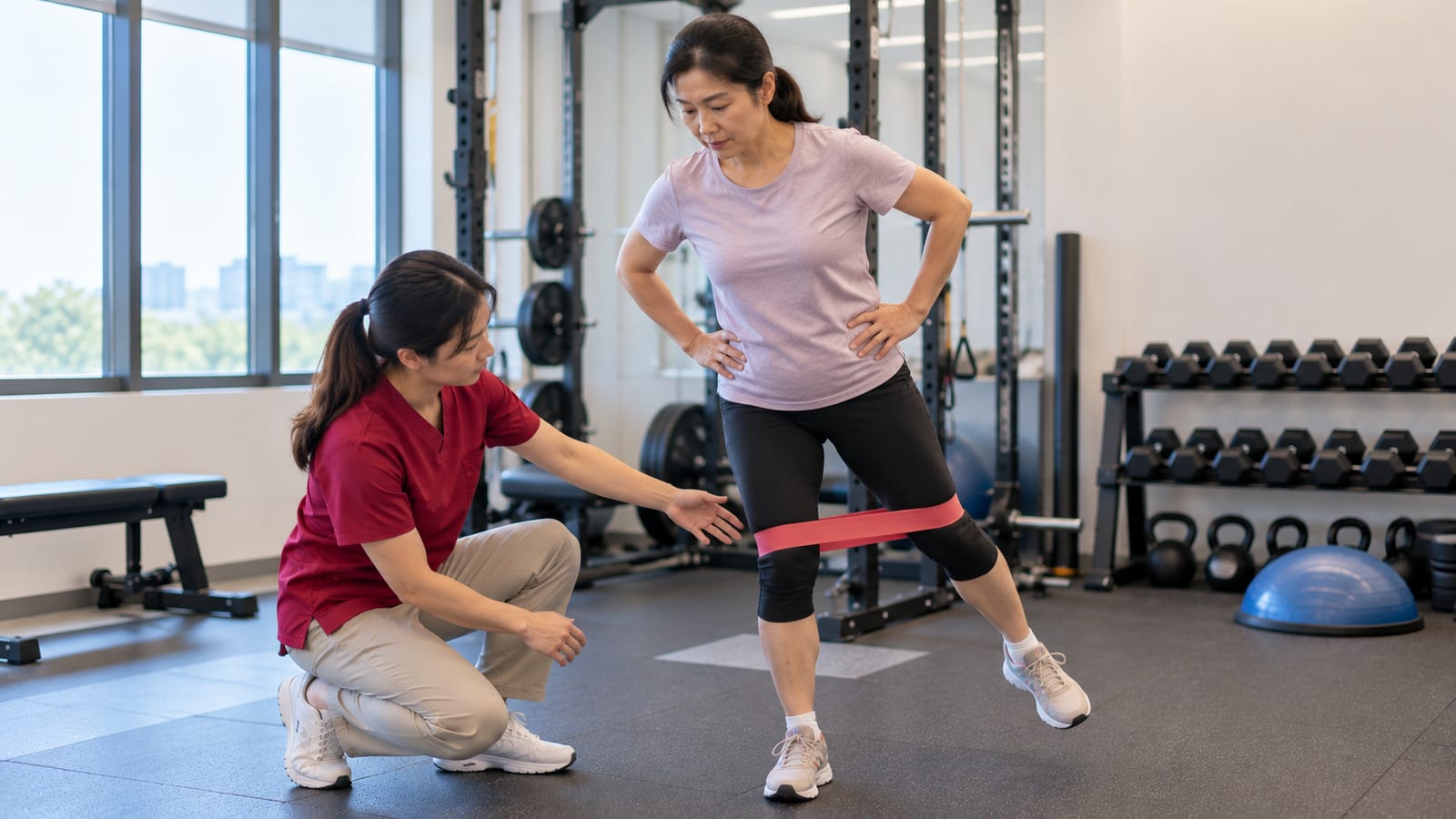
Doctors used to blame outer hip pain on an inflamed bursa, a small cushion of fluid between tissues. Research now points more to the tendons of two buttock muscles that stabilise the pelvis when you walk, climb stairs and stand on one leg. The bursa may be irritated too, but it is often not the main problem. This is why the treatment has shifted: exercise and easing the load on those tendons tend to make more sense than just calming an inflamed cushion.
Why does it hurt when you lie on your side?
Lying on the sore side is one of the most common triggers for outer hip pain. It is also usually worse when you are up and about, so a long day on your feet often leads to a restless night. A review in the British Journal of General Practice describes this pattern: the pain is typically over the bony bump on the side of the hip, and it is worse with weight-bearing and side lying at night.
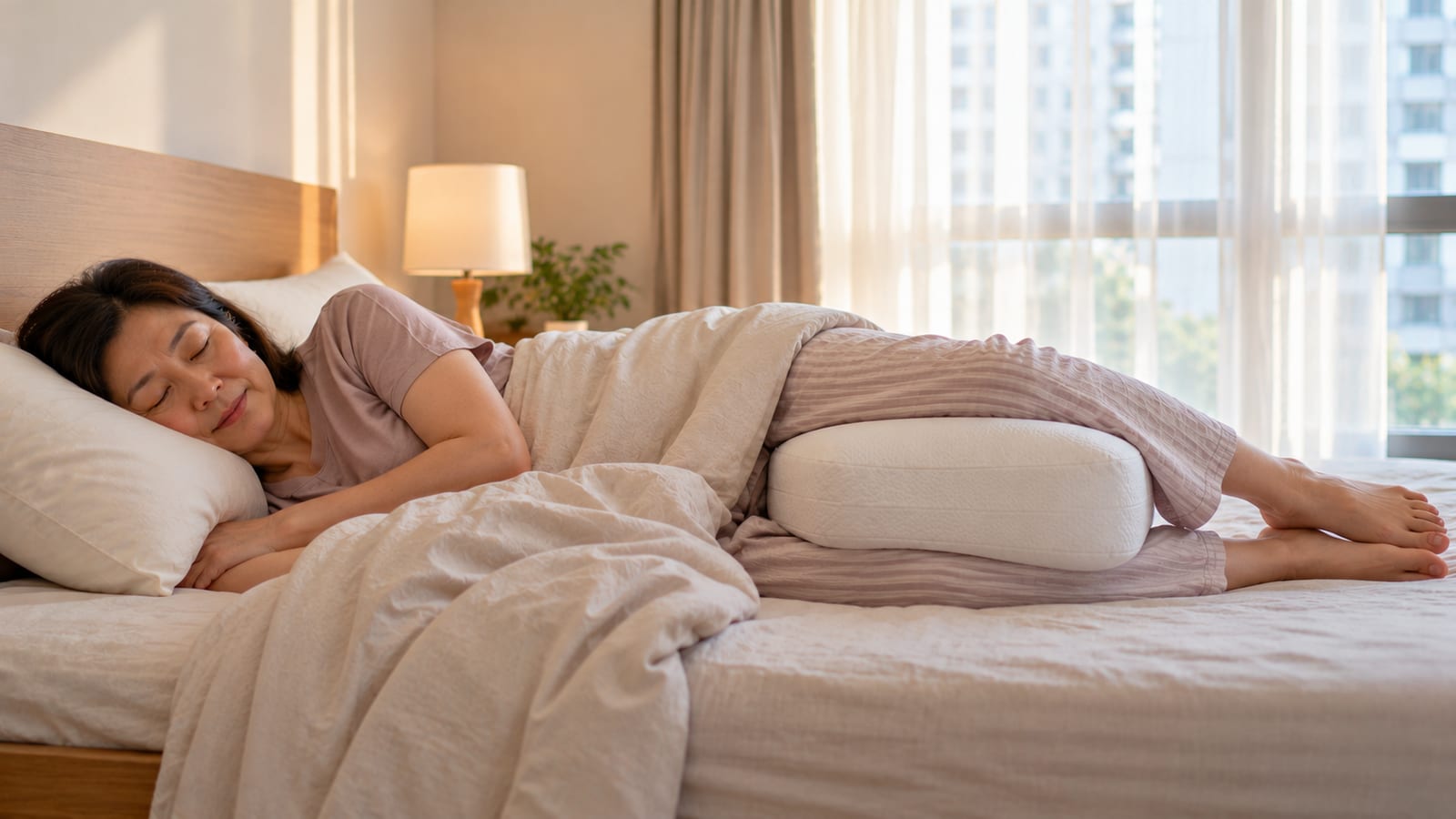
A few small changes can make nights easier while it settles. Here is a tip we often share with patients: put one or two pillows between your knees at night, and try not to cross your legs while the pain settles.
Who gets outer hip pain?
We see it most often in women between 40 and 60. Studies back this up: research on the condition finds it affects women two to three times as often as men. That does not mean men or younger people are safe from it, so do not rule it out if the symptoms sound familiar. Some other factors that may contribute include:
- Sudden increases in walking
- Running or other physical activities
- Difficulty controlling pelvic movement during single leg activities
- Prolonged positions that compress the outer hip
What does the research say helps?
Exercise is the treatment with the most support. Reviews of the research keep coming back to the same plan: strengthening the muscles around your hip and easing off whatever is overloading it. In practice, that usually means a programme of exercises built around your hip strength and your daily routine, along with small changes to how you sit, stand and sleep.
You may be wondering about injections. A steroid injection can ease the pain for a while, but a year later, people who had one do about as well as people who simply waited. The pain also tends to come back if nothing else is done alongside it.
Shockwave therapy is another option. The evidence so far is promising but limited, so it is something to talk through with your physiotherapist rather than a sure fix.
Researchers are still working out the best way to treat this, so recovery looks different for everyone. That is why we start with an assessment before settling on a plan.
Could your hip pain be something else?
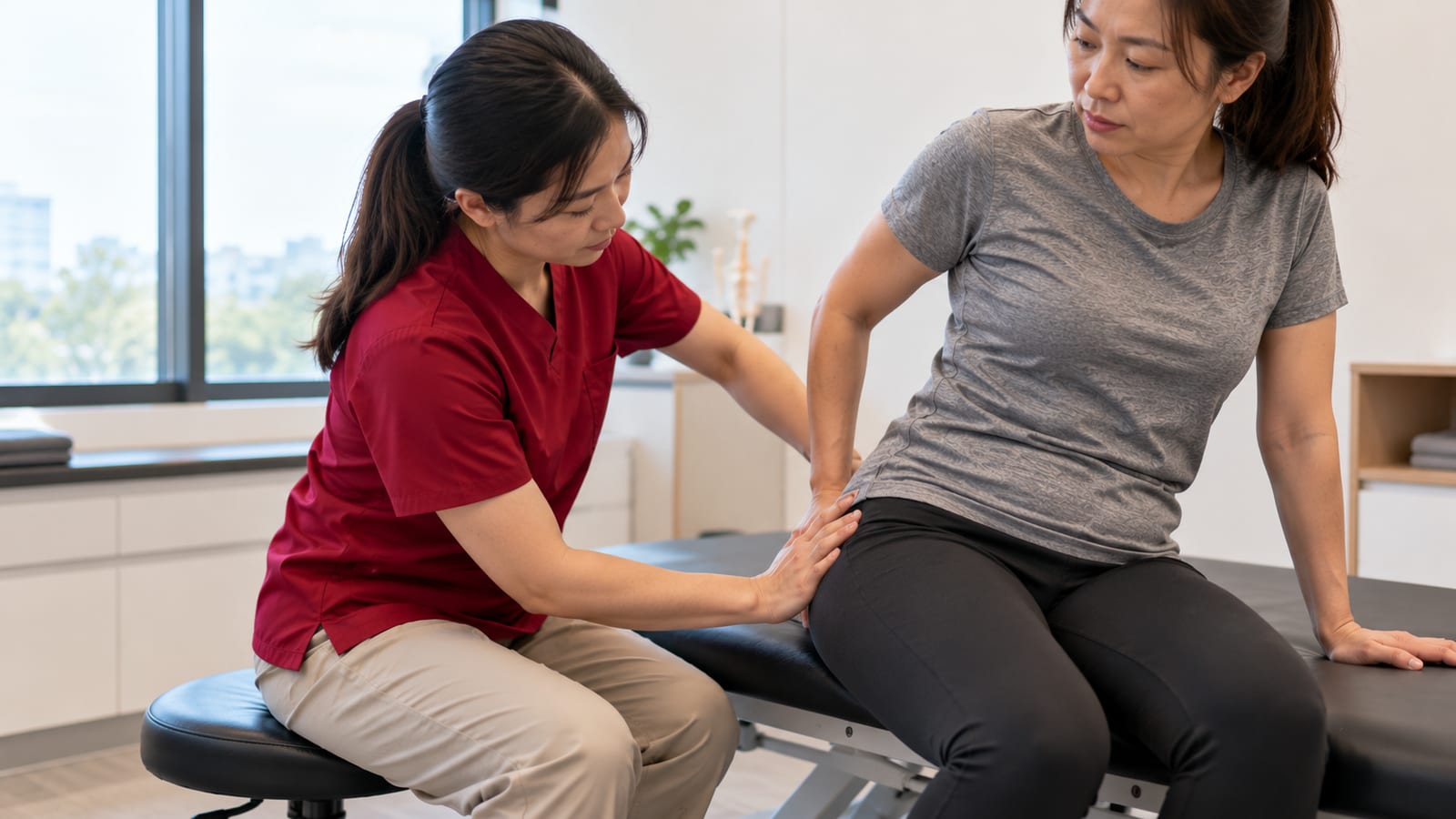
Yes, and it happens more often than you would think. Pain on the outer side of the hip can look a lot like arthritis in the hip joint, or pain that starts in the lower back and travels to the hip. That is why we look at the whole picture, not just where it hurts.
Part of that is asking about everyday things, like how easily you can put on your shoes and socks, which helps us tell the causes apart. A scan can also point you in the wrong direction. Scans often show changes in people who have no pain at all, so the results only make sense alongside a proper assessment.
If your pain feels like it is coming from your back, our guides to sciatica and lower back pain may help. Another cause we see is a hip joint problem called femoroacetabular impingement. People with it often notice groin or outer hip pain, stiffness, or a clicking or catching feeling in the hip. You can read more on our hip pain page.
When should you get your hip checked?
Get it checked if the pain keeps coming back, affects your daily activities, disturbs your sleep, or you are not sure whether it comes from the hip, the tendons or your back. Because hip pain can have several causes, a proper assessment is the quickest way to find out which one you are dealing with and avoid treating the wrong thing.
How do we treat outer hip pain at Physio & Sole Clinic?
We start by working out what is overloading your hip, not just where it hurts. For GTPS, your physiotherapist may use a mix of:
- Assessment, including gait and biomechanical analysis, to see how you load your hip when you walk
- Education on which positions and activities add load to the hip
- Manual therapy, including soft-tissue release for tight muscles, cryotherapy, therapeutic ultrasound and joint mobilisation
- Exercise programmes built around your hip strength and daily routine
- Shockwave therapy where it suits your case, bearing in mind the limited evidence described above
Not sure whether to see a physiotherapist or a podiatrist? Read who to see for your problem. For a wider look at what physiotherapy covers, see our guide to physiotherapy in Singapore.
Frequently Asked Questions
Why does my hip hurt when I lie on my side?
If the pain is on the outer side of the hip, it may be greater trochanteric pain syndrome. A review says the pain is typically worse with weight-bearing and side lying at night.
Is outer hip pain bursitis?
It used to be called bursitis. Research now points more to the tendons of the buttock muscles, with or without the bursa also being involved.
Who gets it most often?
Women between 40 and 60 are affected most often, according to reviews, though others can get it too.
What helps outer hip pain?
Reviews describe exercise and managing the load on the hip as the main treatments. Injections can give short-term relief, but the benefit often fades without other treatment. Researchers still do not agree on the single best approach.
Could it be arthritis or my back instead?
It could. A review warns that this condition can be mistaken for hip arthritis and for pain that starts in the lower back, which is why an assessment matters.
Getting Back to Comfortable Sleep and Walking
Outer hip pain that stops you from sleeping on your side or from walking comfortably is common, and it usually has a clear explanation once someone examines it properly. Understanding what is loading the hip is what lets you change it.
Booking Your Hip Physiotherapy in Singapore?
Read more about how we assess and treat hip pain, then book an appointment at any of our 11 clinics. You can also check our pricing and insurance details first.
Ready to feel better?
Book a consultation with our physiotherapy team to get an assessment tailored to you.