
Quick Summary
If you have flat feet and supportive slippers have not settled your pain, the next step is to look at the whole picture: where the pain sits, what you wear outside the house, how long it has lasted, and how your foot moves, rather than swapping slippers again. A few simple checks at home can help you describe the problem clearly. If the pain is persistent, or it has spread beyond your foot, a podiatry assessment is the best way to find out what is driving it.
This article picks up where our guide to choosing slippers for flat feet at home leaves off. If you have not read it, start there for what to look for in a slipper.
Why Might Slippers Alone Not Settle Flat Feet Pain?
Slippers are one part of what your feet carry every day, and flat feet pain often has more than one contributor. Your arch is supported by the structures of the foot and lower leg, and the plantar fascia, the band of tissue under the foot, plays a role in supporting it. HealthHub lists having flat or overpronated feet, as well as inappropriate footwear, among the common causes of plantar fasciitis. [1]
A slipper may suit your foot, but the shoes you wear to work, the gym or the market are part of the same picture. HealthHub's advice for preventing plantar fasciitis is to wear appropriate, well-fitted footwear for exercise, work or daily activities, not only at home. [1]
Recovery also takes time. HealthHub notes that recovery from plantar fasciitis usually takes months, so a few weeks in new slippers without change in other aspects does not necessarily mean the slippers have failed. [1] It does mean it is worth checking the rest of the picture.
What Can You Check at Home?
Start by noting where the pain is, because pain from flat feet can show up well beyond the arch. Our flat feet condition page lists pain in the arch of the foot, heel, calf, knee, hip, or lower leg, and tiredness in the ankles and lower legs, among the signs people may experience.
Work through this list over a few days and write down your answers:
| Check | What to look for | Why it is worth noting |
|---|---|---|
| Where it hurts | Heel, arch, inner ankle, shin, knee, or lower back | Information on areas of pain is useful for a podiatrist |
| When it hurts | At home, outdoors, after standing, after exercise | Tells us whether it is linked to a particular surface or shoe |
| Your other footwear | Work shoes, exercise shoes, sandals, how worn they are | Footwear outside the house is part of the picture |
| Your ankle | Does the ankle roll inwards when you stand or walk? | Rolling in at the ankle (overpronation) is on the list of signs |
| Tiptoes | Can you stand on tiptoes comfortably? | Difficulty standing on tiptoes can cause issues |
| Inner ankle | Any swelling on the inside of the ankle? | Possible sign of injury |
| How long | Days, weeks or months | Pain that has lasted for more than a few weeks deserves an assessment |
These are observations to bring to an appointment, not a diagnosis.
What Does the Wet Footprint Test Tell You?
It shows you the shape of your footprint, which may suggest flat feet, and nothing more. The test is simple: wet your feet and stand on a flat surface. As our podiatry team explains on the flat feet condition page, if the imprint shows your entire foot, it may indicate flat feet.
What it cannot tell you is whether your flat feet are the reason you are in pain. There are people with fallen arches who experience no pain or problems in their feet, and a footprint says nothing about how your foot moves when you walk. If the footprint looks flat and you are in pain, that is a reason to get it assessed, not a conclusion.
When Is It Time to See a Podiatrist?
See a podiatrist if the pain has lasted for months, if it is spreading beyond the foot, or if home changes have not helped. HealthHub's self-care advice for plantar fasciitis includes seeking treatment early. [1] Signs worth raising include pain in the knee, hip or lower leg alongside foot pain, swelling on the inside of the ankle and difficulty standing on tiptoes, all of which appear on our list of flat feet signs.
If you have diabetes, check your feet daily. See your doctor immediately if you hurt your foot, or if it changes colour or looks different, rather than waiting for a podiatry appointment. [2]
What Does a Podiatry Assessment Look At?
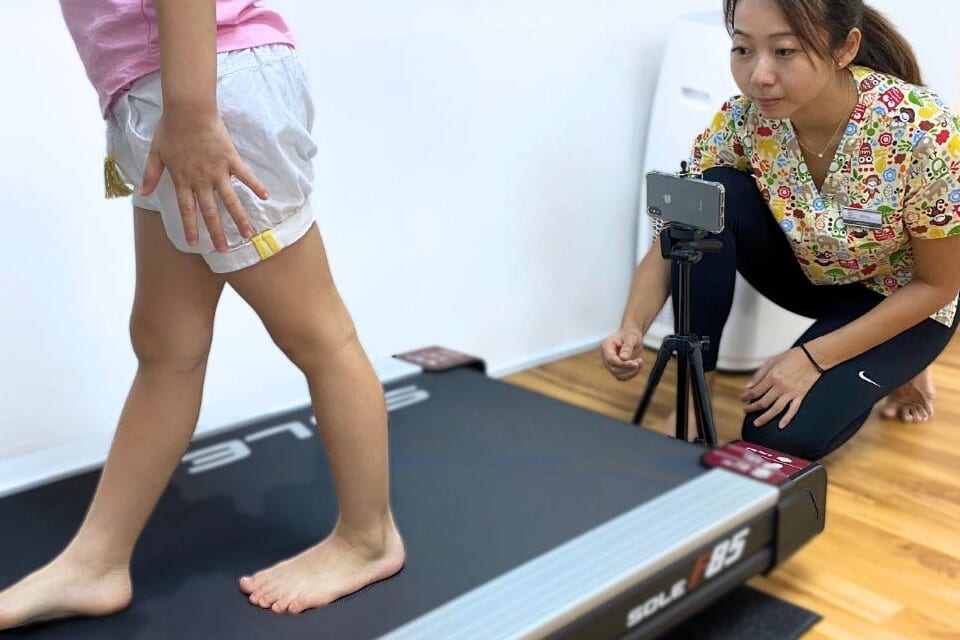
A podiatry assessment looks at your whole leg and foot, not only the arch. At Physio & Sole Clinic, a detailed history and physical examination is carried out, and the assessment includes a hip examination, a knee examination, an ankle and foot examination, standing and gait analysis, and footwear analysis and advice. You can read more about biomechanical gait analysis.
From the findings, the podiatrist builds a plan. Depending on what is found, treatment may include foot orthoses, footwear changes, or specific exercises. A podiatry session lasts 30 to 45 minutes, and there is no surcharge if it runs over. The podiatry assessment is $225 before GST; see our pricing page for current charges.
Our condition page is also honest about the limits: flat feet can be managed but not always fully corrected, especially in adults. The aim of care is to reduce symptoms and improve function.
Frequently Asked Questions on Flat Feet Checks at Home
Can slippers cure flat feet?
No. Supportive slippers can make daily standing more comfortable, but flat feet can be managed rather than always fully corrected, especially in adults. If pain continues, an assessment looks for what is contributing to it.
How do I know if my flat feet are causing my pain?
You cannot tell from a footprint alone. Note where and when the pain occurs, and have it assessed if it is persistent. Some people with fallen arches have no pain at all.
Should I wear shoes at home instead of slippers?
That depends on your feet, and a podiatrist can advise after assessing you. HealthHub's general advice is to wear appropriate and well-fitted footwear for daily activities. [1]
How long does it take for foot pain to settle?
It varies. For plantar fasciitis, HealthHub says recovery usually takes months, which is why starting early matters. [1]
What should I bring to a podiatry appointment?
The shoes you wear most often, including work and exercise shoes, and your notes on where and when the pain occurs.
Your Feet, Your Next Step
Home checks can help you describe what is going on. They cannot tell you why. If slippers alone have not settled the pain, the useful next step is to have your feet, ankles and the way you walk looked at properly.
Booking Your Podiatry Assessment in Singapore?
A podiatry assessment at Physio & Sole Clinic covers your hips, knees, ankles and feet, your standing and walking pattern, and your footwear. Book a podiatry appointment at one of our Singapore clinics, or read about flat feet and how we assess them.
Related Articles
- Choosing the Best Slippers for Flat Feet at Home
- Flat Feet Treatment Guide Singapore
- Children and Adult Flat Feet
References
- HealthHub, Plantar Fasciitis (reviewed 30 June 2021).
https://www.healthhub.sg/health-conditions/plantar-fasciitis - HealthHub, Diabetic Foot Care, contributed by Tan Tock Seng Hospital (reviewed 10 January 2023).
https://www.healthhub.sg/health-conditions/diabetic_foot_ttsh
Ready to feel better?
Book a consultation with our podiatry team to get an assessment tailored to you.