
Quick Summary
If you’re active, whether through gym workouts, sports, climbing, cycling, or simply staying fit after work, an elbow dislocation can feel especially frustrating.
One moment you’re moving normally. Next, your arm is swollen, painful, and stuck in a position that doesn’t feel right.
As a physiotherapist in Singapore, I often see patients after A&E or orthopaedic review, asking the same question:
“My elbow has been put back… now what?”
This guide is written to answer that, clearly, practically, and without unnecessary medical jargon.
What Is an Elbow Dislocation? (And Why It’s More Than “Just a Sprain”)
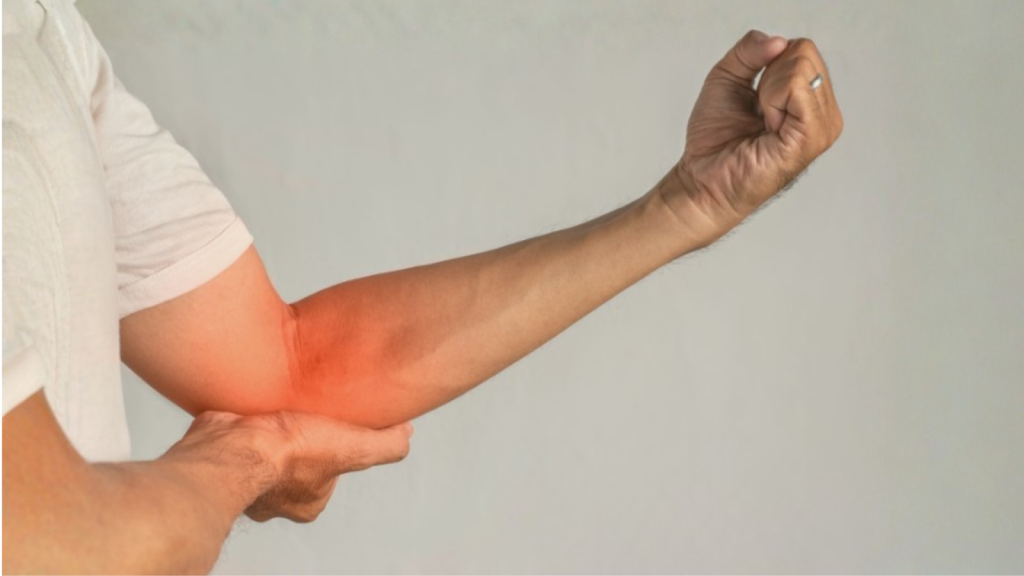
An elbow dislocation happens when the bones of the elbow joint are forced out of alignment, usually from a fall onto an outstretched hand, a sporting collision, or a sudden twisting force.
Unlike a simple bruise or strain, a dislocation almost always involves ligament injury, and sometimes cartilage or nerve irritation as well.
From a clinical perspective, elbow dislocations are broadly classified as:
Simple dislocationBones are displaced, but no fracture is present.
Complex dislocationDislocation occurs alongside a fracture.
Most active adults I see have simple posterior elbow dislocations, which still require structured rehabilitation to recover fully.
How Do You Tell If an Elbow Is Broken, Dislocated, or Just Bruised?
This is one of the most common questions, and an important one.
Signs it may be dislocated or fractured
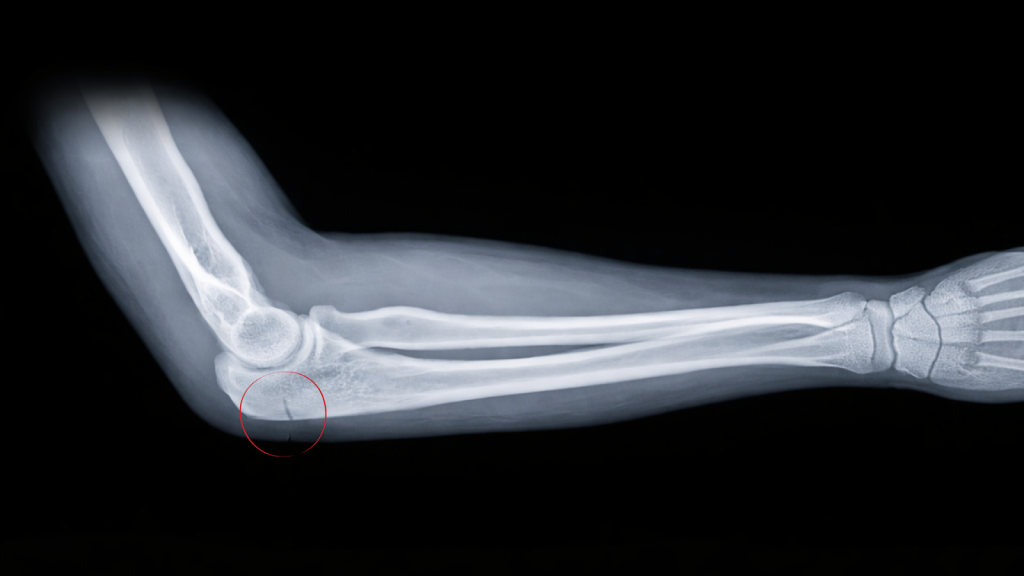
Obvious deformity or “out of place” appearance
Severe pain and rapid swelling
Inability to bend or straighten the elbow
Tingling or numbness in the hand or fingers
Signs it may be bruised or mildly sprained
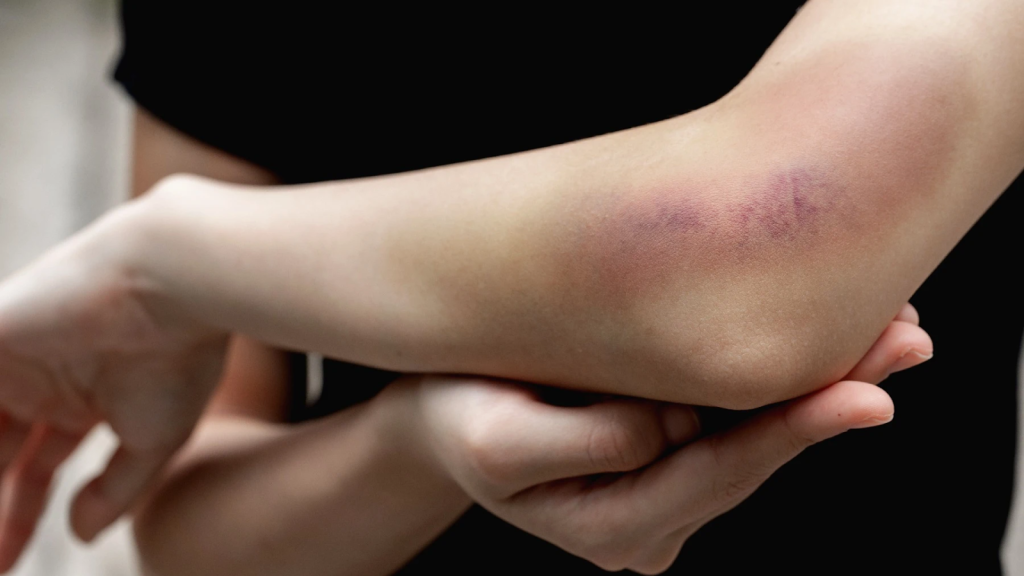
Pain, but normal joint shape
Able to move the elbow (even if uncomfortable)
Swelling develops gradually, not instantly
Key takeaway: If the elbow looks deformed or movement is suddenly blocked, don’t try to “push through”. In Singapore, this means prompt assessment at the A&E or an orthopaedic clinic for imaging and reduction.
The Real Problem After Elbow Dislocation

Here’s where many people get stuck.
Once the elbow is “put back,” pain improves, but stiffness sets in quickly.
The elbow joint is particularly prone to:
Loss of extension (straightening)
Protective muscle guarding
Scar tissue formation when immobilised for too long
I often tell patients:
“The injury heals faster than the stiffness.”
Without proper rehab, it’s common to see:
Difficulty locking out the arm
Weak pushing strength (push-ups, bench press)
Fear of loading the arm again
How Long Does It Take to Straighten an Arm After an Elbow Dislocation?
This depends on how early and how appropriately rehab starts.
Typical recovery timelines (general guide)
Phase
What’s happening
0–2 weeks
Pain and swelling control, protected movement
2–6 weeks
Regaining elbow range of motion
6–12 weeks
Strength, stability, and load tolerance
3–6 months
Full return to sport (for higher-demand activities)
Most patients can partially straighten the arm within 2–4 weeks, but full extension often takes longer, especially if rehab is delayed.
How to Treat an Elbow Dislocation
Treatment doesn’t stop after reduction. In fact, that’s where recovery really begins.
Medical Management First
In Singapore, this usually involves:
X-rays (and sometimes MRI)
Reduction by A&E or orthopaedic doctors
Short-term sling or brace
Once serious complications are ruled out, physiotherapy becomes the main driver of recovery.
How Do You Exercise with a Dislocated Elbow Safely?
This is where many people either recover well or get stuck.
Early Phase: Restore Safe Movement
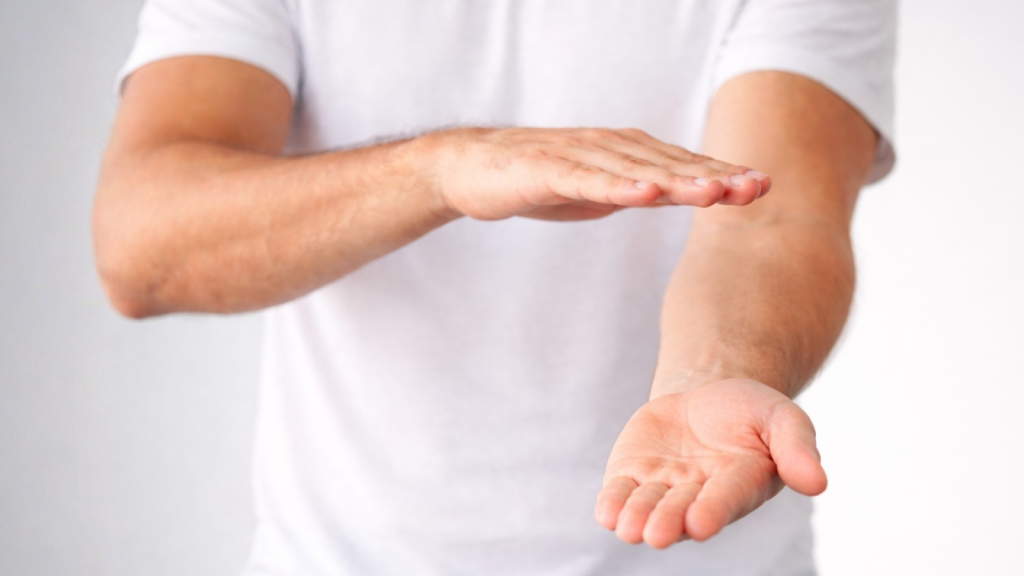
We focus on:
Gentle elbow bending and straightening
Forearm rotation (turning palm up/down)
Reducing swelling and guarding
These are gentle, controlled movements, designed to restore motion without triggering instability.
Middle Phase: Strength & Control
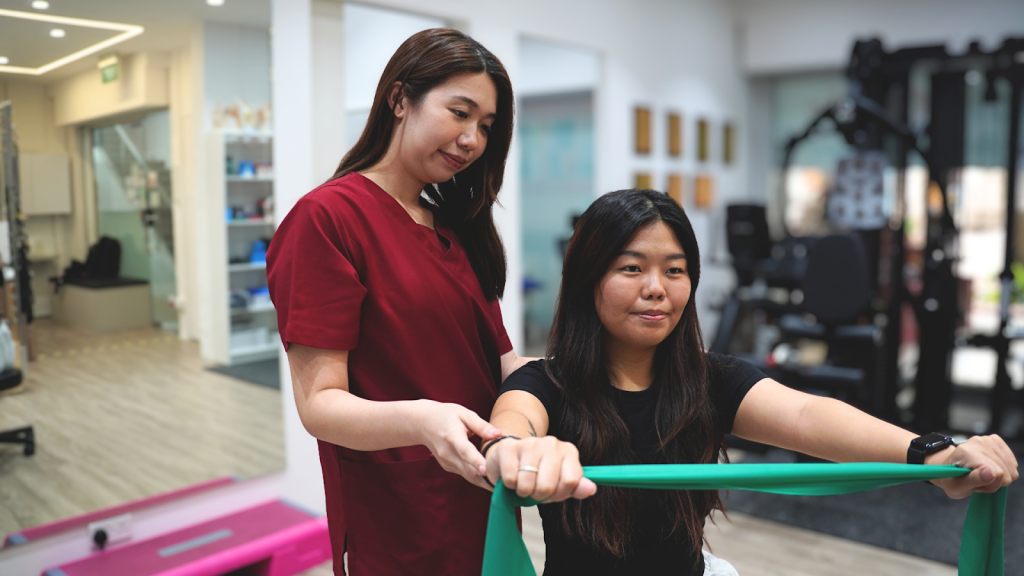
As pain settles:
Isometric and controlled resistance work
Shoulder and wrist strengthening (often overlooked)
Gradual weight-bearing progression
Later Phase: Return to Sport

For active adults, this includes:
Push, pull, and load-bearing drills
Sport-specific movements (gym, racquet sports, climbing)
Confidence rebuilding, which is a big but under-appreciated factor
Common Misconceptions About Elbow Dislocation Recovery
Let’s clear a few up:
**“If it pops out once, it’ll always be unstable.” **With proper rehab, most elbows regain excellent stability.
**“I should rest until it feels normal.” **Too much rest leads to stiffness.
**“Pain means I’m damaging it again.” **Controlled discomfort during rehab is often normal.
When Should You See a Physiotherapist?

You should seek physiotherapy if:
Your elbow isn’t straightening after 2–3 weeks
Swelling or pain persists despite rest
You feel unstable or weak when loading the arm
You want to return to sport safely, not just “get by”
At Physio & Sole, our sports physiotherapy and post-injury rehabilitation approach focuses on restoring confidence, strength, and real-world function, not just range of motion on a treatment bed.
Clinician’s Perspective: What I See Most Often
In practice, the biggest issue isn’t the dislocation itself; it’s under-rehabilitation.
Patients are often told:
“Give it time.”
Time helps tissues heal, but movement quality, load tolerance, and neuromuscular control don’t come back automatically.
That’s where guided rehabilitation makes the difference between:
“I can use my arm.”
and “I trust my arm again.”
Final Thoughts: Recovering Well, Not Just Healing

An elbow dislocation is a significant injury, but for active adults, it doesn’t have to be a long-term setback.
With:
Early movement
Progressive strengthening
Sports-specific rehab
Most people return to full activity safely and confidently.
If you’re unsure whether your elbow is progressing as it should, a professional assessment can give clarity and prevent months of unnecessary stiffness.
Ready to Get Your Elbow Moving Again?
If you’ve had an elbow dislocation and want a clear, structured recovery plan, our team at Physio & Sole Clinic is here to help.
A proper assessment can make the difference between slow frustration and a confident return to activity.
Ready to feel better?
Book a consultation with our physiotherapy team to get an assessment tailored to you.