Physiotherapy condition
Posterior Tibial Tendon Dysfunction胫后肌腱功能障碍

The part worth understanding is that it is progressive. This is not a flat foot someone has had since childhood; it is an arch that is coming down now, in an adult, because a tendon is failing. Caught early, the tendon can be offloaded and the supporting muscles strengthened. Left alone, the surrounding ligaments give way too and the collapse becomes structural.
Posterior Tibial Tendon Dysfunction at a Glance
| Detail | Information |
|---|---|
| What it is | Degeneration of the tendon supporting the arch |
| Main symptom | Pain on the inside of the ankle, arch flattening |
| Typical recovery | Varies with severity, assessed at first visit |
| Session duration | 45–60 minutes |
| GP referral needed? | No |
| Clinicians | AHPC-registered |
Is This the Same as Flat Feet?
Related, but not the same thing, and the difference changes what helps.
Flat feet describes the shape of a foot. Many people have had low arches all their lives, often without pain, and management is largely about support and footwear.
PTTD describes a tendon that is failing. The flat foot is the result, not the starting point. The distinguishing features are that it comes on in adulthood, it is usually painful on the inside of the ankle, it tends to affect one foot more than the other, and the arch is lower than it used to be. If an arch that was there before is dropping, this is the more likely explanation, and it needs the tendon treated rather than only the arch supported.
What Causes Posterior Tibial Tendon Dysfunction?
The tibialis posterior muscle and its tendon lie on the inner aspect of the ankle and act as the primary dynamic support for the medial arch. Repetitive loading of the foot produces microtrauma in that tendon and, over time, progressive failure of it. As the tendon loses its ability to do its job, the surrounding ligamentous structures take more load than they are built for, and the medial arch eventually collapses.
What Does It Feel Like?
Pain on the inner aspect of the ankle and foot, which is the usual first complaint
Swelling in the same area
Pain and weakness during activity, particularly walking and running
Gradual flattening of the affected foot, which is often noticed by someone else, or in a photograph, before the person notices it themselves
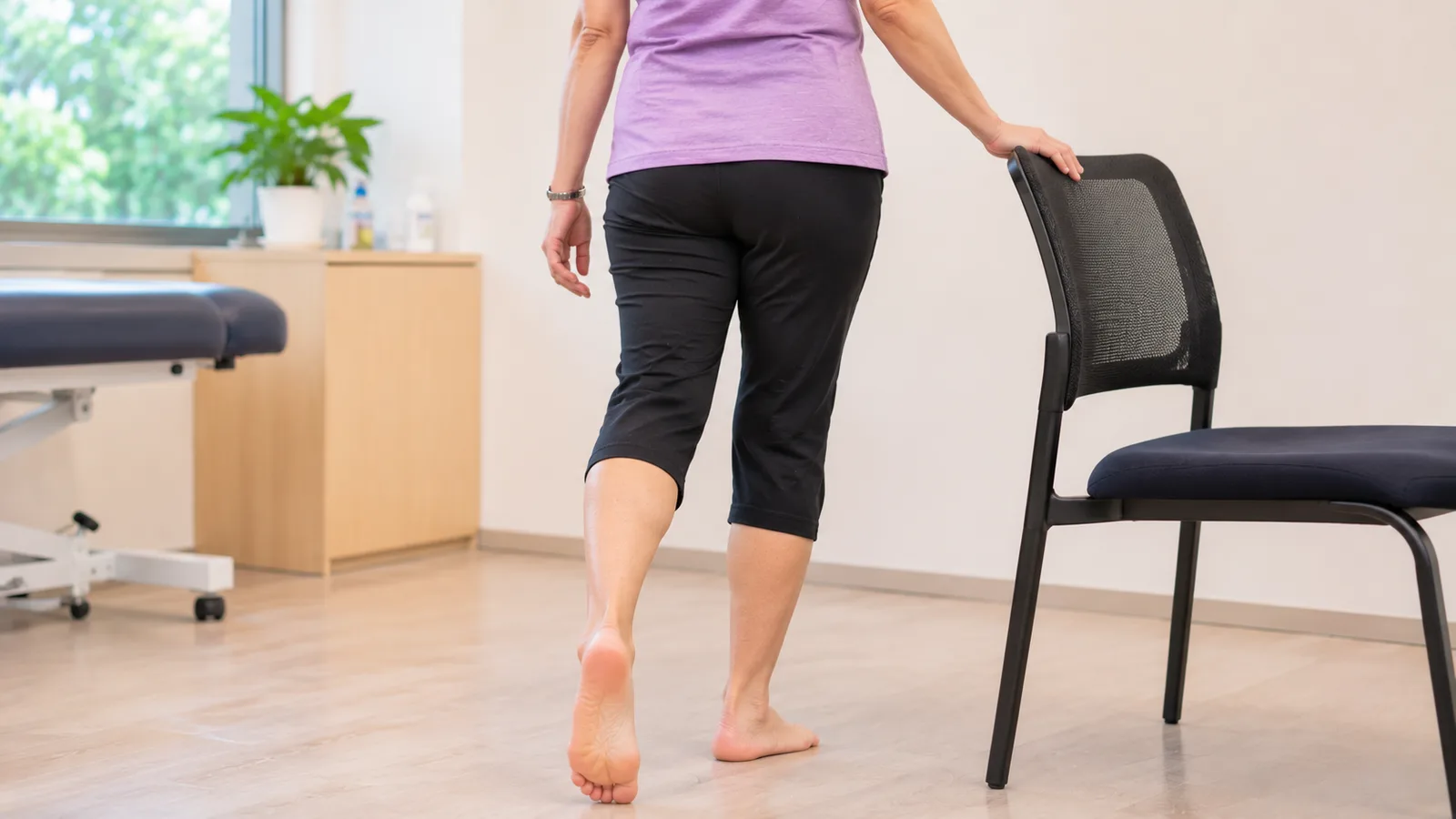
Difficulty rising onto the toes on the affected side
Pain on the inside of the ankle is not always this condition. An ankle sprain can produce pain in a similar place, and the two are told apart by how the pain started: a sprain has a moment, this does not.
How Does Physiotherapy Help?
Step 1: Assessment
Your physiotherapist determines the severity of the condition and what has come with it, including swelling and weakness through the lower limb, ankle and foot. Standing and gait analysis shows how the foot is loading when you walk.
Step 2: Taking Load Off the Tendon
Activity modification: identifying which activities are aggravating the tendon and pausing them, which speeds up recovery of the tendon itself
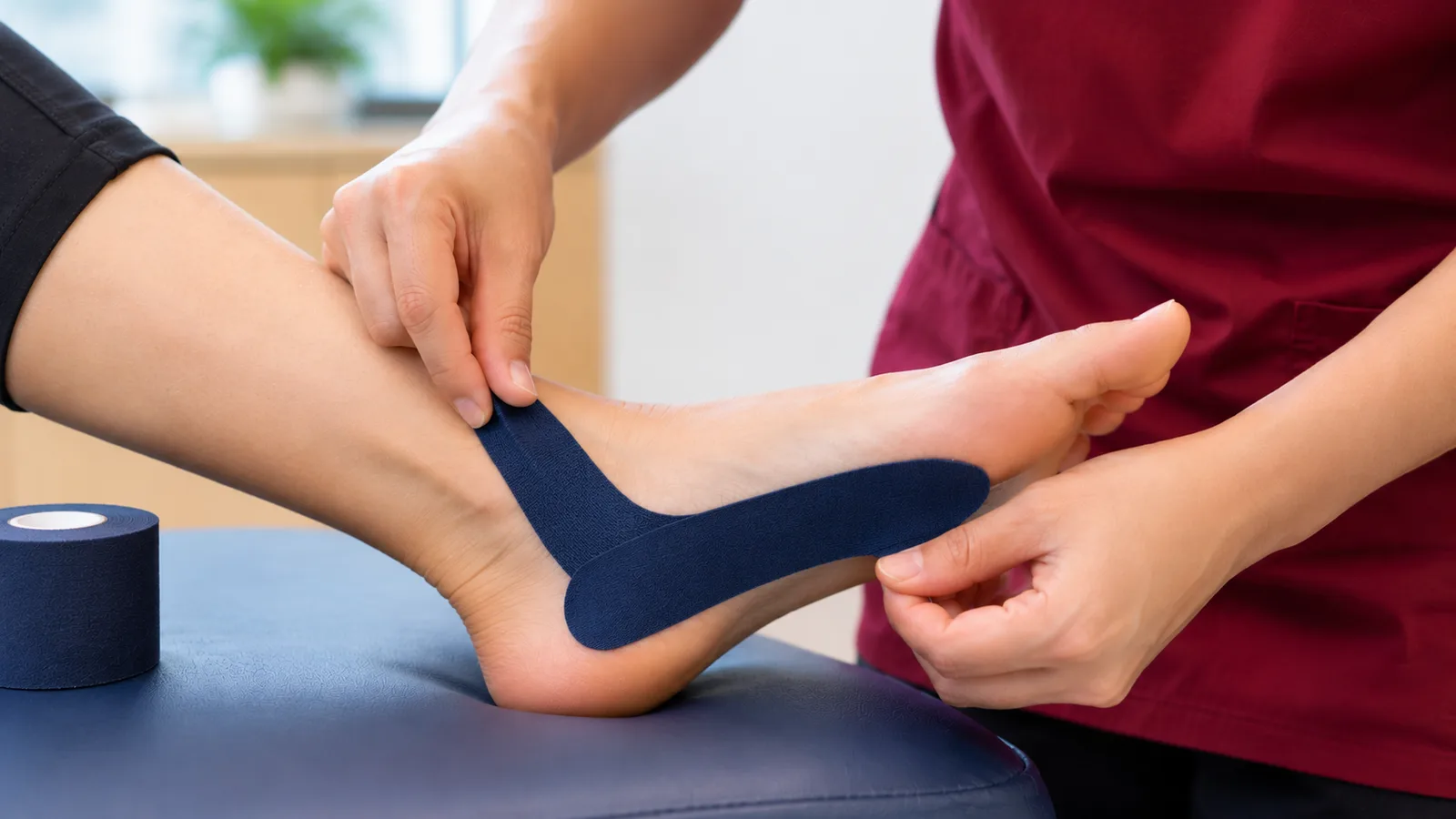
Sports taping to reduce load on the posterior tibial tendon and support the medial arch
Manual therapy: soft tissue release of tight muscles and joint mobilisation where ankle stiffness has developed
Ultrasound therapy to help manage pain
Where longer-term arch support is part of the answer, customised insoles are made by our podiatry team and used alongside the rehabilitation rather than instead of it.
Step 3: Strengthening and Return to Activity
Strengthening of the weak muscles through the lower limb, ankle and foot, to prevent recurrence
Progressive loading of the tendon itself
A sport-specific programme towards the end of rehabilitation, to allow a safe return to the activity you want to get back to
When Should You See a Physiotherapist?
Pain on the inside of the ankle that has not settled
An arch that is lower than it used to be, particularly on one side
Difficulty rising onto your toes, or pain when you do
Swelling on the inside of the ankle that keeps returning
Pain on the inside of the ankle that worsens with walking or running
This condition does not generally improve by being left alone, and the earlier the tendon is offloaded the more of the arch there is to preserve.
Book an appointment at any of our 11 clinic locations across Singapore. No GP referral is needed.
Frequently Asked Questions on Posterior Tibial Tendon Dysfunction
Is PTTD the same as having flat feet?
No. Flat feet describes the shape of the foot, and many people have low arches without pain. PTTD is a tendon on the inside of the ankle degenerating, which causes an arch that was previously there to flatten. The flat foot is the consequence. The giveaway is an arch that is dropping in adulthood, usually with pain on the inside of the ankle.
Will my arch come back?
That depends on how far it has progressed and whether the collapse is still flexible. Treatment is aimed at offloading the tendon, strengthening what supports the arch and stopping further progression. Your physiotherapist will tell you what is realistic after assessing the foot.
Do I need insoles?
Often they help, by supporting the arch while the tendon recovers. They are used alongside strengthening rather than instead of it; support alone does not restore a tendon's capacity to do its job.
Can I keep running?
Usually not at the same volume while the tendon is irritable. Running is one of the loads that aggravates it, so it is commonly reduced or paused, then reintroduced progressively as part of rehabilitation.
Which side does it usually affect?
Typically one foot rather than both, which is one of the things that separates it from lifelong flat feet, where both feet usually look the same.
Related Articles
Personalised care
Ready to get back on your feet?
Our physiotherapists can assess your symptoms and build a recovery plan around your goals.
Cashless care options
Insurance
We work with leading insurers to make eligible physiotherapy and podiatry visits more convenient.









Direct billing is subject to your membership terms. Our clinic team can help check your panel eligibility.