Skip to content



Written by
Felicia Cher
Senior Musculoskeletal Physiotherapist at Physio & Sole Clinic
A physiotherapist with a unique background in dance and STOTT Pilates, she brings a strong movement-based approach to musculoskeletal, orthopaedic and neurological rehabilitation. She is passionate about helping patients regain function and return to the activities they love.
Quick Summary: Sciatica Relief for Office Workers
Sciatica is a condition where the sciatic nerve becomes irritated or compressed, causing lower back pain that radiates down the leg, often described as a sharp, electric, or burning sensation. For office workers, prolonged sitting, poor posture, and tight muscles can worsen this compression, making symptoms more frequent and intense. Physiotherapy focuses on identifying the root cause of the nerve irritation, whether it’s from spinal discs, muscle tightness, or movement habits, rather than just masking the pain. Through targeted exercises, posture correction, and nerve mobilization techniques, physiotherapy helps relieve symptoms and prevent recurrence.
In This Blog:
- What Is Sciatica and Why Does It Cause Radiating Leg Pain?
- Why Does Sitting Make Your Sciatica Worse?
- Common Causes of Sciatica in Office Workers
- How Can a Physiotherapist in Singapore Help?
- Desk-Friendly Sciatica Relief Exercises (Including Nerve Glides)
- How to Set Up a Sciatica-Friendly Workspace
- Physiotherapy vs Relying on Painkillers
- Frequently Asked Questions About Sciatica
What Is Sciatica and Why Does It Cause Radiating Leg Pain?

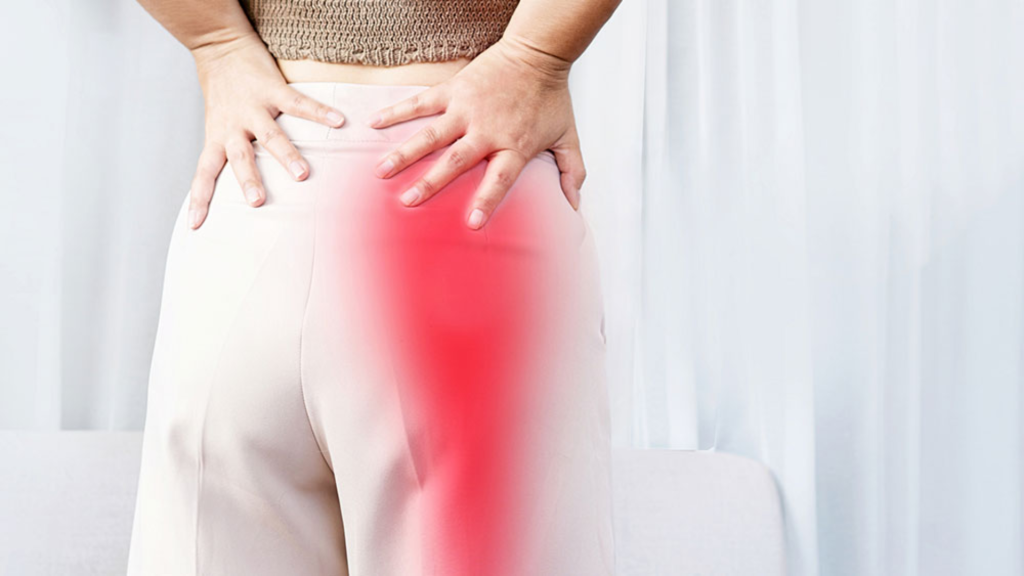
Sciatica is not a diagnosis on its own. It is a description of symptoms caused by irritation or compression of the sciatic nerve.
The sciatic nerve is the largest nerve in the body. It starts in the lower back, travels through the buttocks, and runs down the back of each leg. When this nerve becomes irritated, pain can travel along its pathway.
That is why sciatica often feels different from regular lower back pain. Instead of being limited to the back, it may cause:
- pain in the buttock
- pain shooting down the thigh or calf
- tingling or numbness in the leg
- a burning or electric-shock feeling
- discomfort that gets worse when sitting
Not all radiating leg pain is sciatica, though. Some people may have hip-related pain, muscle strain, or other nerve symptoms that feel similar. Proper assessment matters.
Why Does Sitting Make Your Sciatica Worse?
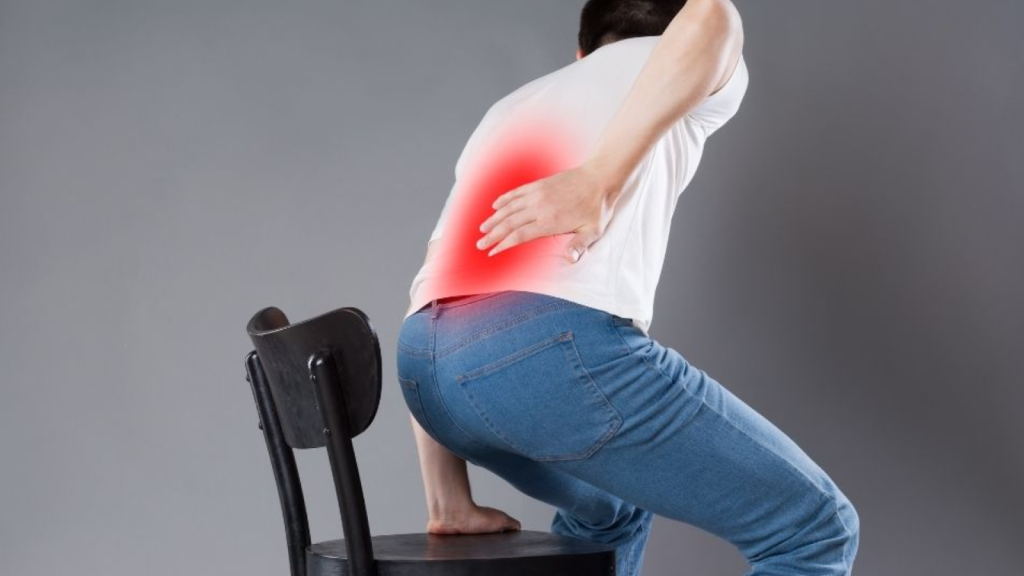
Many people with sciatica notice that sitting sciatica pain is worse than standing or walking. This is common, especially for desk-bound professionals.
When you sit for long periods, several things can happen. Your hips stay bent for hours, your lower back may slump, and pressure through the lumbar spine increases. If you already have a sensitive disc or irritated nerve root, this position can aggravate symptoms.
Prolonged sitting can also reduce movement in the hips and lower back. Muscles such as the hip flexors, glutes, and piriformis may become tight or underactive. Over time, this combination can increase tension around the nerve and make lower back pain and radiating leg symptoms more noticeable.
In short, sitting is not always the root cause, but it is often a major trigger.
Common Causes of Sciatica in Office Workers
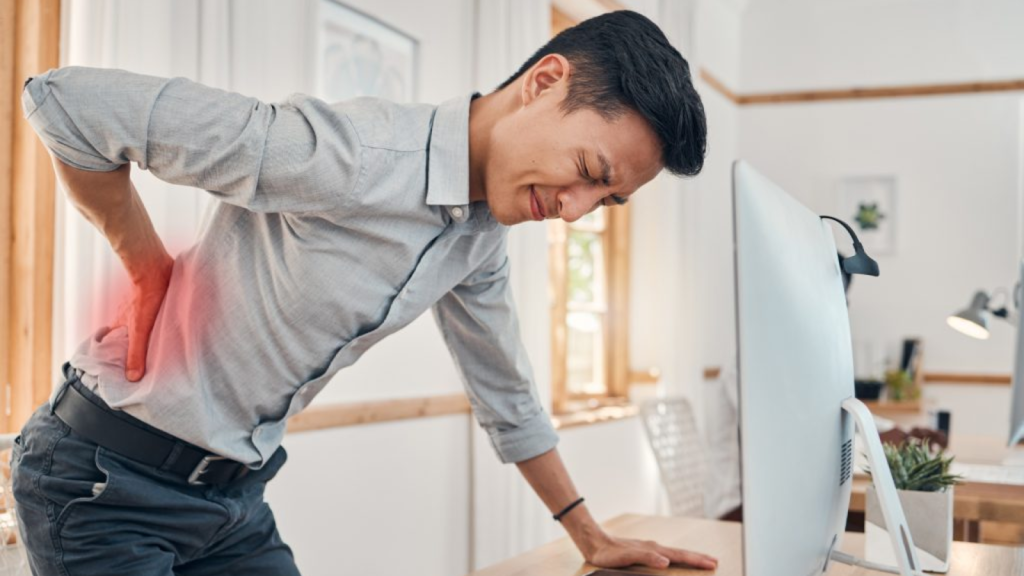
Sciatica in working adults is often driven by a mix of posture, movement habits, and tissue sensitivity rather than one single factor.
1. Prolonged sitting
Remaining seated for hours can increase stiffness, reduce circulation, and keep the lower back and hips in a compressed position. This is one of the most common patterns seen in office workers.
2. Poor posture
A slumped posture can place more stress on the lumbar spine. Over time, this may contribute to irritation around the nerve, especially if your chair setup is poor.
3. Weak core and glutes
If your deep trunk muscles and glutes are not doing their job well, other areas may compensate. This can affect spinal loading and hip control.
4. Tight hip muscles
Tightness in the piriformis, hamstrings, and hip flexors may contribute to tension around the nerve pathway. In some cases, piriformis syndrome may mimic or contribute to sciatic-type symptoms.
5. Lumbar disc issues
For some patients, a disc bulge or disc irritation in the lower back can affect a nerve root and create true sciatic pain. This is why assessment is important. Not all cases respond to the same exercises.
How Can a Physiotherapist in Singapore Help Sciatica?
A physiotherapist in Singapore can help by identifying what is actually driving your symptoms.
This is important because one person’s sciatica may respond well to spinal extension movements, while another may need nerve gliding, hip mobility work, or load management. A blanket internet routine may not suit everyone.
A physiotherapy assessment typically looks at:
- where your symptoms start and travel
- what positions worsen or ease pain
- spinal movement
- hip mobility
- nerve sensitivity
- muscle strength and control
- workstation and sitting habits
From there, your treatment plan is built around the root cause. That may include reducing nerve irritation, improving posture, restoring strength, and changing the habits that keep triggering the pain.
For busy professionals, this makes physiotherapy a practical long-term option, not just a temporary fix.
Treatment Methods Used in Physiotherapy
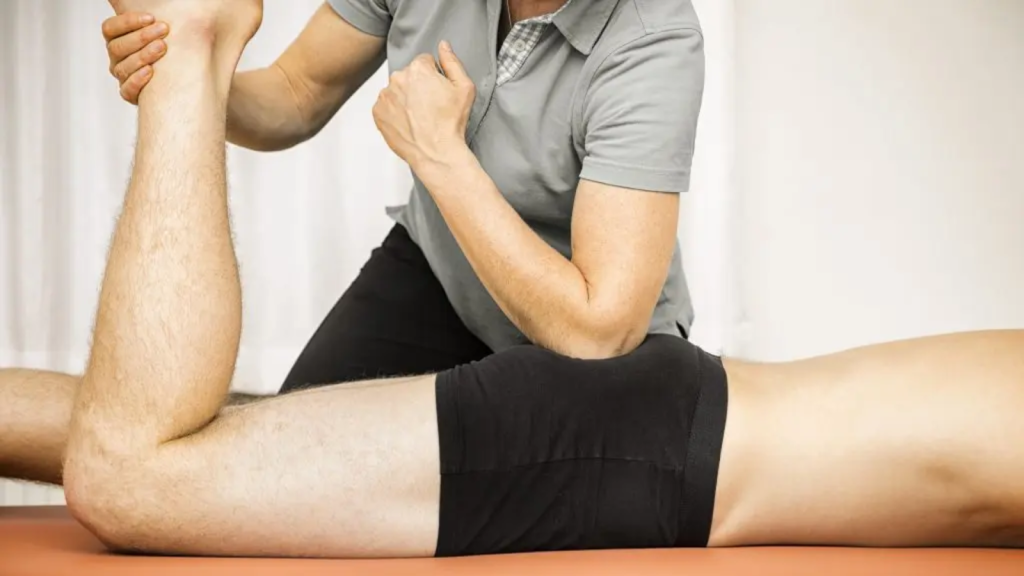
Physiotherapy for sciatica usually combines pain relief strategies with long-term correction.
Manual therapy
Hands-on treatment may be used to reduce stiffness in the lower back, hips, or surrounding soft tissue. This can help improve movement and reduce sensitivity.
Joint mobilisation
If certain joints in the lumbar spine are stiff or not moving well, joint mobilisation may help restore movement and ease mechanical irritation.
Nerve gliding techniques
Nerve glide exercises for sciatica are gentle movements designed to improve the nerve’s ability to move and tolerate tension. These are often very useful when symptoms include tingling, pulling, or zapping sensations.
Soft tissue release
Tight muscles around the lower back, buttocks, and hips may add to your symptoms. Releasing these areas can improve comfort and movement.
Posture correction
Small changes in the way you sit, stand, and position your pelvis and this can reduce unnecessary stress on the lower back.
Movement retraining
Sometimes the issue is not just posture, but how you move throughout the day. A physiotherapist can help retrain bending, sitting, standing, and walking patterns.
Targeted strengthening and mobility exercises
These may include core control, glute strengthening, hip mobility drills, and graded spinal exercises to build resilience.
Desk-Friendly Sciatica Relief Exercises (Including a 30-Second Routine)
If you are looking for sciatica relief for office workers, the best approach is often little and often. A few simple movements done regularly may help more than one big stretch at the end of the day.
Seated nerve glide
Sit upright near the edge of your chair. Straighten one knee slowly while lifting your chest. Then return to the start position. Keep the movement gentle. You should feel a mild stretch, not a strong zap or worsening pain.
Standing spinal extension
Stand up, place your hands on your hips, and gently lean your chest backward. This may help some people who feel worse after prolonged sitting.
Posture reset
Sit tall, bring your shoulders back slightly, and imagine lengthening through the top of your head. Keep both feet flat on the floor.
30-second desk routine
Try this every 1 to 2 hours during your workday:
- 10 seconds: posture reset
- 10 seconds: 5 gentle seated nerve glides each side
- 10 seconds: 3 standing spinal extensions
This is simple, realistic, and easier to maintain during a busy office schedule.
How to Set Up a Sciatica-Friendly Workspace
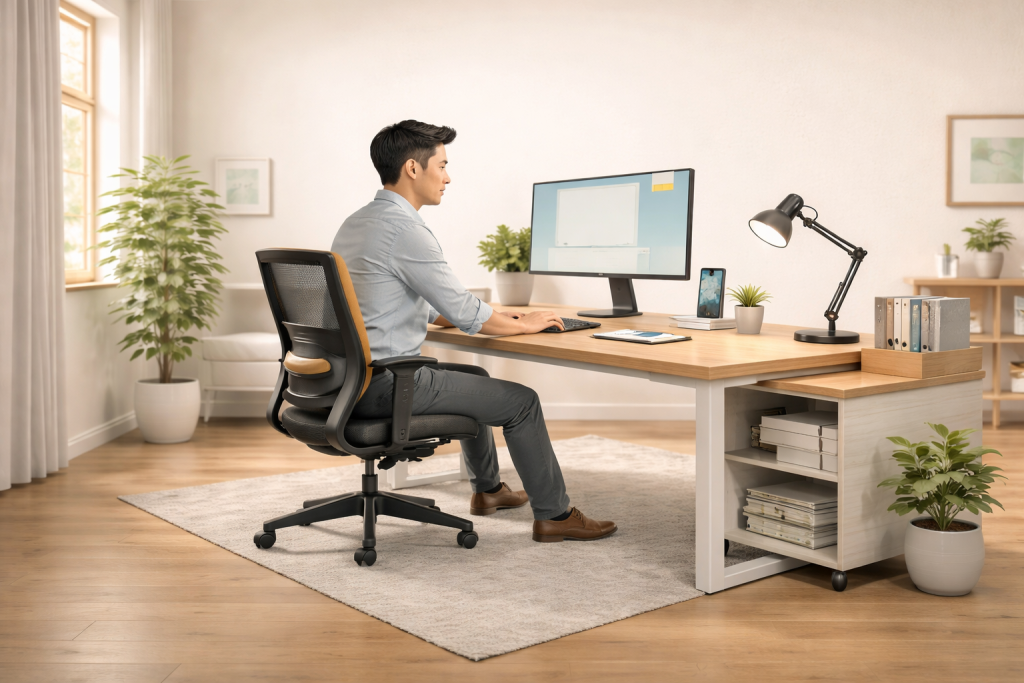
A better ergonomic setup for sciatica can reduce repeated strain throughout the day.
Chair height and lumbar support
Your feet should rest flat on the floor. Your knees should be roughly level with or slightly lower than your hips. Use lumbar support if your lower back collapses into a slumped posture.
Screen positioning
Your monitor should be at eye level so you are not constantly leaning forward. This helps reduce full-body slouching.
Sitting posture
Avoid perching at the edge of your seat for long periods, but also avoid sinking backward in a slumped position. Aim for a supported, neutral posture.
Office chair support
The best chair is not always the most expensive one. It is the one that allows you to adjust seat height, back support, and armrests so your body is well supported.
Movement breaks
No setup can fully compensate for sitting all day. Stand up regularly. Walk to refill your bottle. Take calls standing. Even brief movement matters.
Physiotherapy vs Relying Only on Painkillers

Painkillers may help reduce discomfort in the short term, but they do not explain why the pain keeps coming back.
That is the main difference between symptom relief and root-cause care.
| Painkillers | Physiotherapy |
| May reduce pain temporarily | Aims to identify the source of nerve irritation |
| Does not improve posture or movement habits | Addresses posture, movement, strength, and nerve mobility |
| Symptoms may return when medication wears off | Builds long-term resilience and prevention |
| Useful in some cases for short-term relief | Best for targeted recovery and recurrence prevention |
Rest also has limits. While a short period of easing off may help during a flare, too much rest can lead to more stiffness and deconditioning. Most people do better with the right type of movement, not complete inactivity.
Frequently Asked Questions About Sciatica
- Can a physiotherapist help sciatica?
Yes. A physiotherapist can assess the likely cause of your sciatic symptoms and create a treatment plan that targets the source, not just the pain.
- Why does sitting make my sciatica worse?
Sitting can increase pressure through the lower back, reduce movement, and keep the hips in a flexed position for too long. This may aggravate a sensitive sciatic nerve.
- What exercises help relieve sciatic nerve pain?
This depends on the cause, but common examples include gentle nerve glides, spinal extension movements, posture resets, and strengthening work for the core and glutes.
- How long does sciatica take to heal?
Recovery varies. Mild cases may improve within weeks, while more persistent cases can take longer. The timeline depends on the cause, severity, and whether the right treatment is started early.
- Should I rest or stay active with sciatica?
In most cases, gentle activity is better than prolonged bed rest. Staying active within tolerable limits usually supports recovery better than doing nothing.
- When should I see a physiotherapist in Singapore?
You should consider assessment if pain is recurring, worsening, travelling further down the leg, affecting your work, or not improving with simple self-care.
- Is walking good for sciatica?
Walking is often helpful because it encourages movement and circulation, but it depends on your symptoms. If walking clearly worsens pain, you may need a more tailored approach first.
- Can poor ergonomics cause sciatica?
Poor ergonomics may not directly cause every case, but it can contribute to ongoing irritation and flare-ups, especially when combined with prolonged sitting and weak *poor* movement habits.
Conclusion
Sciatica is common among office workers because long hours of sitting, poor posture, and limited movement can all irritate an already sensitive lower back and neural system. The good news is that sciatica relief for office workers is possible when the real cause is identified and managed properly.
Rather than relying only on painkillers or hoping it goes away, physiotherapy helps address the underlying driver, whether that is a disc issue, muscle tightness, nerve sensitivity, or poor workstation habits. With the right treatment, movement strategy, and ergonomic changes, many professionals can reduce pain, move better, and prevent future flare-ups.If you are dealing with recurring sciatic pain, consult a physiotherapist in Singapore at Physio & Sole Clinic for an accurate assessment, targeted treatment, and a practical recovery plan that fits your workday.