Skip to content

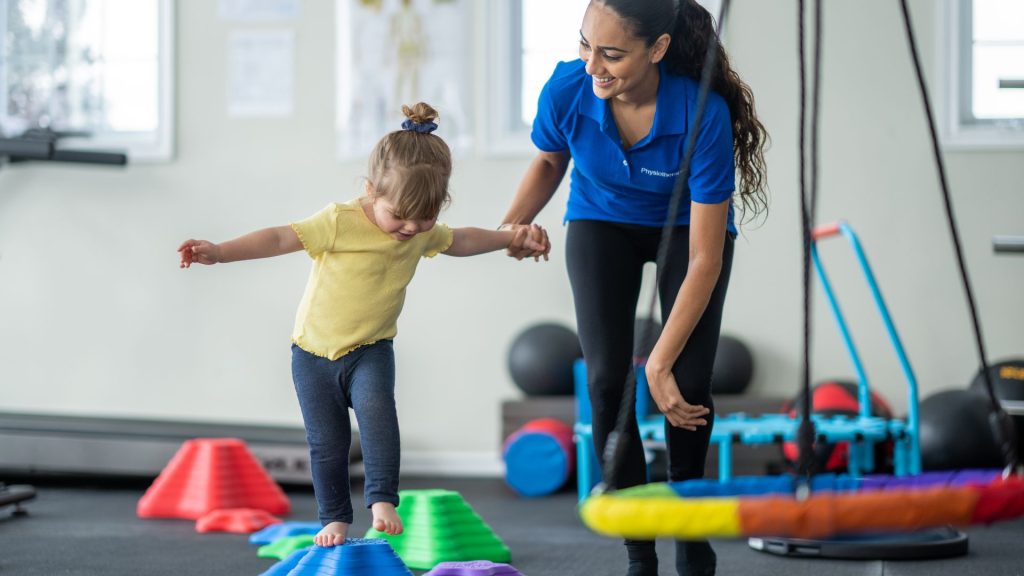

Written by Farha Nisha, Senior Partner & Principal Musculoskeletal Physiotherapist at Women & Children Centre and Physio and Sole Clinic
As a physiotherapist working with children in Singapore, I often hear the same worries from parents:
“I’m not sure if this is just a phase.”
“My friends say to wait, but something still feels off.”
“I don’t want to overreact… but I also don’t want to regret waiting.”
If that sounds like you, you’re not alone.
The early years are full of change; some children walk earlier, some later; some love tummy time, others hate it. With so much variation, it’s hard to know:
When should I take my child to a physiotherapist in Singapore?
What is “within normal range,” and what are true red flags?
In paediatric physiotherapy, there’s one principle I come back to again and again:
The earlier we support a child’s movement, the easier it is to help them.
Not because something is “wrong with your child”, but because the early years are when their brain, muscles, joints, and coordination are most adaptable.
This article will walk you through:
- What milestones to watch for
- Common red flags in child motor development
- How early intervention helps
- What happens if physiotherapy is delayed
- What actually happens in a paediatric physiotherapy assessment in Singapore
So you can make confident decisions for your child, without second-guessing yourself.
The Problem: “Let’s Just Wait and See”

Many parents delay seeking help because:
- They’re told “boys are just slower” or “she’ll grow out of it.”
- They’re afraid of being labelled “kan cheong” (overly anxious)
- They’re unsure if they should see a paediatrician, physio, or someone else
- Google gives mixed messages
This “wait and see” approach is common, but it can mean:
- Mild delays quietly widen over time
- Compensations become habits (e.g., W-sitting, tiptoe walking, slouching)
- Children start avoiding physical play or feeling “not as good” as their peers
By the time some kids finally arrive at our clinic, parents often say:
“I wish we had come earlier.”
The good news?
In many cases, children respond beautifully and quicklywhen we start early.
What Happens When Support Comes Too Late?

Let’s answer one key question directly:
What happens if physiotherapy is delayed in children?
Not every child who starts late develops long-term problems. But when support is delayed, we often see:
1. Small delays become larger gaps
A baby who dislikes tummy time may skip crawling → weaker core → delayed balance → clumsy running later on.
2. Compensatory patterns get “wired in.”

Examples:
- Always W-sitting instead of sitting cross-legged
- Toe-walking instead of heel-to-toe walking
- Leaning on furniture instead of standing freely
The brain and body get used to these patterns, making them harder to change later.
3. Confidence and participation drop
Children notice when they can’t keep up. They may:
- Avoid climbing, running, and ball games
- Cling more to adults
- Become “careful kids” not because of personality, but because movement feels hard.
4. Joints and posture adapt around poor mechanics

Over time, this can contribute to:
- Flat or overly stiff feet
- Knee pain
- Poor posture at school
- Less efficient movement patterns
None of this is to scare you, but it explains why we care so much about timing.
What Parents in Singapore Need to Know
Now let’s go through the key questions one by one.
1. When Should I Take My Child to a Physiotherapist in Singapore?
You don’t need a referral to see a paediatric physiotherapist. You can consider bringing your child if:
For babies (0–12 months)

- Your baby hates tummy time and cannot tolerate it even for a few seconds.
- You notice they seem very floppy or very stiff.
- They always look to one side or have a flat spot on the head.
- They’re not rolling by around 6–7 months.
- They’re not sitting with support by 8–9 months.
For toddlers (1–3 years)

- Not pulling to stand by around 12 months.
- Not walking by 18 months.
- Walks only on tiptoes most of the time.
- Falls very frequently or seems unusually clumsy.
- Strong preference for using just one hand/side.
For preschoolers (3–6 years)

- Trouble running, jumping, hopping, or climbing compared to peers.
- Avoids playgrounds or “rough play”.
- Has very flat or very high-arched feet with pain.
- Complaints of leg pain after walking.
- Struggles with coordination tasks (catching, kicking, balancing on one leg).
If you’re unsure, a simple rule is:
If you’ve been worried for more than a month, it’s worth getting it checked.
2. What Developmental Milestones Should Parents Watch For?
Here’s a simplified motor milestone guide (approximate ranges):
| Age | Typical Milestones |
| 3 months | Lifts head in tummy time, brings hands to mouth, follows toys with eyes |
| 6 months | Rolls both ways, reaches for toys, sits with support |
| 9 months | Sits without support, starts crawling/commando crawling, transfers toys between hands |
| 12 months | Pulls to stand, cruises along furniture, may take first steps |
| 15–18 months | Walks independently, squats to pick up toys, pushes/pulls toys |
| 2 years | Runs, kicks a ball, walks up/down steps with support |
| 3 years | Jumps with two feet, pedals tricycle, walks up stairs alternating feet |
| 4–5 years | Hops on one foot, catches a ball, balances, climbs confidently |
Remember:
There is a range for each skill. A little earlier or later can still be normal. What matters is continuous progress.
3. What Are Red Flags in Child Motor Development?
These are signs where I would recommend an assessment sooner rather than later:
- No head control by 4–5 months
- No rolling by 7–8 months
- Not sitting independently by 9–10 months
- Not weight-bearing through legs when supported by 10–12 months
- Not crawling or moving towards toys by 12 months
- Not walking independently by 18 months
- Persistent tiptoe-walking past age 2
- Very stiff or very floppy muscle tone
- One side is clearly weaker (e.g. always using one hand/leg)
- Frequent falls beyond what seems typical for age
- Child avoids movement, play, or gross motor tasks
- Parents simply feel “something is not right”
If you notice one or more of these, early physio can help identify whether the delay is mild and easily supported, or whether further medical evaluation is needed.
4. How Does Early Intervention Help in Paediatric Physiotherapy?
Early intervention works because it leverages the brain’s natural neuroplasticity, its ability to rewire and adapt, especially during the first 5–6 years.
In practical terms, early physio can:
Build proper movement foundations

We help children:
- Learn to roll, crawl, sit, stand, and walk with good alignment
- Use both sides of the body evenly
- Develop strong cores and stable hips
Prevent compensations
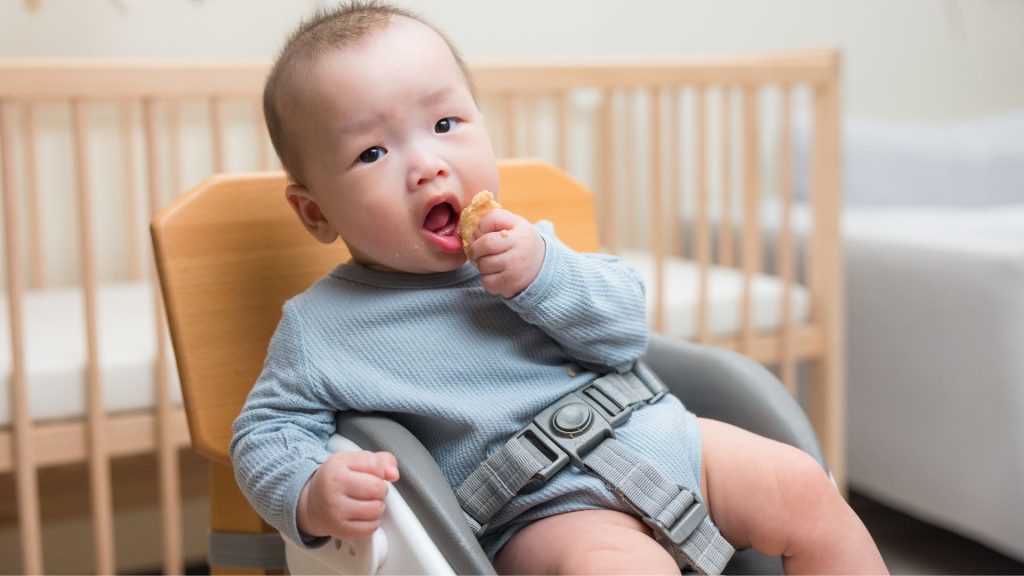
Instead of always W-sitting, toe-walking, or leaning, children learn more efficient and safer ways to move.
Boost confidence

When movement becomes easier, children:
- Join in the play more
- Explore their environment
- Build resilience and independence
Support other areas of development
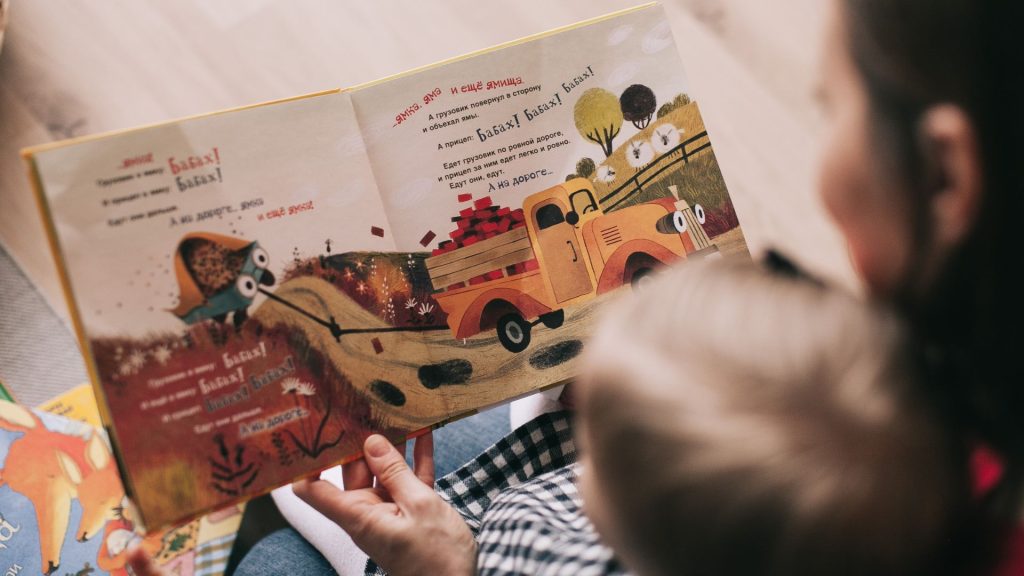
Good motor skills also support:
- Attention and learning (because posture is more stable)
- Play with peers
- Emotional regulation (movement is a natural calming tool)
In short, early physio helps now and sets your child up better for later.
5. How Does a Paediatric Physio Assessment Work for Young Children?
Many parents worry their child will “cry the whole time” or “refuse to cooperate.” That’s okay — we fully expect some stranger danger and adjustment.
At Physio and Sole Clinic and Women & Children Centre, a typical paediatric physiotherapy Singapore assessment looks like this:
Parent Conversation (You know your child best.)

We ask about:
- Pregnancy and birth
- Medical history
- Your child’s strengths & challenges
- What you’re noticing at home
- Your biggest worries and goals
Observation Through Play
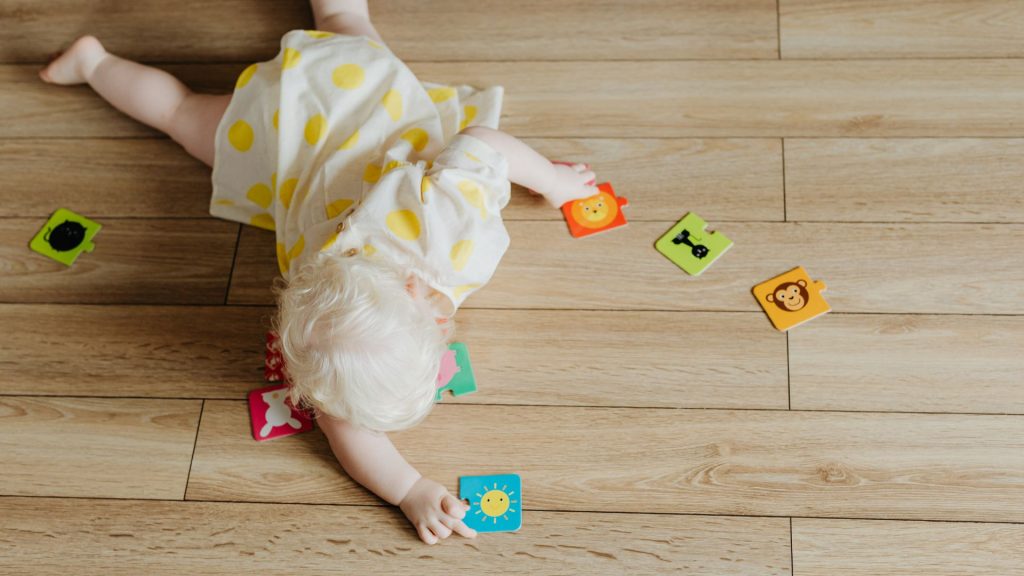
We don’t just “test” your child, we play with them. We observe how they:
- Move on the floor
- Get in and out of sitting
- Crawl, stand, walk, or run
- Climb, squat, and reach for toys
- Use both sides of the body
- Balance and coordinate movements
Hands-On Assessment (As tolerated)
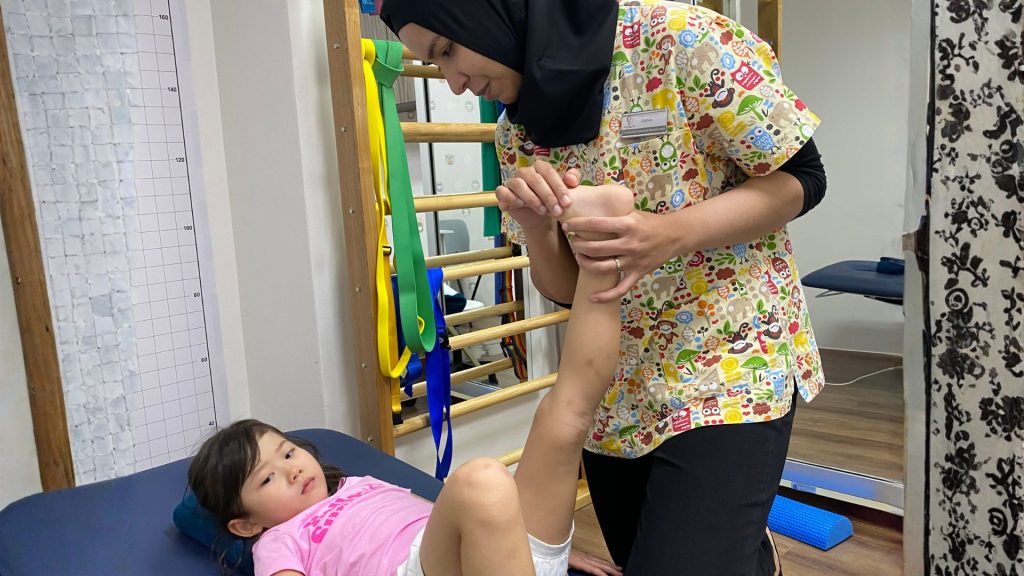
Gently, we may check:
- Muscle tone (stiff/floppy)
- Joint range of motion
- Muscle strength
- Foot posture and leg alignment
- Posture and spine
- Everything is adjusted to your child’s comfort level.
Explanation in Plain Language
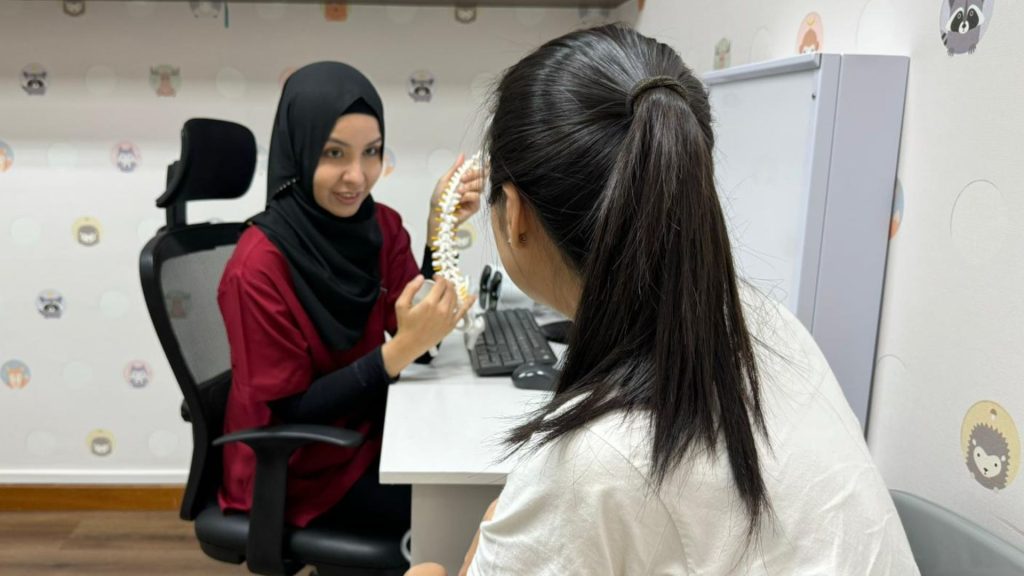
We will:
- Explain what we see
- Show you which movements are on track
- Highlight any concerns
- Answer all your “Is this normal?” questions honestly but gently
Personalised Plan

If your child needs support, we’ll create a plan that may include:
- Fun home exercises
- Play positions and activities to encourage
- Movements to avoid for now
- Session frequency (e.g., once a week / fortnightly)
- Referral to a paediatrician if needed
The goal is not to make you feel guilty or overwhelmed; it’s to give you a clear roadmap.
What Does Paediatric Physiotherapy Actually Look Like?
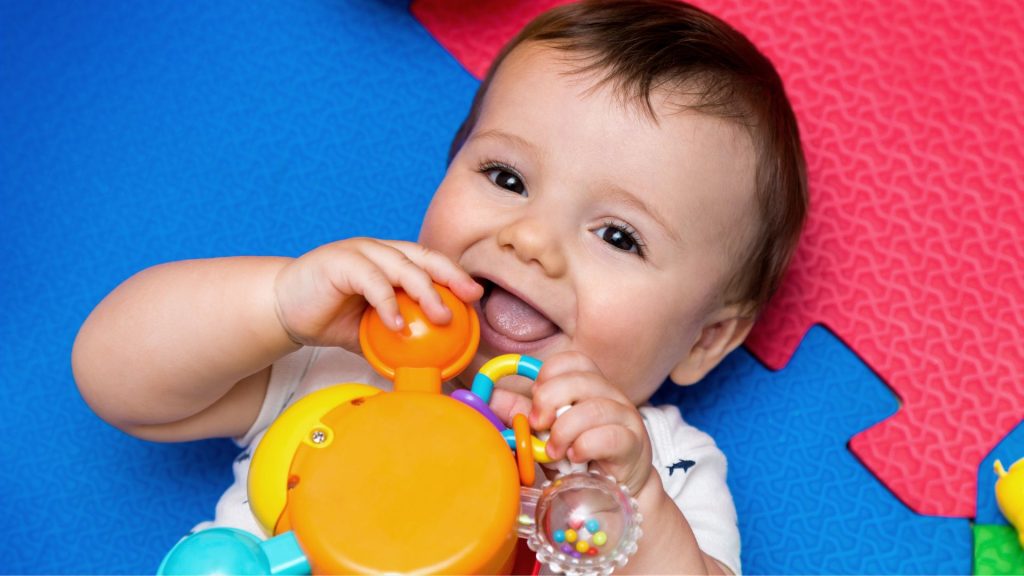
Sessions are very different from adult physio. They’re:
- Play-based
- Colourful
- Movement-rich
- Child-led (we follow your child’s motivation)
We might use:
- Tunnels, slides, and balance beams
- Soft mats and wedges
- Balls, bubbles, stickers
- Games like “animals” (walk like a bear, hop like a bunny)
Behind the scenes, we’re constantly assessing:
- Symmetry
- Alignment
- Strength
- Coordination
- Endurance
But to your child, it should feel like play with a purpose.
“Sooner” Doesn’t Mean “Something Is Wrong”
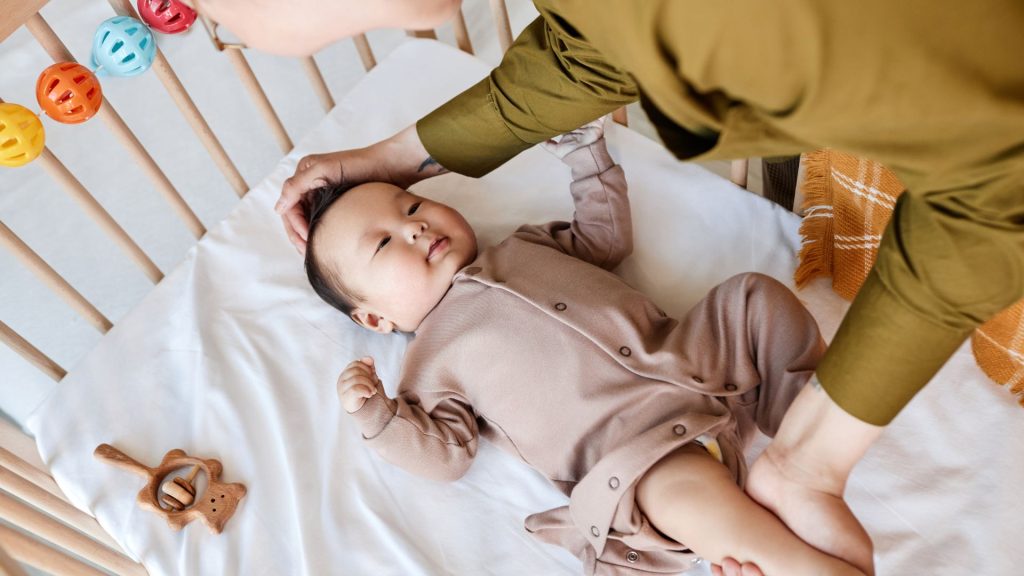
Seeking paediatric physiotherapy early doesn’t mean you’re labelling your child or expecting the worst. It simply means:
“I care enough to check. I want to give my child the best support I can.”
Sometimes after an assessment, I tell parents,
“Your child is within the normal range. Let’s just monitor, and I’ll show you a few things you can do at home.”
That reassurance alone is worth a lot.
Other times, we catch things early and work together to make meaningful changes. Either way, you’re not overreacting. You’re advocating.
Worried About Your Child’s Movement or Milestones? We’re Here to Help.
If you’ve been wondering, “Is this normal?” for more than a few weeks, it’s a good time to ask.
At Women & Children Centre (WACC) and Physio and Sole Clinic, our paediatric physiotherapy team works closely with families in Singapore to support babies, toddlers, and children through playful, evidence-based movement therapy.
Book a paediatric physiotherapy assessment today. Let’s understand where your child is at, support their development, and give you peace of mind, the sooner, the better.