Skip to content



Written by
Wesley Chee
Director & Chief Sports Physiotherapist at Physio & Sole Clinic
A highly experienced sports physiotherapist with a strong background in musculoskeletal and sports rehabilitation, Wesley brings a performance-driven and evidence-based approach to injury management. He has a special interest in treating runners and shoulder conditions, and is passionate about helping patients recover, prevent injuries, and return to the activities they enjoy.
Quick Overview on Kinesiology Taping
Kinesiology tape (KT) is an elastic therapeutic tape used by physiotherapists to support muscles and joints without restricting movement. Unlike conventional rigid sports tape, KT stretches up to 140% of its original length, creating a lifting effect on the skin that helps reduce pain, improve circulation, and support joint alignment. It is commonly applied for sports injuries, muscle strains, postural correction, and swelling management. Kinesiology taping is most effective when applied by a trained physiotherapist or podiatrist who can determine the correct taping technique for your specific condition.
In This Blog
- What is Kinesiology Taping (KT)?
- What Are the Benefits of Kinesiology Taping?
- What Conditions Can Kinesiology Taping Help With?
- How Is Kinesiology Tape Applied?
- Is Kinesiology Taping Right for You?
What is Kinesiology Taping (KT)?
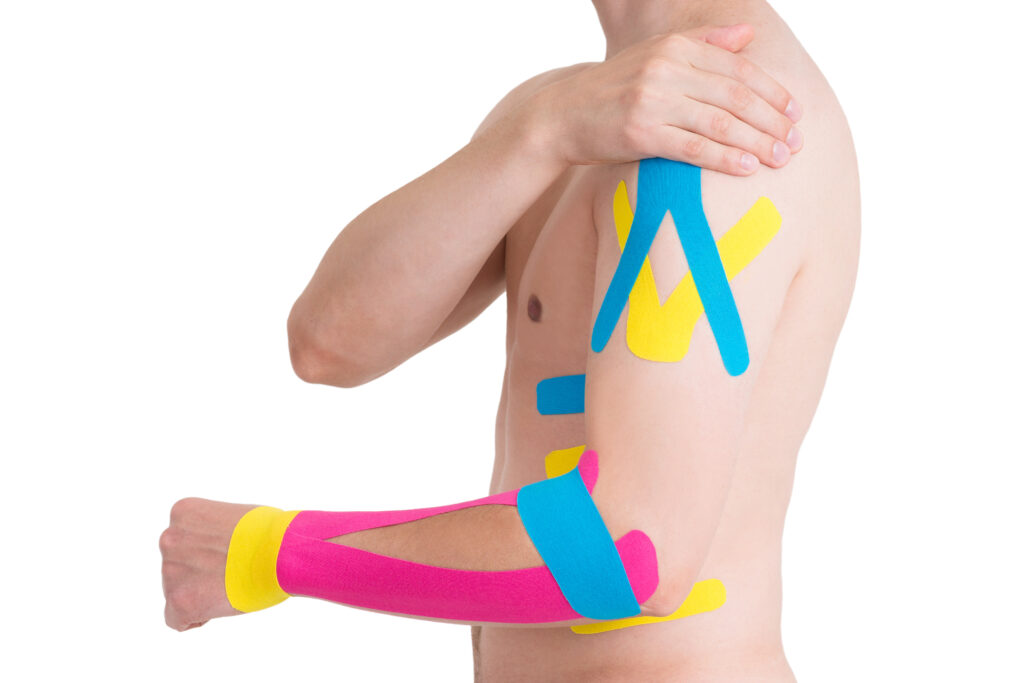
Kinesiology tape is an elastic therapeutic tape developed in the 1970s by Japanese chiropractor Dr Kenzo Kase. Unlike conventional rigid sports tape, KT is designed to mimic the weight and thickness of human skin, allowing it to stretch up to 140% of its original length before recoiling back. When applied to the skin, this recoil creates a gentle lifting effect on the superficial layers of tissue beneath, which is the mechanism behind most of its therapeutic benefits. KT is available in a range of colours — the bright blues, pinks, and yellows you often see on athletes at the Olympics or on the sports field are all the same tape, just different colours. The colour has no bearing on its function.
What Are the Benefits of Kinesiology Taping?
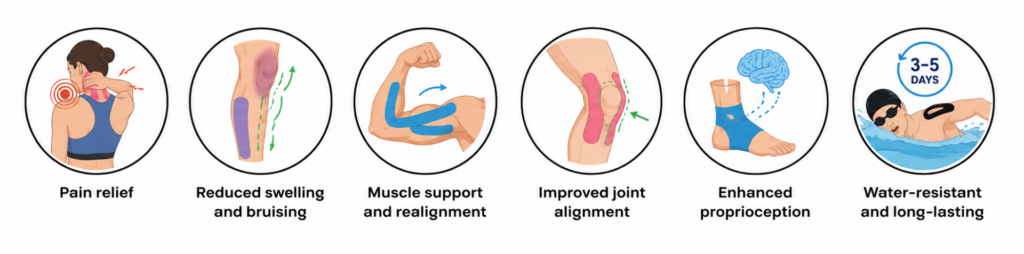
When applied correctly, kinesiology tape offers several evidence-supported benefits:
- Pain relief: The lifting effect on the skin reduces pressure on pain receptors and nerve endings beneath the surface, providing a degree of immediate pain relief without medication.
- Reduced swelling and bruising: By creating space between the skin and underlying tissue, KT encourages better lymphatic drainage and blood circulation, helping the body clear inflammatory fluid more efficiently.
- Muscle support and realignment: KT applied along a muscle’s length can facilitate or inhibit muscle activity depending on the direction of application, helping to correct muscle imbalances or reduce overuse strain.
- Improved joint alignment: By influencing surrounding muscle tone, KT can help reposition displaced or poorly tracking joints, particularly the kneecap, shoulder, and ankle.
- Enhanced proprioception: The tape stimulates mechanoreceptors on the skin surface, increasing the body’s spatial awareness of the taped area. This is particularly useful during rehabilitation, where re-establishing movement control is a key recovery goal.
- Water-resistant and long-lasting: Unlike rigid sports tape, KT can be worn continuously for 2 to 3 days, through bathing and light swimming, without needing reapplication.
What Conditions Can Kinesiology Taping Help With?
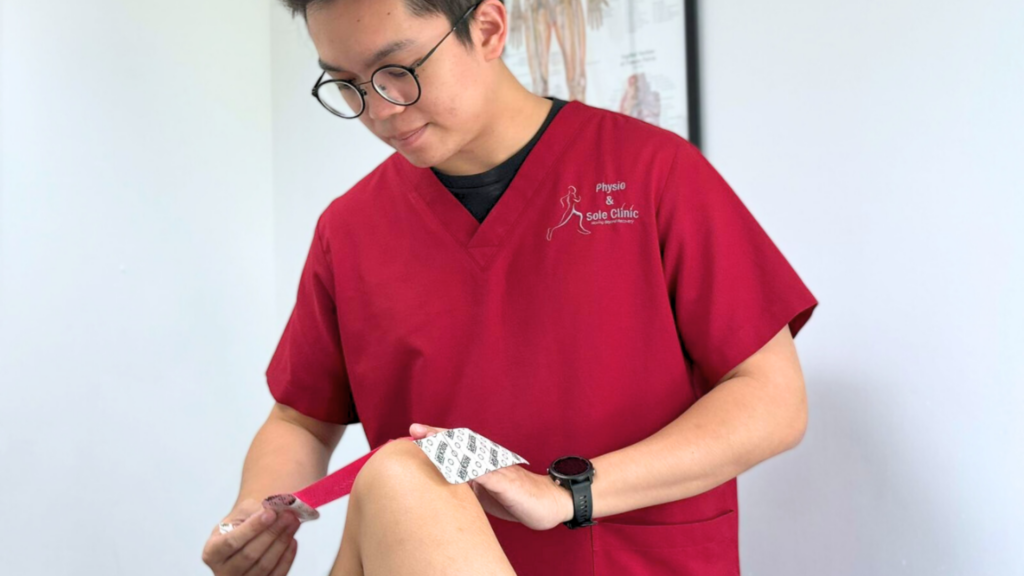
Physiotherapists at Physio & Sole Clinic use kinesiology taping as part of treatment for a wide range of musculoskeletal and sports-related conditions, including:
- Knee pain including patellofemoral pain syndrome (runner’s knee) and post-surgical swelling
- Shoulder injuries such as rotator cuff strains, impingement, and postural correction
- Lower back pain for muscle support during activity and recovery
- Plantar fasciitis and heel pain supporting the arch and offloading the plantar fascia
- Ankle sprains providing proprioceptive support during the rehabilitation phase
- Tennis elbow and golfer’s elbow reducing strain on the forearm tendons
- Shin splints managing tibial stress and reducing muscle fatigue during running
- Lymphoedema and post-surgical swelling supporting fluid drainage in affected limbs
- Postural correction encouraging upright posture by providing tactile feedback to the upper back and shoulders
It is important to note that kinesiology taping works best as a complement to physiotherapy treatment and not as a replacement. Your physiotherapist will determine whether KT is appropriate for your condition and combine it with manual therapy, exercise rehabilitation, and education as part of a comprehensive care plan.
Not sure if kinesiology taping is suitable for your condition? Our physiotherapists can assess your injury and advise whether KT is the right approach for your recovery. Book an Appointment →
How Is Kinesiology Tape Applied?
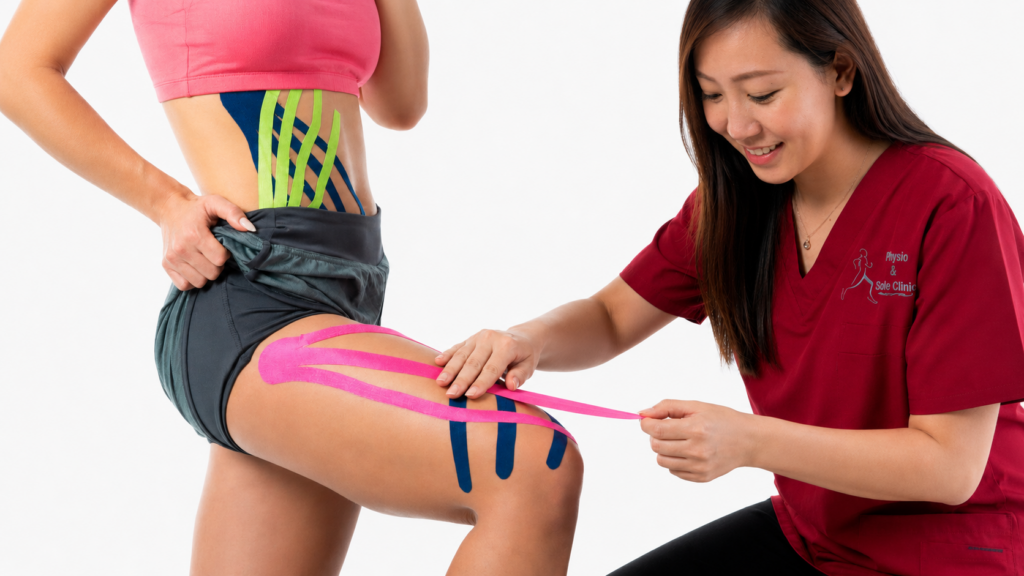
Proper application requires knowledge of the underlying anatomy, the condition being treated, and the desired therapeutic outcome. The direction of tape application, the amount of stretch applied, and the starting and ending anchor points all vary depending on the goal — whether that is pain relief, muscle facilitation, swelling reduction, or postural correction.
A typical application at Physio & Sole Clinic follows these steps:
- Skin preparation — The area is cleaned and dried. Body hair may need to be trimmed to ensure adequate adhesion.
- Positioning — The physiotherapist positions your body in a specific way to place the target muscle or joint on stretch before applying the tape.
- Anchor placement — The tape is applied without stretch at both ends. The therapeutic stretch is applied only to the middle portion of the tape.
- Activation — After application, the physiotherapist rubs the tape briskly to activate the heat-sensitive adhesive and ensure it bonds properly to the skin.
- Post-application advice — You will be advised on how long to wear the tape, how to remove it safely, and what signs of skin irritation to watch for.
The entire application typically takes 5 to 15 minutes depending on the number of strips required and the complexity of the condition being addressed.
Is Kinesiology Taping Right for You?
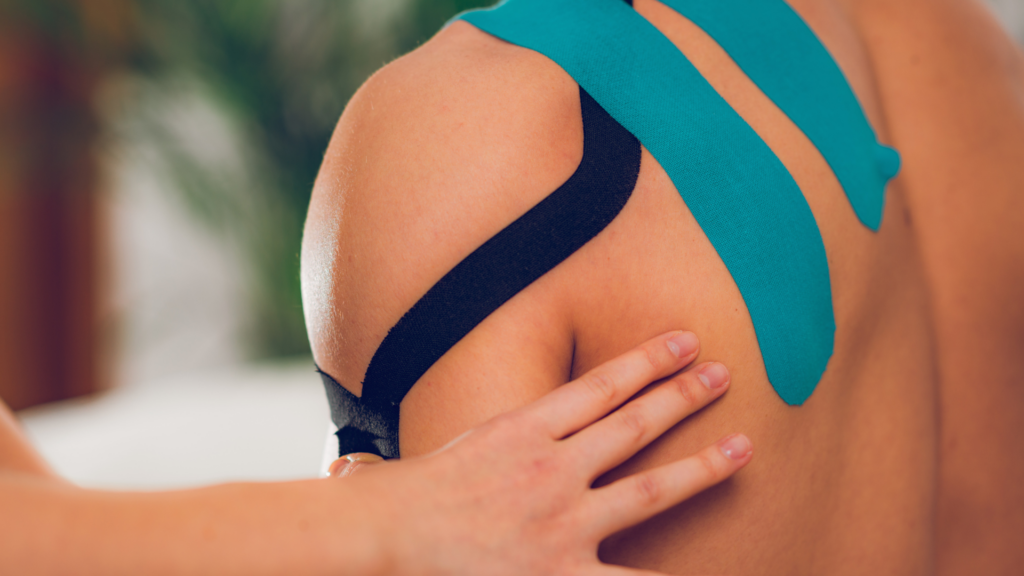
Kinesiology taping is suitable for most people, including recreational athletes, office workers dealing with postural pain, post-surgical patients, and older adults managing chronic musculoskeletal conditions. It is generally safe and well-tolerated, with the most common side effect being mild skin irritation in those with sensitive skin.
However, KT is not recommended in certain situations — including over open wounds, sunburned or fragile skin, areas with active deep vein thrombosis, or in individuals with known adhesive allergies. If you are pregnant, have diabetes, or have a known circulatory condition, consult your physiotherapist before using kinesiology tape.
The best way to determine whether kinesiology taping is appropriate for your specific condition is to book an assessment with one of our physiotherapists at Physio & Sole Clinic. They will evaluate your condition, explain your treatment options, and apply the tape correctly if it is indicated — so you get the full benefit from day one.
Get Taped by a Professional — Book at Physio & Sole Clinic
Kinesiology taping is most effective when applied correctly for your specific condition. Our AHPC-registered physiotherapists at Physio & Sole Clinic are experienced in KT application for a wide range of musculoskeletal conditions across Singapore. Book an appointment today.
Resources from Physio & Sole Clinic
This article is part of Physio & Sole Clinic’s Guide to Physiotherapy. Our physiotherapists treat a wide range of musculoskeletal conditions across Singapore.
- Private vs Public Physiotherapy in Singapore
Find out which option gets you faster access, more personalised care, and better value for your recovery journey.
- Signs You Need Physiotherapy
Learn the key warning signs early, so you can seek treatment before pain or injury gets worse.
- What to Look for in A Physiotherapist in Singapore
Discover how to choose a qualified physiotherapist you can trust for safe, effective results.
- What to Expect at Your First Physiotherapy Appointment
Know exactly what happens in your first session, so you feel confident and prepared before you visit.
- Physiotherapy Cost in Singapore — What’s Covered?
Understand treatment costs, insurance options, and ways to make physiotherapy more affordable.