Skip to content




Written by
Chee Wai Siong Wesley
Director and Chief Sports Physiotherapist | AHPC-Registered
Wesley Chee is the Director and Chief Sports Physiotherapist at Physio & Sole Clinic. He graduated with a Master Degree in Musculoskeletal & Sports Physiotherapy from University of South Australia in 2010. He specialises in Sports & Musculoskeletal injuries with special interest in treating runners and patients with shoulder problems.
Quick Overview
Travel injuries are more common than most Singaporeans realise. Physiotherapists recommend preparing your body before a demanding trip, choosing ergonomic luggage, using correct lifting techniques, and staying active on long flights. If you have an existing musculoskeletal condition, consult a physiotherapist before you travel.
In This Blog
- Tip #1: Plan Your Activities Wisely to Avoid Travel Injuries
- Tip #2: Choose the Right Luggage to Protect Your Back and Joints
- Tip #3: Use Correct Lifting Techniques When Handling Heavy Luggage
- Tip #4: Pack the Right Footwear and Equipment for Your Trip
- Tip #5: Stay Active on Long Flights to Prevent Stiffness and DVT
- Frequently Asked Questions on Travelling and Physiotherapy
Singaporeans are frequent travellers — and with one of the world’s most powerful passports, it’s easy to see why. But whether you’re hiking through New Zealand, city-walking across Tokyo, or skiing in Japan, travel places unexpected physical demands on your body. Physiotherapy clinics in Singapore regularly see patients who return from holidays with new injuries or flare-ups of existing conditions — many of which were entirely preventable. From choosing the right luggage to preparing your body before departure, there are simple steps every traveller can take to stay injury-free. Here are 5 things your physiotherapist wishes you knew before your next trip.
Tip #1: Plan Your Activities Wisely to Avoid Travel Injuries
Injuries can happen when one takes on too much physical activity suddenly. Travellers who usually lead a sedentary lifestyle often find that their body is not equipped to handle the physical demands of outdoor sports like skiing and mountain climbing during the holidays. For those who barely exercise or walk daily, they will find that even the leisurely strolls through new cities day after day can put a strain on their legs.
It is often much safer to do targeted exercises or training in the 12 weeks prior to your holiday to prepare the body physically. Warm-up and cool-down stretching before and after physical activities will also be very helpful. For those undergoing physiotherapy for existing injuries, you should discuss with your physiotherapist if you are physically able to handle the activities planned for your holiday, and how to prepare for it.

Tip #2: Choose the Right Luggage to Protect Your Back and Joints
Not all suitcases are created equal! Choose one that rolls smoothly, and has a light but sturdy frame. Avoid over-packing and making your suitcase too heavy. Choose a luggage with wheels and a handle.
Keep in mind your travel destination – are there a lot of stairs? Will there be paved paths to wheel your suitcases? If not, you might want to consider choosing a bag that you can carry, like a backpack. It is no fun carting a trolley bag up and down the subway staircases in Paris or the steps over the bridges in Venice.
When packing a backpack, try to put the heaviest items closest to your back. This keeps the weight close to your centre of gravity, and that means you do not have to spend excessive energy holding it up. Adjust the straps to your size to ensure you have got the best fit. When using a backpack, ensure that it has two padded, adjustable shoulder straps to balance the weight equally.
Do not be afraid to ask for help if you need assistance loading bags into overhead lockers, vehicles or suitcase lockers. You can always make new friends while travelling!
Packing well and wearing your pack properly can avoid unwanted neck, shoulder, back and leg injuries during travel.
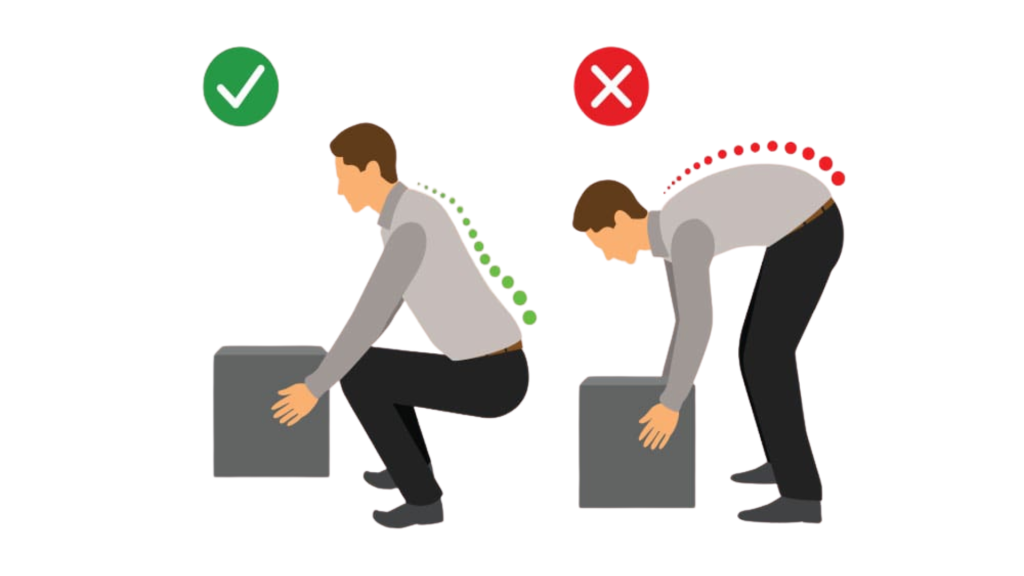
Tip #3: Use Correct Lifting Techniques When Handling Heavy Luggage
The larger and heavier your luggage, the more at risk you are for neck, back, and shoulder injuries. Lifting and carrying bulky luggage can strain your bones, muscles, and joints.
Here are some tips to prevent injuries while lifting and carrying:
- Lift from your legs, not your back: Keep your back straight and bend at the knees – not the waist – to pick items up from the ground.
- Avoid twisting while carrying: If you have to turn, point your toes in the direction you are headed and turn your entire body in that direction.
- Use both hands, not one: This decreases stress to the spine. Less weight on any one arm can also reduce the risk of developing “suitcase elbow,” a chronic condition similar to “tennis elbow.”
- Two-step lifting: When placing luggage in an overhead compartment, first lift it onto the top of the seat. Place your hands on the left and right sides of the suitcase before lifting. If your luggage has wheels, make sure the wheel-side is set in the compartment first. Once the wheels are inside, put one hand atop the luggage and push it to the back of the compartment. To remove the luggage, reverse this process.
The key is to maikanjeong (not to rush) when lifting or carrying a suitcase. Seek help if you are unable to manage it on your own!
Heading overseas soon but dealing with an existing injury? Don’t let it sideline your trip. Our physiotherapists can assess your condition and get you travel-ready before you go. Book an Appointment →

Tip #4: Pack the Right Footwear and Equipment for Your Trip
If you are planning a hiking trip, research on the weather conditions and terrain which you will be hiking on, so as to pack the appropriate shoes. For example, for a hike in the Scottish Highlands where the trails can be rough, uneven and slippery, you will need a pair of waterproof boots with good ankle support and good grip on the soles.
If you have any prescribed tools for your movement or health, such as insoles, walking aids or therabands for a hotel-room physiotherapy exercise routine, make sure you take them with you. Continuing your normal self-care routine goes a long way to avoiding preventable injuries.
Tip #5: Stay Active on Long Flights to Prevent Stiffness and DVT
The most common issues I see (from returning travellers) tend to surround prolonged sitting in planes, trains, buses or ferries. Our bodies are designed to move, bend, twist and lift. Hence when you cramp yourself into a small space and stay really still for a long time, your body is going to let you know about it one way or another!
The best way to get around this is to take small movement breaks, in addition to the toilet breaks! Get up and move around regularly. The exercise techniques are as unobtrusive as possible. Nevertheless, be oblivious to the curious stares from other passengers. Your back/legs/neck/hips will thank you when you get to your destination and comfortably walk off the plane, pain-free.
Ready to Travel Pain-Free?
Don’t let a travel injury cut your trip short. Whether you’re preparing for an upcoming holiday or recovering from one, our team at Physio & Sole Clinic is here to help. From pre-trip conditioning to post-travel recovery, we’ve got you covered.
Book an Appointment today!
Frequently Asked Questions About Travel Injuries and Physiotherapy
- Should I see a physiotherapist before going on a holiday?
If you have an existing injury, chronic pain, or are planning a physically demanding trip — such as hiking, skiing, or extended walking — a pre-travel physiotherapy assessment is highly recommended. Your physiotherapist can identify physical limitations, prescribe preparatory exercises, and advise on whether you are ready for the activities you have planned. - What should I do if I injure myself while travelling overseas?
Protect the area, avoid activities that aggravate it, and seek local medical attention if the pain is severe or accompanied by swelling, numbness, or loss of movement. Once you return to Singapore, book a physiotherapy assessment as soon as possible to get a proper diagnosis and begin rehabilitation before the injury becomes chronic. - How do I prevent back pain on long-haul flights?
Get up and move every 45–60 minutes, perform gentle ankle circles and seated spinal rotations in your seat, and avoid tucking your legs under you for extended periods. If you have a history of back pain, inform your physiotherapist before flying — they can prescribe specific in-flight exercises tailored to your condition. - Can I fly after a physiotherapy session?
In most cases, yes. A standard physiotherapy session does not restrict you from flying. However, if you have recently had a procedure, injection, or are in an acute flare-up, check with your physiotherapist first as prolonged sitting and reduced cabin pressure can affect certain conditions.
Resources from Physio & Sole Clinic
This article is part of Physio & Sole Clinic’s Guide to Physiotherapy. Our physiotherapists treat a wide range of musculoskeletal conditions across Singapore.
- Private vs Public Physiotherapy in Singapore
Find out which option gets you faster access, more personalised care, and better value for your recovery journey.
- Signs You Need Physiotherapy
Learn the key warning signs early, so you can seek treatment before pain or injury gets worse.
- What to Look for in A Physiotherapist in Singapore
Discover how to choose a qualified physiotherapist you can trust for safe, effective results.
- What to Expect at Your First Physiotherapy Appointment
Know exactly what happens in your first session, so you feel confident and prepared before you visit.
- Physiotherapy Cost in Singapore — What’s Covered?
Understand treatment costs, insurance options, and ways to make physiotherapy more affordable.